
1. Why Hoka is the Game-Changer for Your Joints
If you’ve spent any time at a local trailhead or a city marathon lately, you’ve probably noticed those chunky, colorful, and impossibly cushioned shoes gliding by. Yes, we’re talking about Hoka sneakers.
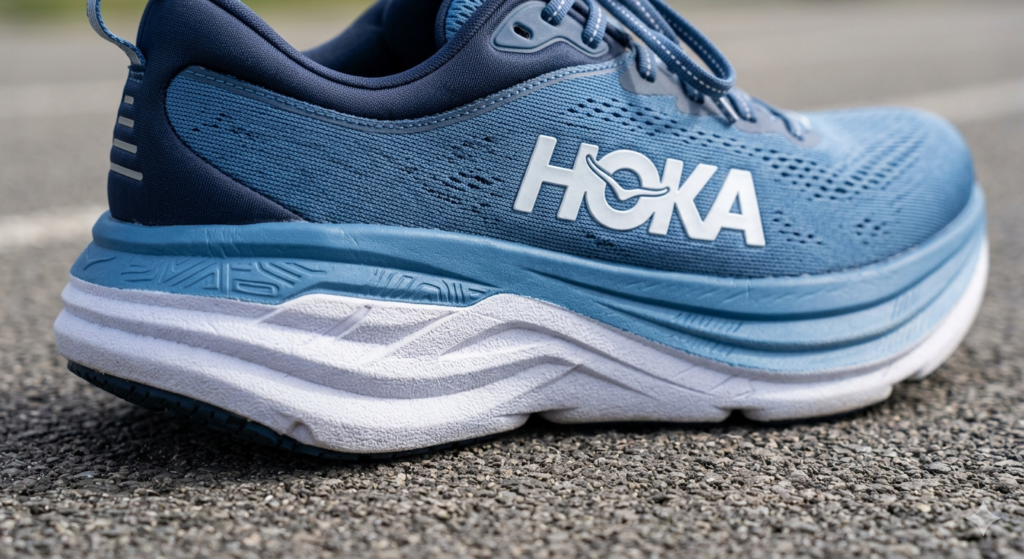
Once a niche favorite for ultramarathoners, Hoka has taken the world by storm. But why the sudden shift to “maximalist” footwear? Unlike traditional racing flats that offer a 1:1 ground feel, Hoka provides a 30mm+ stack height of proprietary CMEVA (Compression Molded EVA) foam.
The Science: Independent gait analysis studies show that maximalist cushioning can reduce peak impact forces on the knee joint by up to 15-20% compared to standard trainers. Whether you’re a seasoned pro or just starting your fitness journey, choosing the right Hoka sneakers is the first step toward pain-free performance.
2. Top-Rated Hoka Sneakers for Women: From Gym to Street
Women’s biomechanics often involve a wider Q-angle (the angle between the hip and the knee), which can lead to overpronation or “runner’s knee.” Hoka sneakers for women are specifically engineered with gender-specific lasts to cradle the foot without feeling restrictive.
The Bondi 8: The “Cloud” Experience
The Bondi 8 is the most cushioned road shoe in the lineup. It features a rear crash pad that provides a balanced transition from heel strike to toe-off.
- User Case: Sarah, a 34-year-old nurse who spends 12-hour shifts on concrete floors, swears by these. “I used to have throbbing heel pain by hour six. Switching to Bondi 8 felt like standing on a yoga mat all day.”
- Pros: Maximum shock absorption; memory foam collar.
- Cons: Can feel slightly heavy (approx. 8.9 oz) for lightning-fast sprints.
The Clifton 9: The Versatile Daily Driver
Hoka stripped away weight in the 9th iteration, making it 4g lighter than the previous version while adding 3mm of stack height. It’s the “Goldilocks” of Hoka sneakers for women—not too heavy, not too firm, just right for daily 5Ks.
3. Engineered for Power: Best Hoka Sneakers for Men
Men’s feet typically generate higher impact forces, requiring a more robust support platform. Hoka sneakers for men address this with wider bases and responsive foam blends.
The Speedgoat 5: The Trail King
Named after ultra-legend Karl Meltzer, this shoe utilizes Vibram® Megagrip with Traction Lug. These aren’t just rubber studs; they are micro-textured 5mm lugs designed to increase surface area by 25%.
- Real-World Test: On a wet, 15-degree incline trail, the Speedgoat 5 maintains traction where standard rubber slips.
- Fit Tip: If you have a high instep, look for the “Wide” (2E) version to prevent mid-foot numbness.
The Arahi 6: Stability Without the Weight
For men who overpronate (feet roll inward), the Arahi offers J-Frame™ technology. It guides the foot without the stiff, heavy plastic posts found in traditional stability shoes.

4. Maintenance Secrets: How to Clean Hoka Sneakers
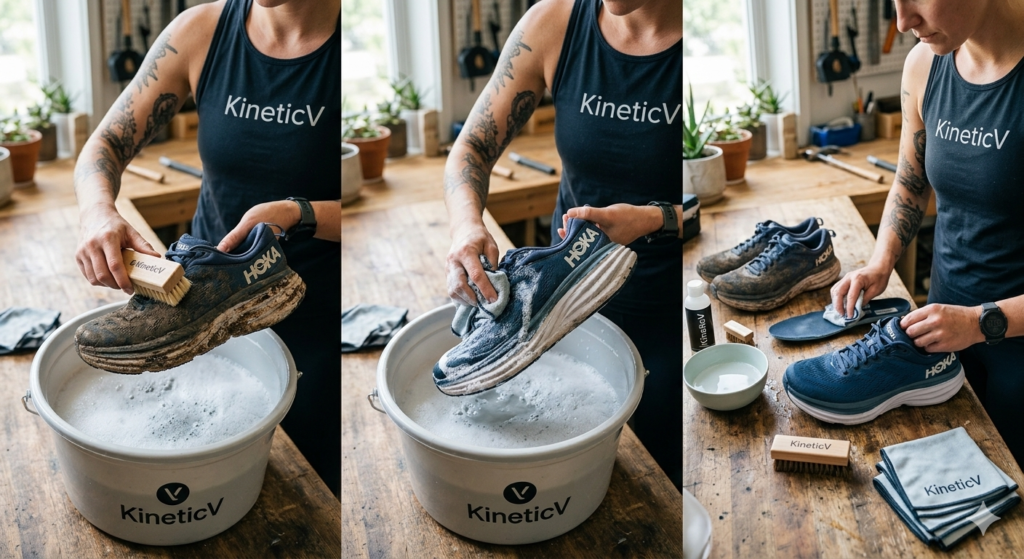
You’ve invested $150+ in your gear; don’t ruin it in the washing machine. High heat denatures the EVA foam’s cell structure, leading to a “dead” feeling shoe. Here is the “Temperature & Texture” protocol on how to clean Hoka sneakers:
- Water Temp: Use lukewarm water (under 30°C/86°F).
- The Solution: Mix 10ml of mild pH-neutral detergent with 500ml of water.
- The Process: Use a soft-bristled brush to flick away dried mud first. Then, gently scrub the mesh with a microfiber cloth.
- The Drying Hack: NEVER use a dryer. Stuff the shoes with recycled paper to hold the shape and air-dry in a shaded spot for 12 to 24 hours.
5. Performance Synergy: Footwear Meets Compression
While your Hoka sneakers manage the external impact, what are you doing for the internal recovery? Pro athletes know that footwear is only half the battle.
To truly maximize your output, we recommend pairing your Hokas with KineticV Graduated Compression Gear.
- The Science: While Hoka’s Meta-Rocker helps your stride, our compression socks increase oxygen delivery to the calves by an estimated 7-10%.
- The Result: Reduced muscle oscillation and faster recovery times between runs.
6. Comprehensive FAQ Section
| Question | Expert Answer |
| How long do Hokas last? | Typically 350–500 miles. If you see deep “wrinkling” in the foam, the support is likely spent. |
| Are they true to size? | Generally yes, but the toe box is a “performance-fit.” Many runners size up by 0.5 for long-distance swelling. |
| Can I wear them for HIIT? | Models like the Kawana are better for lateral moves; Bondi is too tall for heavy side-to-side agility. |
7. Conclusion: Step Into Your Next Adventure
Choosing the right footwear is the most important decision you can make for your joint health. Whether you are browsing for Hoka sneakers for women to crush your first 10K or looking at Hoka sneakers for men for a rugged trail hike, there is a model designed for your feet.
Remember, the best shoe is the one that you forget you’re wearing. Combine the maximalist cushion of Hoka with the muscle-support technology of KineticV, and you’ll be unstoppable.
Gentle suggestions: Don’t wait for an injury to upgrade your gear. Your knees will thank you for the extra foam today!