
Let’s be real: looking fit and actually being fit are two very different things. We’ve all seen the person who looks like a Greek god but pulls a muscle reaching for a tennis ball. In 2026, the trend has shifted. We’re moving away from isolation machines and toward functional training—a science-backed approach to building peak athletic performance that actually translates to your real life. If you want a body that moves with fluid power, you have to understand the kinetic chain. Here’s how you stop training for the mirror and start training for life.
The Kinetic Chain: Why Isolated Moves are Failing You
Your body doesn’t work in isolation. When you jump, run, or even lift a heavy grocery bag, your muscles fire in a coordinated sequence called the kinetic chain. Traditional gym machines break this chain by forcing you into a fixed path. Functional training does the opposite; it integrates your entire system to work as one powerhouse unit.
Multi-Planar Mastery
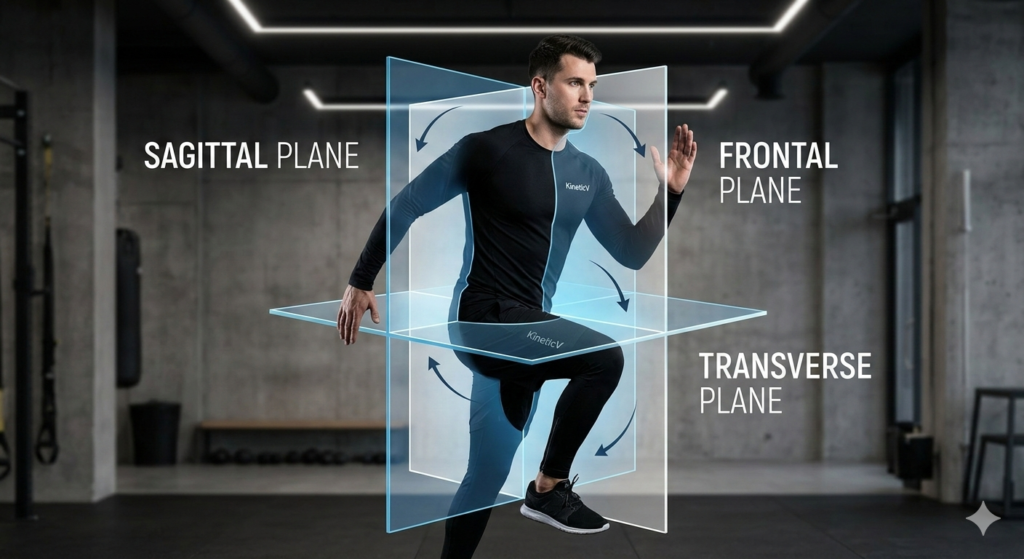
Humans aren’t robots. We don’t just move forward and back. To truly master your movement, you need to hit all three planes of motion:
- Sagittal Plane: Forward/backward (e.g., Lunges or Squats).
- Frontal Plane: Side-to-side (e.g., Lateral shuffles or Side lunges).
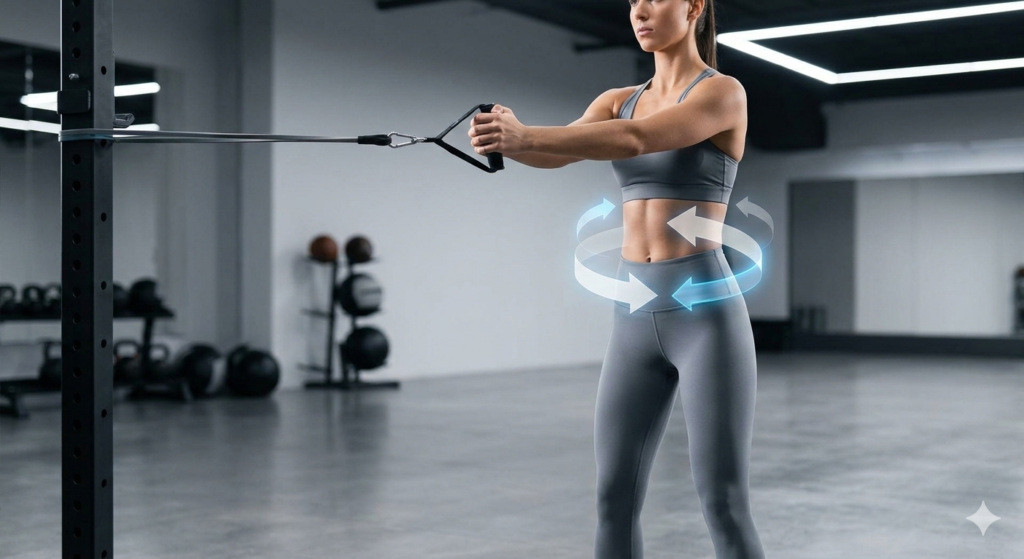
- Transverse Plane: Rotational (e.g., Woodchoppers or Medicine ball throws).
Why It Works: The Hard Numbers
Is this just another fitness fad? The data says no. Research comparing integrated functional movements to machine-based training shows a massive gap in real-world results and metabolic efficiency.
| Performance Metric | Machine-Based Training | Functional Integrated Training |
| Muscle Fiber Recruitment | ~35% (Isolated) | ~80% (Systemic) |
| Metabolic Burn (kcal/hr) | 300 – 400 | 550 – 750 |
| Core Activation | Low (Stabilized by seat) | Extreme (Self-stabilized) |
| Injury Prevention Rate | Baseline | +45% Improvement |
The 4 Pillars of a High-Performance Body
To build a “V-level” physique—one that is both aesthetic and functionally lethal—you need to focus on these four pillars.
1. Core Stability is Your Power Source
Forget six-pack abs; we’re talking about core stability. Your core is the bridge between your upper and lower body. If that bridge is weak, power leaks out before it reaches your limbs. Exercises like the Pallof Press or bird-dog rows teach you to resist rotation and stay solid under pressure, protecting your spine.
2. Unilateral Strength: Kill Your Weakness
We all have a “strong side.” Left-to-right imbalances are the #1 cause of nagging injuries. By using unilateral movements (one arm or one leg at a time), you force your stabilizing muscles to wake up and even the playing field. Think Bulgarian split squats over traditional leg presses.
3. Explosive Power & Reaction
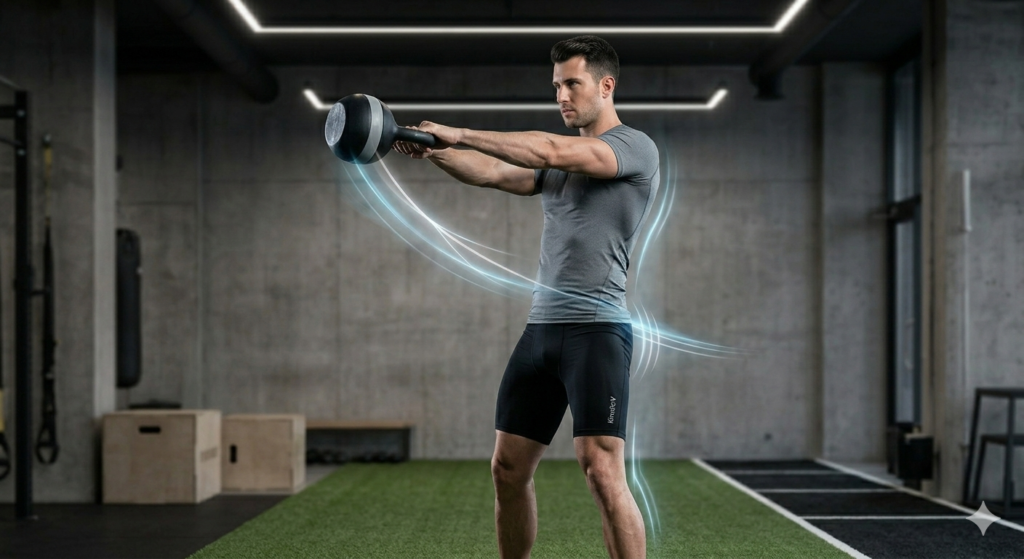
Athletes don’t just move; they explode. Adding plyometrics or kettlebell work primes your central nervous system to fire faster. This “pop” is what separates a standard gym-goer from a true athlete. It’s about teaching your muscles to generate force in milliseconds.
4. Mobility: Strength Without Limits
Flexibility is passive; mobility is active. If you can’t control your joints through their full range of motion, you’re a ticking time bomb for injury. Functional training prioritizes “strength-at-length,” ensuring you are strong even in deep, awkward positions.
Gear That Moves Like You Do
You wouldn’t put budget tires on a supercar. Why wear restrictive, heavy gear for high-intensity movement? When you’re twisting, jumping, and lunging, you need moisture-wicking performance gear that feels like a second skin.
At KineticV, our technical apparel is engineered specifically for the kinetic chain. We focus on compression that supports muscle proprioception (your body’s ability to sense its position) without killing your range of motion. If you’re serious about your 2026 performance, your gear should be too.

FAQ: Mastering Your Functional Routine
Q: Can I still get “big” with functional training? Absolutely. It’s called “functional hypertrophy.” You might not get the puffy, bloated look of a bodybuilder, but you’ll develop dense, hard, and useful muscle that actually does something.
Q: How often should I do this? Consistency beats intensity every time. Aim for 3 solid sessions a week. Because you’re using your whole body, your central nervous system needs that recovery time to rebuild.
Q: Do I need fancy equipment? Nope. While a couple of kettlebells and bands help, your own body weight is the ultimate functional tool. It’s about the movement, not the machine.
Final Thoughts: The Road to 2026 Peak Performance
Mastering your body is a marathon, not a sprint. By prioritizing the kinetic chain and core stability, you’re setting yourself up for decades of high-level movement.
As noted by the American College of Sports Medicine (ACSM), functional fitness is the most effective way to maintain metabolic health and joint integrity as you age. Stop exercising for the mirror—start training for the life you want to lead.