
In the fitness world, we love a good rivalry. It’s usually the “meatheads” lifting heavy iron in the power rack versus the “athletes” doing explosive rotational work with sandbags. But if you’re choosing one over the other, you’re likely leaving serious results on the table. Understanding the nuance of functional vs strength training is the difference between having a body that just looks powerful and one that actually is. In 2026, the elite are moving toward a hybrid model to maximize muscle gains while bulletproofing their athletic performance.
The Great Debate: Defining the Two Styles
Before we fix your routine, let’s clear the air. Traditional strength training is often about isolation and raw output—think bench presses and bicep curls aimed at maximum muscle gains. Functional training, however, focuses on movements that mimic real-world activities, prioritizing the kinetic chain stability over individual muscle size.
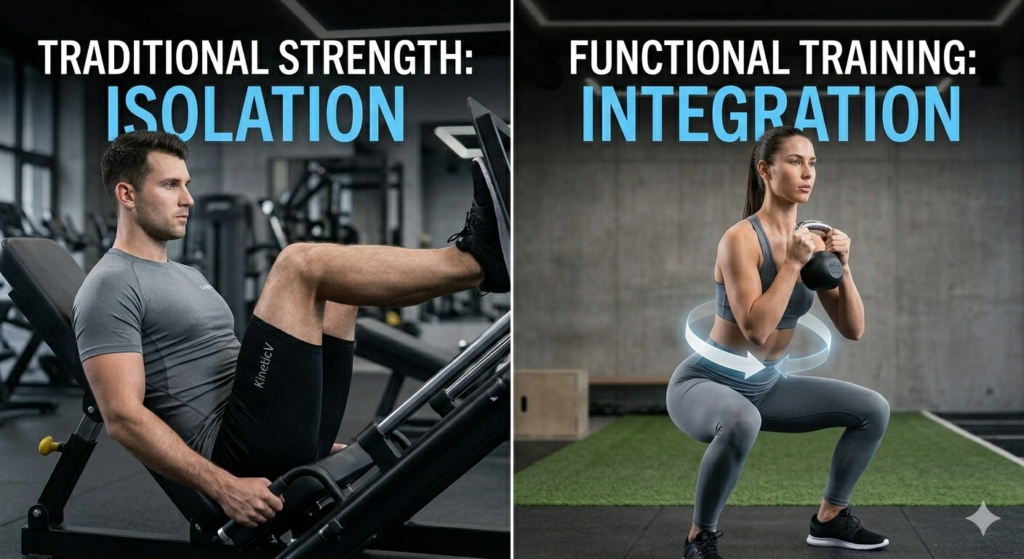
solation vs. Integration
While strength training builds the “engine” (your muscles), functional training optimizes the “driver” (your nervous system). One builds the size; the other ensures that size can move efficiently through space.
The Comparison: Gains, Power, and Longevity
Which one actually delivers? Here is how they stack up when you look at the physiological data.
| Metric | Traditional Strength Training | Functional Training |
| Hypertrophy Speed | Very High (Targeted) | Moderate (Full Body) |
| Joint Mobility | Moderate / Low | High |
| Caloric Burn | Moderate | Very High |
| Injury Prevention | Low (Static support) | High (Dynamic stability) |
5 Critical Mistakes Sabotaging Your Results
If you aren’t seeing the progress you want, you’re likely falling into one of these traps.
Mistake 1: Ignoring the Base of Absolute Strength
Many people jump into “functional” drills without a strength foundation. You can’t have high-level athletic performance if you can’t squat your own body weight. Functional moves need raw force to be effective.
Mistake 2: Complexity Over Quality
Doing a squat on a Swiss ball isn’t “functional”—it’s a circus act. Sacrificing your form for the sake of looking “athletic” is the fastest way to stall your muscle gains and end up in physical therapy.
Mistake 3: Zero Planar Variety
Most strength lifters live in the sagittal plane (up and down). If you never move sideways or rotate, your body becomes rigid. Functional training fixes this by introducing lateral and rotational work.
Mistake 4: Misunderstanding “Core” Stability
Your core isn’t just for sit-ups. In both functional and strength contexts, the core’s job is to stabilize the spine. If you aren’t bracing properly during heavy lifts, you’re leaking power.
Mistake 5: Wearing the Wrong Gear
You can’t do a deep, rotational lunge in stiff, heavy cotton. High-intensity hybrid work requires apparel that supports kinetic chain stability. At KineticV, our gear is designed with high-stretch, technical fabrics that offer proprioceptive feedback, helping your brain and muscles stay in sync during complex moves.
Building the 2026 Hybrid Blueprint
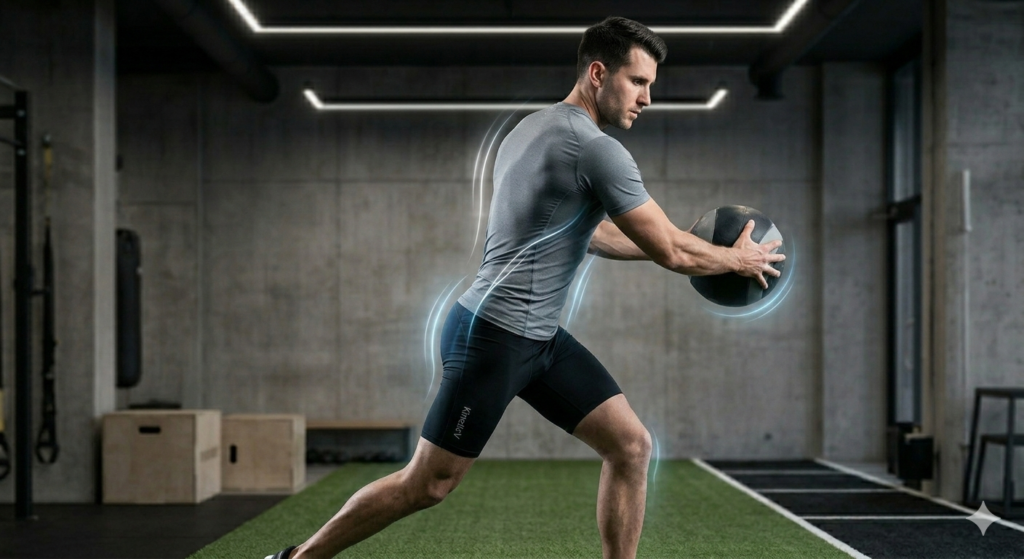
You don’t have to choose. The most successful athletes use an 80/20 rule: 80% heavy, foundational strength work to build the “base,” and 20% high-intensity functional drills to sharpen their athletic performance.
By wearing gear that supports your range of motion—like the KineticV Performance Series—you ensure that your clothing never becomes a limiting factor in your transition between the rack and the turf.
FAQ: Settling the Score
Q: Can I build a great physique with only functional training? Yes, but it takes longer. For the fastest muscle gains, you still need some heavy, progressive resistance training.
Q: Which is better for fat loss? Functional training generally wins here due to the higher metabolic cost of multi-joint, full-body movements.
Q: Should I do strength or functional work first in my session? Always do your heavy strength lifts first when your nervous system is fresh, then finish with functional, high-heart-rate drills.
Conclusion: The Hybrid Evolution
The “Functional vs Strength” war is over, and the winner is the hybrid athlete. By avoiding these 5 mistakes, you ensure that your muscle gains are backed by real-world athletic performance.
As research from the Mayo Clinic suggests, functional fitness is essential for maintaining a high quality of life and preventing injury as you push your physical limits. Don’t just be strong—be capable.