
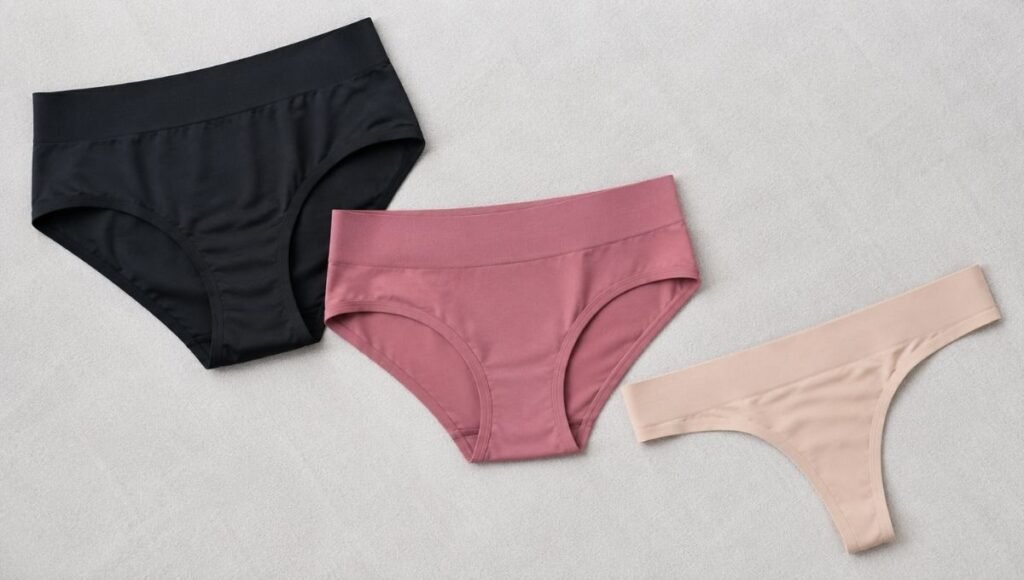
There’s a conversation that happens in running communities that almost never makes it into gear guides: should you wear underwear for running at all? A significant number of runners — especially those running in shorts with built-in liners or compression tights — go commando and report zero problems. Others swear by specific running underwear as the difference between a comfortable 10-miler and one that ends in chafing and regret.
The honest answer is that both approaches work — for different people, different clothing, and different distances. What doesn’t work is running in regular cotton underwear under anything for any real distance. Cotton absorbs sweat, holds it against your skin, and creates the warm, moist friction environment that produces chafing. This is the one consistent rule in running underwear: if you’re wearing underwear for running, it has to be technical fabric, not cotton.
This guide covers the actual decision-making: whether to wear running underwear at all, which style works for which situation, and which specific options perform best for runners who need them.
Key Takeaways
- Cotton underwear is the only universal “don’t” — it absorbs and holds moisture against skin, creating friction and increasing bacterial and fungal growth risk during sustained exercise
- Running commando in lined shorts or compression tights is a valid choice — many experienced runners never wear underwear for running; the liner built into quality running shorts is designed to replace it
- Seamless or laser-cut construction eliminates VPL — visible panty lines under running tights are a construction problem, not a size problem; seamless underwear in the right style removes them entirely
- Thongs aren’t wrong for running, but fit matters more than style — a thong that stays in position is more comfortable than a brief that rides up and requires adjustment
- Merino wool and moisture-wicking synthetics (nylon-spandex blends) are the two best fabric categories for running underwear — merino for odor resistance and temperature regulation, synthetics for fastest drying
Do You Actually Need Running Underwear?
This is the question most guides skip, and it’s the most useful one to answer first.
If you’re running in shorts with a quality built-in liner: You probably don’t need underwear. The liner in running shorts is specifically designed to replace underwear — it provides support, manages moisture, and sits against the skin without the seams and coverage that external underwear adds. Adding another layer underneath creates more fabric, more heat, and potentially more chafing at the liner edge.
If you’re running in compression tights or leggings: Many runners go without underwear under tights specifically because the tights themselves are the base layer, and adding underwear creates seams at the hip and thigh that become friction points at distance. Seamless tights worn directly against skin often perform better than tights with underwear underneath.
If you’re running in running shorts without a liner: Underwear is useful — you need something between skin and the outer fabric. Brief-style running underwear that stays in place and manages moisture is the right choice here.
If you’re running in casual athletic shorts or non-running shorts: Technical running underwear is the answer — it provides the moisture management that casual shorts don’t include.
The practical guide: try your next long run without underwear under lined shorts or tights. If you experience no chafing and no discomfort, you’ve simplified your kit. If you do experience issues, running-specific underwear is the solution — not cotton underwear.
Why Cotton Underwear Fails for Running
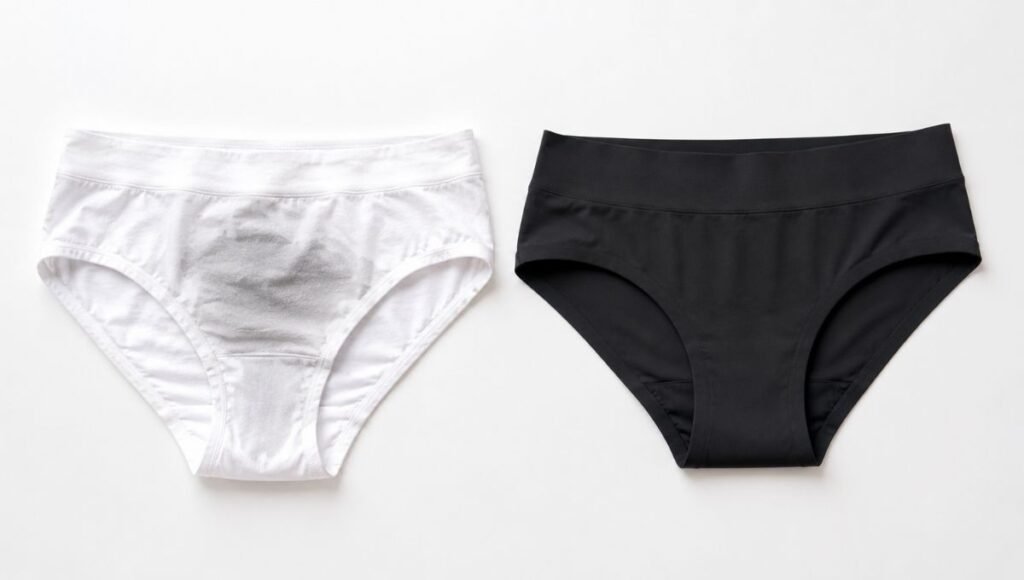
This is worth explaining beyond “cotton is bad” — understanding the mechanism helps you understand what to replace it with.
Cotton fiber absorbs moisture and holds it within the fiber structure rather than moving it to the surface to evaporate. During a run that lasts 45 minutes or longer, significant sweat accumulates. In cotton underwear, that moisture stays trapped against your skin.
Wet skin is more vulnerable to friction damage than dry skin — the moisture softens the outermost layer, and repeated contact with fabric (thousands of strides worth) creates abrasion rather than just pressure. This is the chafing mechanism: moisture plus friction. Cotton maximizes both variables.
The secondary problem: moist warm fabric against skin creates an environment that supports bacterial and fungal growth. Gynecologists specifically recommend moisture-wicking underwear for active women for this reason — sustained moisture in warm, enclosed areas increases the risk of infections, particularly yeast infections and bacterial vaginosis in women.
Technical running underwear interrupts both mechanisms: moisture-wicking fabric moves sweat to the outer surface for evaporation (keeping skin drier), and the minimal seam construction reduces friction points even when some moisture is present.
Running Underwear Styles: What Works for Running
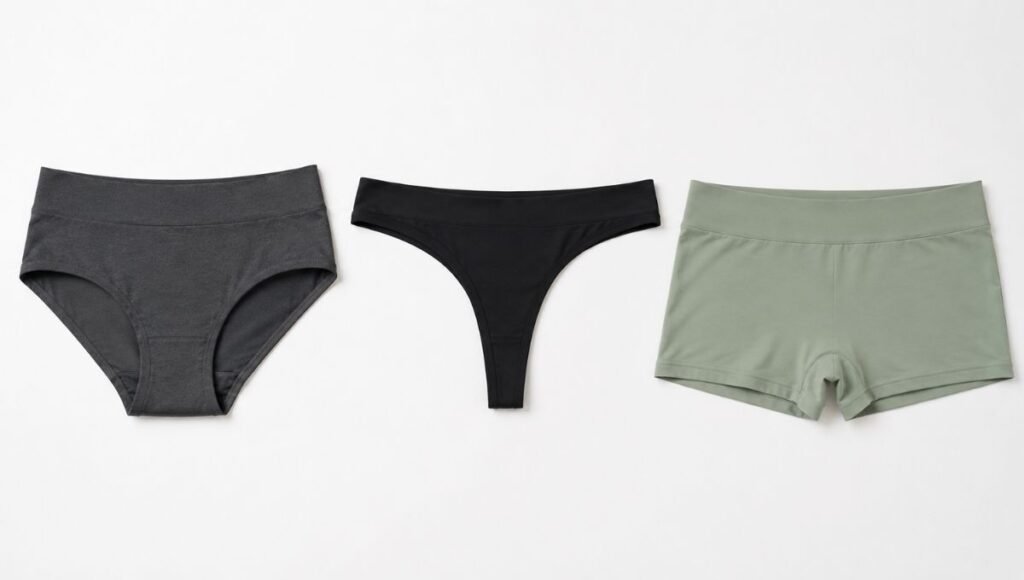
Brief Style
The most common choice for running underwear. A brief with full coverage at the back, medium coverage at the front, and a fitted waistband. Works well for most body types and most running conditions.
What makes it work for running: Full seat coverage means the fabric moves with you through full stride without riding up or requiring adjustment. The coverage prevents the inner thigh and seat contact that creates chafing in other styles. A properly fitted brief should feel secure without restricting movement.
What to look for: Seamless or laser-cut edges, moisture-wicking nylon or polyester fabric with spandex for stretch, flat or bonded waistband that doesn’t dig during bending and stride.
Thong Style
Controversial in running circles but genuinely works for many runners. The logic: no fabric in the seat area means no fabric to bunch, ride up, or create friction across the inner thigh and seat contact zones. For runners who have experienced brief-style riding up, a thong eliminates the problem at the source.
What makes it work: When properly fitted, a thong stays in one position because there’s almost no fabric to migrate. The front coverage prevents the front-of-thigh chafing that can occur with commando running in less structured shorts.
What makes it fail: Poor fit. A thong that’s even slightly too large will shift and migrate during running stride in ways that are worse than any alternative. Running thongs specifically are sized for active use with different stretch ratios than fashion thongs.
Editor’s note: Don’t dismiss thongs for running based on general assumptions. Try one on a short run first. Many runners who found briefs uncomfortable find thongs work better specifically because there’s less fabric to manage.
Boy Short / Hipster Style
Extended coverage brief that provides full-thigh protection. The best choice for runners who experience inner thigh chafing in standard briefs, or for running in loose shorts where additional coverage is wanted.
What makes it work: The extended leg coverage provides a fabric barrier across the inner thigh contact zone — particularly useful for runners with thighs that contact throughout stride. Less effective under fitted tights where the additional layer adds seams at the thigh.
Bikini Brief
Similar to standard brief but with lower sides — less waistband coverage. Works well under low-rise running shorts or for runners who find standard brief waistbands irritating during running. The lower cut reduces the risk of waistband pressure points at the hip flexor during stride.
The VPL Problem: Running Underwear Under Tights
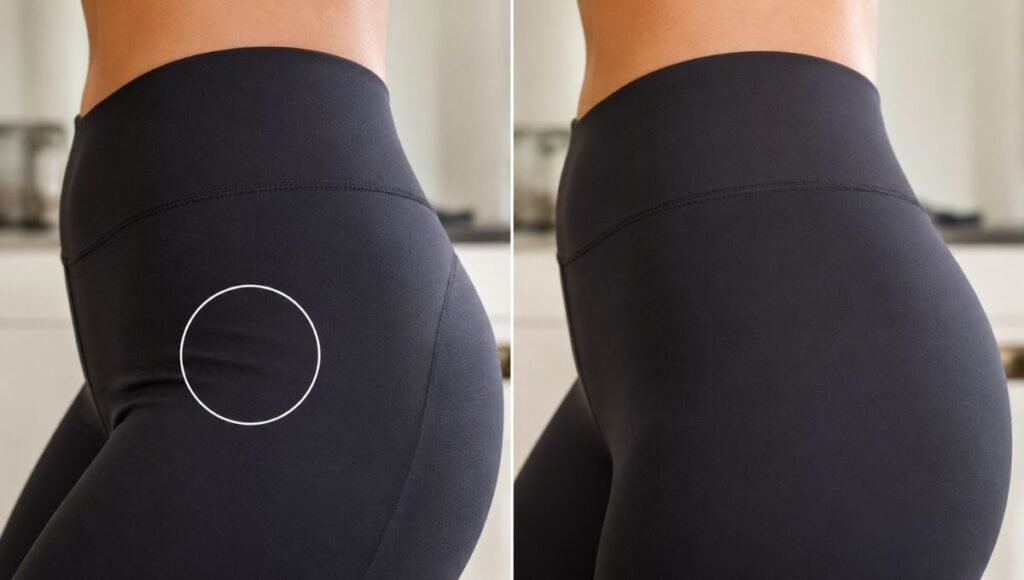
Visible panty lines under fitted running tights are almost entirely a construction problem — specifically, the elastic edge at the leg opening and waistband of standard underwear creating a ridge that shows through the tights’ fabric.
The solutions in order of effectiveness:
Seamless underwear: No sewn edges means no ridge to show through tights. True seamless construction (not just smooth fabric with sewn seams) eliminates VPL at the source. This is the most reliable solution.
Laser-cut underwear: Edges are cut by heat rather than folded and sewn, eliminating the raised edge. Similar effectiveness to seamless construction for VPL prevention.
Thong style: No coverage in the back means no back seam to show through tights. Most thongs with seamless or laser-cut front edges eliminate VPL entirely.
Correct sizing: Underwear that’s too small creates more visible edges because the fabric stretches and the elastic digs in. Sizing up can reduce VPL even in non-seamless styles.
The Best Running Underwear in 2026
Best Overall: Runderwear Women’s Running Briefs
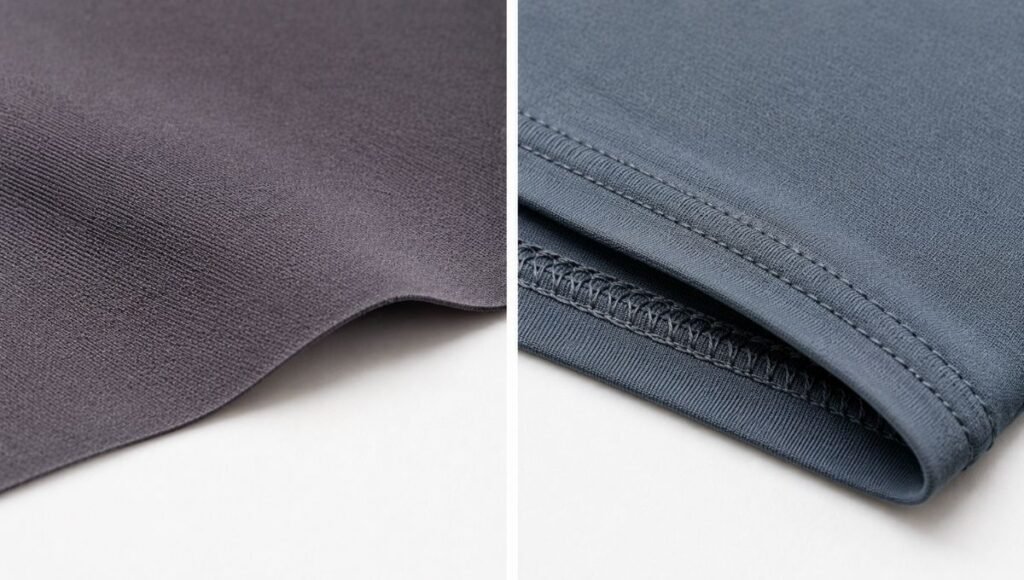
Runderwear builds specifically for running, and it shows in the construction details. The 360-degree seamless technology means no seams anywhere on the garment — not at the waistband, leg openings, or seat. The result is underwear that performs identically to seamless-only at the edges but with seamless construction throughout.
The moisture-wicking polyester-spandex blend moves sweat efficiently without the slow-drying problem that affects merino in high-sweat conditions. The high-waisted cut stays in position during full running stride without a restrictive waistband band. Available in full brief, boyshort, and thong styles for runners with different preferences.
Best for: Any running distance, under both shorts and tights, runners who have experienced chafing with other underwear, anyone who wants underwear built specifically for running rather than adapted from general athletic wear.
Best for No VPL Under Tights: Oiselle Flyte Brief
The Flyte Brief uses HoverFit technology — a 65% recycled polyester, 32% lyocell, 3% spandex blend — that sits against the skin with a barely-there profile. The seamless construction eliminates the edge ridges that create VPL, and the laser-finished edges at the legs and waist disappear under fitted tights completely.
The lyocell content gives the fabric a softer, less plastic feel than pure synthetic alternatives, which some runners find more comfortable for sustained contact against skin. The moisture management is good if not the fastest-drying option on the list.
Best for: Running under fitted compression tights, runners sensitive to the feel of pure synthetic fabrics, anyone whose primary concern is invisible fit under tights.
Best Thong Option: Under Armour Pure Stretch Thong
The UA Pure Stretch earns consistent positive reviews from runners specifically — not just general athletic use — because the stretch ratio is engineered for movement rather than just comfort standing still. The tag-less, seamless construction sits flat, and the nylon-spandex blend dries quickly after high-sweat runs.
For runners who find brief-style underwear rides up or bunches during running, the Pure Stretch Thong often resolves the problem cleanly — no back fabric means no back fabric to migrate.
Best for: Runners who find briefs uncomfortable during running, minimalist approach, hot weather running where maximum ventilation is the priority.
Best Merino Option: Icebreaker Siren Hipkini
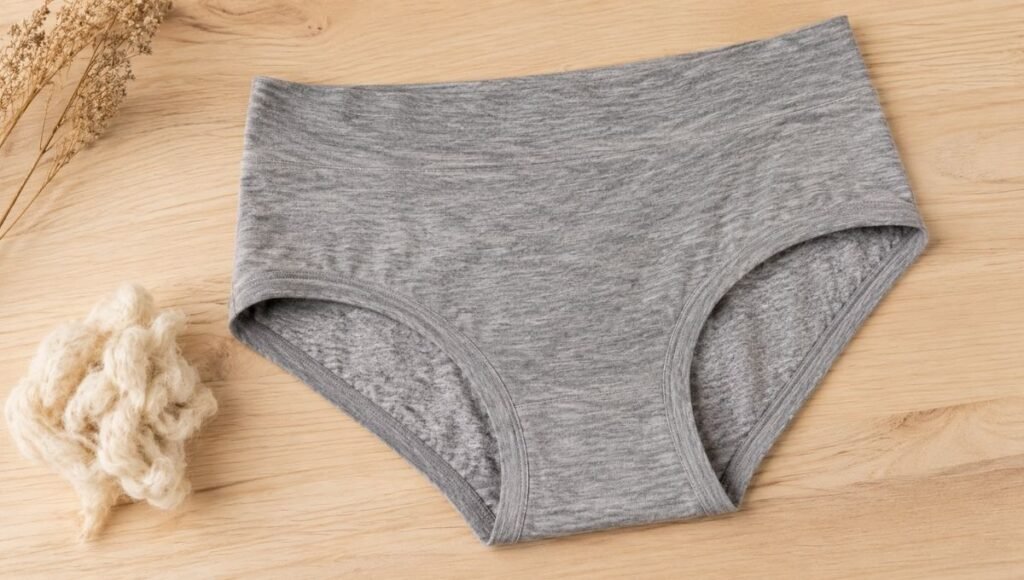
For runners who prioritize odor management over fastest drying — multi-day events, travel, or simply not wanting to wash after every run — merino wool underwear is the answer. The Icebreaker Siren uses merino’s natural antimicrobial properties to resist odor even after sustained use.
The hipkini cut provides more coverage than a bikini brief without the full coverage of a boy short — a middle ground that works well under both tights and running shorts. Merino is slightly heavier and slower-drying than synthetic alternatives, making it better suited for cooler conditions and lower-intensity efforts.
Best for: Multi-day trail running, travel, runners who prefer natural fibers, cool-weather running where synthetic quick-dry matters less.
Best Budget Option: Balanced Tech Seamless Bikini Brief (3-Pack)
At significantly below premium pricing for a three-pack, these deliver the functional essentials: seamless construction, moisture-wicking polyester fabric, good stretch. The seamless edges prevent VPL under tights, and the moisture management is appropriate for training runs of moderate distance.
The elastic at the leg openings is slightly more visible than true laser-cut options when wearing very thin tights. For training use and runners building their rotation without premium investment, these cover the functional requirements honestly.
Best for: Budget-conscious runners, building a rotation of multiple pairs without high per-pair cost, training runs under 90 minutes.
Running Underwear Mistakes That Create the Problems You’re Trying to Avoid
Wearing the wrong size. Underwear that’s too small digs in and creates pressure points during running stride. Underwear that’s too large has excess fabric that migrates and bunches. Running underwear sizing can differ from your standard size — check brand-specific size guides based on measurements, not standard sizing assumptions.
Adding underwear under shorts that already have a liner. The liner in quality running shorts is designed to replace underwear — adding a layer underneath creates unnecessary heat, additional fabric contact points, and potential chafing at the liner’s edge. Try the liner-only approach before defaulting to underwear underneath.
Washing with fabric softener. The same principle as running tights and technical shirts — fabric softener coats moisture-wicking fibers and degrades their performance. Cold wash without fabric softener, air dry for all running underwear.
Keeping underwear too long. Elastic degrades faster than outer fabric. Running underwear that’s lost its elastic recovery shifts during running even when it fits correctly standing still. Replace when the waistband or leg openings no longer spring back to their original position after stretching.
FAQ: What Runners Ask About Running Underwear
Should I wear underwear when running? It depends on what you’re wearing. If your running shorts have a quality built-in liner, you likely don’t need underwear — the liner is designed to replace it. If your shorts don’t have a liner, or you’re running in casual shorts, technical running underwear is the right choice. Never run in cotton underwear for any significant distance.
What is the best underwear to prevent chafing when running? Seamless or laser-cut construction in moisture-wicking fabric (nylon-spandex or merino wool). The seam-free edges eliminate the mechanical friction points that cause chafing, and the moisture-wicking fabric keeps skin drier. Runderwear Women’s Running Briefs and Oiselle Flyte Brief are the most consistently recommended options for chafe prevention specifically.
Is it okay to run without underwear? Yes — running commando in lined running shorts or compression tights is common and works well for many runners. The liner in quality running shorts and the fabric of compression tights are designed to work directly against skin. Whether commando or with underwear is more comfortable is personal preference, not a rule.
What underwear should I wear under running tights? Seamless or laser-cut underwear to prevent visible panty lines. Brief, thong, or hipster styles all work — the key is seamless construction at the edges. Alternatively, many runners wear nothing under compression tights specifically to avoid the seam issue.
Can I wear regular athletic underwear for running? General athletic underwear works for short easy runs. For longer distances or higher effort, running-specific construction — seamless edges, running-specific stretch ratios, moisture management optimized for higher sweat output — makes a measurable difference in comfort. The distinction matters most at distances over 60 minutes.
The Bottom Line
Running underwear exists to solve specific problems: moisture management, chafing prevention, and invisible fit under tights. If your current setup doesn’t have those problems — particularly if you’re running in lined shorts without underwear — there’s no reason to add a layer.
If you do need running underwear, the rules are simple: no cotton, seamless or laser-cut construction, moisture-wicking technical fabric. Runderwear and Oiselle Flyte Brief are the most consistently recommended options from runners who have specifically tested for chafe prevention and long-distance comfort. For thong preference, Under Armour Pure Stretch. For budget rotation, Balanced Tech.
The goal is the same as every other piece of running apparel: clothing you stop thinking about by mile 2.
For the complete picture of what to wear under your running clothes, check out our best running leggings for women guide — and our best running shorts for women guide covers which shorts have quality liners that replace underwear entirely.
References:
- Kendter, M., CPT, UESCA Running Coach. Expert commentary on running underwear and moisture management. Women’s Health Magazine, 2024.
- American Academy of Dermatology Association. (2023). How to Prevent Chafing. AAD Patient Education.
- Laing, R.M., et al. (2020). Textile and clothing comfort in sport: A review of current knowledge. Sports Medicine.
- Reed, J. OB-GYN. Commentary on moisture-wicking underwear and vaginal health. Women’s Health Magazine, 2024.