

The running top is the easiest piece of your kit to get wrong — because unlike tights or sports bras, a bad running shirt doesn’t usually announce itself until mile 6. That’s when the underarm seam that felt fine in the fitting room has turned into a red ridge along the side of your arm. Or when the “fitted” shirt that sat perfectly at the start has ridden up to expose your midriff in every single mile marker photo. Or when you finish a summer long run and realize the fabric that felt breathable for the first three miles has been functioning as a wet compress against your torso for the last seven.
Running shirts are the most under-researched item in most runners’ kits. Everyone has strong opinions about tights and socks. The shirt gets picked up based on color or brand loyalty and hoped for the best. This guide is a more deliberate approach: what actually matters in running top construction, how to choose between a singlet, tank, and short sleeve based on your conditions, and which specific options earn consistent praise from runners who have tested them for real.
Key Takeaways
- Flatlock seams are the single most important construction feature — regular seams create raised ridges that become friction points over distance; flatlock seams sit flush against the skin and eliminate the problem at the source
- Singlets vs tanks vs short sleeves is a temperature and coverage decision, not a style choice — singlets for racing and hot weather, tanks for warm training, short sleeves for cool conditions and sun protection
- For running under a hydration vest, choose a short sleeve or tank with wider coverage at the shoulders and collarbone — minimal tanks with thin straps create chafing at the vest contact points
- UPF 50+ is worth seeking for summer running — a technical running shirt with UPF rating blocks significantly more UV than standard polyester fabric, without adding meaningful weight or warmth
- Running shirt odor is a fabric and washing problem, not a brand loyalty issue — antimicrobial treatments extend usable life between washes; avoiding fabric softener preserves moisture-wicking performance
Singlet vs Tank vs Short Sleeve: The Decision Framework
Most running top guides treat this as a style preference. It’s actually a functional decision with real implications for comfort, thermoregulation, and — for longer runs — chafing risk.
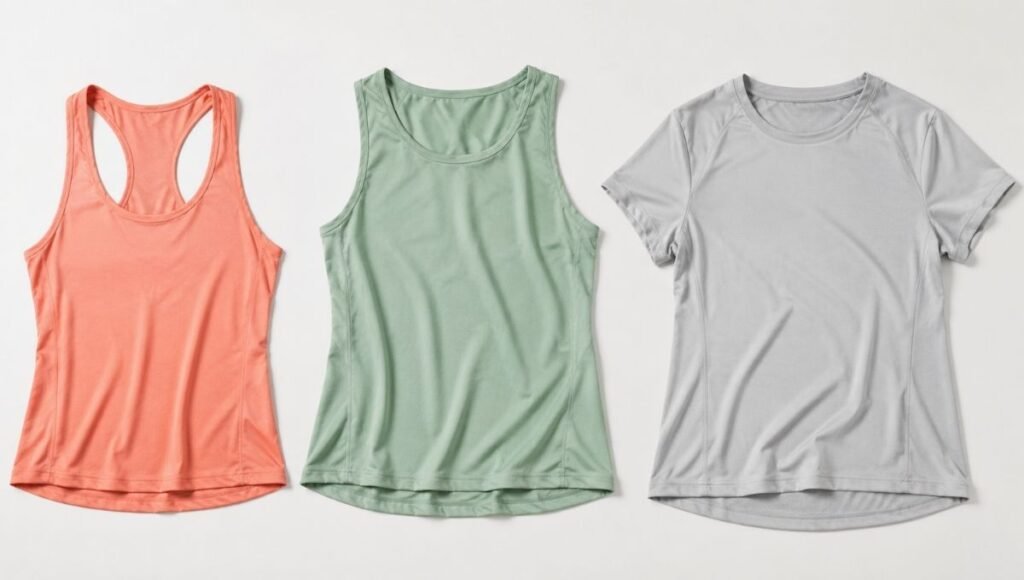
Running Singlets
A singlet is a sleeveless top with minimal shoulder coverage — narrow straps, open armholes, maximum ventilation. It’s what you see on competitive runners at races because the design prioritizes airflow and minimal fabric contact over coverage or modesty.
Choose a singlet when:
- Racing in warm to hot conditions where every degree of ventilation matters
- Running at high intensity where heat dissipation is the primary concern
- You don’t need to carry a hydration vest (singlet straps and vest straps conflict)
- Temperature is above 65°F and you run hot
The limitation: Singlets expose more skin to sun, provide no protection at the shoulders, and don’t work well under hydration vests where the vest’s shoulder straps contact exposed skin directly.
Running Tank Tops
A tank top provides more coverage than a singlet — wider straps, more fabric across the shoulders — while still leaving arms fully free and providing significantly more ventilation than a short sleeve.
Choose a running tank when:
- Training in warm weather (55–75°F) where you want good ventilation but not maximum exposure
- You want some shoulder coverage without sleeve restriction
- Running under a hydration vest on shorter efforts (wider straps provide a buffer against vest contact)
- You want the option to layer a lightweight arm warmer when conditions are borderline
The tank is the most versatile warm-weather running top for most training runs.
Running Short Sleeves
A short sleeve adds arm coverage, more sun protection, and additional warmth over a tank or singlet. The difference in actual temperature between a tank and a short sleeve is smaller than most runners expect — it’s the sun protection and coverage that differentiates them more than thermal performance.
Choose a short sleeve when:
- Temperature is below 60°F and you want a single layer without a jacket
- You’re running in direct sun for extended periods and want UPF protection beyond your face
- Running under a hydration vest for long distances where any exposed skin under straps will eventually chafe
- You want a top that works for both running and casual post-run use
The Flatlock Seam: Why Construction Details Matter More Than Brand
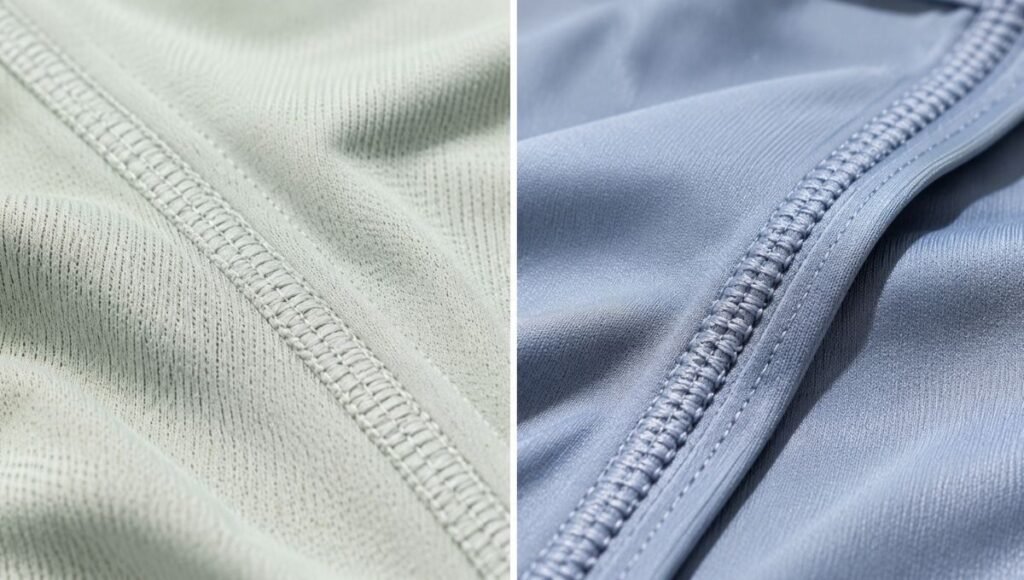
This is the technical detail that separates a running-specific shirt from a generic athletic top — and it’s rarely explained clearly enough for buyers to know what to look for.
A standard sewn seam joins two pieces of fabric by overlapping them and stitching through the overlap. The result is a raised ridge on the interior of the garment. On a T-shirt, this is inconsequential. On a running top worn for 10 miles at sustained effort, that raised ridge contacts the same square centimeter of skin thousands of times through your arm swing cycle. The result is a friction abrasion — that specific welt along the arm or shoulder that shows up after long runs.
A flatlock seam joins fabric edges side by side rather than overlapping them, then stitches through both simultaneously. The result is a seam that sits flush against the skin with no raised edge. The mechanical cause of the friction is eliminated at the construction level.
When you’re evaluating running tops, look specifically for “flatlock seams” or “bonded seams” (an alternative that uses heat-bonded tape rather than stitching) in the product description. Check the underarm area specifically — this is where seam chafing is most common during running arm drive. Running your thumb along the interior underarm seam of any shirt tells you immediately whether it’s a flatlock or standard construction.
The Underarm Gusset: The Other Detail Most Runners Miss
Some running shirts include an underarm gusset — a small diamond or triangular piece of fabric added at the armhole where the sleeve meets the body. This construction detail allows the arm to move forward and back without pulling fabric across the chest or restricting the shoulder, which matters during running arm drive.
Shirts without underarm gussets can feel slightly restrictive at higher running speeds or longer distances, pulling the front of the shirt sideways with each arm stroke. You may not notice it on an easy 4-miler; you’ll notice it at mile 18 of a marathon.
Not all running tops include this feature, and many runners never need it — it depends on your range of arm motion during stride. But if you’ve experienced running tops that feel constricting across the chest during faster running, the underarm gusset is likely the solution.
Running Shirts for Hydration Vest Use
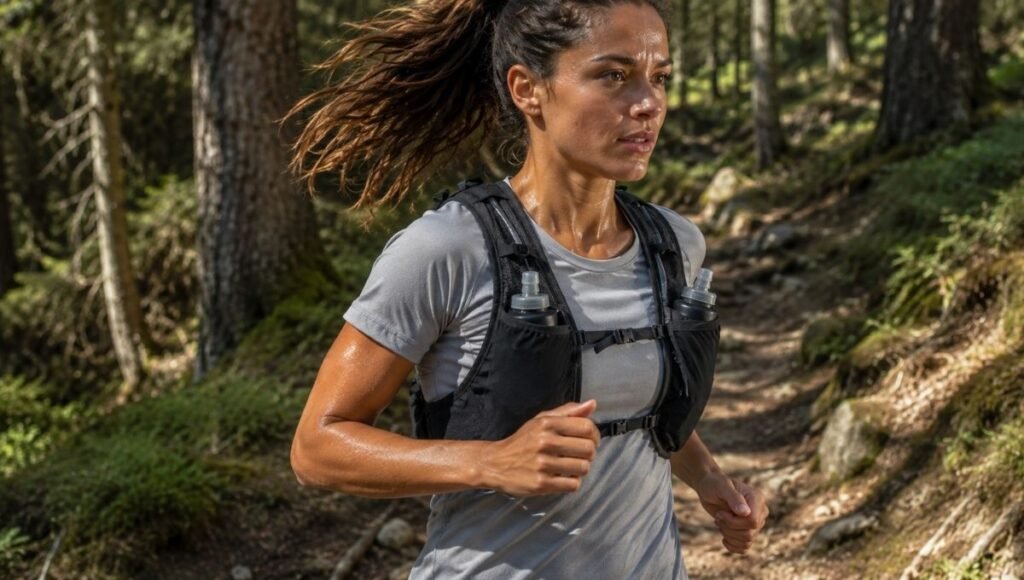
This is the use case most running top guides don’t address specifically, and it’s a genuine consideration for trail runners and anyone doing long runs with a vest.
The contact points between a hydration vest and your body are at the shoulders, collarbone, and chest straps. If your running top has thin straps or minimal shoulder coverage in these areas, sustained vest contact creates friction in the same way any other seam does — just at the vest’s edges rather than the shirt’s.
For vest running specifically:
- Choose a short sleeve or a tank with wide shoulders and enough fabric coverage to buffer the vest’s contact zones
- Avoid singlets — the thin straps provide almost no protection against vest edge contact
- Look for smooth, seamless construction at the shoulders and collarbone specifically
- Apply anti-chafe balm along the vest’s primary contact lines before runs over 90 minutes regardless of top choice
The Oiselle Rogas Tank and rabbit EZ Tee short sleeve both specifically get positive reviews from trail runners for vest compatibility — wider shoulder coverage without adding sleeve bulk.
The Best Running Shirts for Women in 2026

Best Overall: Brooks Distance Short Sleeve
The Brooks Distance earns its consistent recommendation through a combination that sounds basic but is surprisingly rare to execute: it fits the way running clothing should fit — not too tight, not so loose it flaps — and the fabric manages moisture well enough across a range of conditions to function as the everyday training shirt for most weather.
The flatlock seams eliminate underarm friction. The polyester-spandex blend wicks efficiently and dries in under an hour. The cut covers the waistband of tights without riding up during stride. Available in multiple colors with understated design that doesn’t look exclusively athletic off the run.
Best for: Year-round short-sleeve training, everyday training runs, runners who want one reliable option that works in most conditions.
Editor’s note: This is the shirt we’d hand to any runner who asked for a starting point. No flashy claims. Just consistent execution.
Best Running Tank: Oiselle Rogas Tank
The Rogas Tank is specifically engineered for running rather than adapted from a general athletic tank — the difference shows in the details. Wide shoulders provide coverage without sleeve restriction, the flatlock seaming throughout eliminates contact points, and the body length is calculated to stay tucked through full running stride without requiring constant readjustment.
Particularly worth noting for vest runners: the wider shoulder construction provides meaningful coverage at vest strap contact points, reducing the friction that thin-strap tanks create under pack pressure.
Best for: Warm-weather training runs, trail runners using hydration vests, runners who want a tank that functions across training and racing.
Best Running Singlet: rabbit EZ Singlet
The rabbit EZ Singlet earns consistent top-tier placement in running top guides for its combination of genuine lightness (under 3 ounces) and a fabric that manages heat and moisture better than most fabrics at equivalent weight. The UPF 50 rating adds sun protection without adding warmth — a specific achievement in lightweight running fabric.
The open-back construction maximizes airflow. The minimal seaming reduces contact points. This is a hot-weather and race-day singlet first, an everyday trainer second — it does the first job better than almost anything in the category.
Best for: Racing in warm to hot conditions, summer speed work, runners who prioritize maximum airflow above coverage.
Best for Sun Protection: Janji Sunchaser 50 Short Sleeve
The Sunchaser 50 leads with its UPF 50 rating — meaning it blocks 98% of UV radiation — in a fabric weight that feels genuinely appropriate for running rather than hiking. The Tencel lyocell and merino wool blend provides temperature regulation that pure synthetic fabrics can’t match across the light-to-heavy effort range.
The fabric drapes rather than compresses, which keeps it comfortable across a wider range of body shapes than form-fitted running shirts. The cut is longer than most running tops, providing coverage that some runners appreciate and others find unnecessary — worth noting for runners with shorter torsos.
Best for: Summer long runs in direct sun, trail running at altitude where UV exposure is increased, runners who want to reduce sunscreen application on arms and torso.
Best Budget Option: Brooks Dash Short Sleeve
At half the price of premium options, the Brooks Dash covers the functional essentials: moisture-wicking polyester, flatlock seams, fitted cut that moves with stride rather than against it. The construction isn’t as refined as the Distance, but for shorter training runs and runners building their wardrobe, the performance gap is minimal.
Best for: Budget-conscious runners, beginners building their kit, backup tops for rotation, gym and treadmill use where conditions are more controlled.
Best Merino Option: Icebreaker 125 Cool-Lite Sphere Short Sleeve
Merino wool running shirts earn their place in cold-weather running and multi-day events where odor management matters more than maximum performance. The Icebreaker 125 Cool-Lite uses a merino-synthetic blend that provides merino’s natural odor resistance with better moisture management and durability than pure merino.
The 125 weight is the lightest in the Icebreaker running line — appropriate for cool conditions and easy efforts, not hot-weather running where the fabric manages moisture more slowly than pure synthetic.
Best for: Fall and cool-weather running, multi-day trail events, runners who want to go multiple runs between washes, anyone dealing with persistent synthetic shirt odor issues.
Running Shirt Fit: What “Fitted” Actually Means
Fit terminology is inconsistent across running brands — one brand’s “fitted” is another’s “relaxed” — and getting this wrong in either direction affects both comfort and function.
Too tight: Fabric that compresses the torso restricts breathing depth during sustained effort. It’s subtle at easy pace and noticeable at tempo. Any running shirt that feels constrictive across the chest when you take a full breath is too tight for running.
Too loose: Fabric that billows during stride catches wind and creates unnecessary drag. On downhills and in crosswinds, loose fabric flapping against the body is distracting. Fabric that bunches under a hydration vest creates additional contact points.
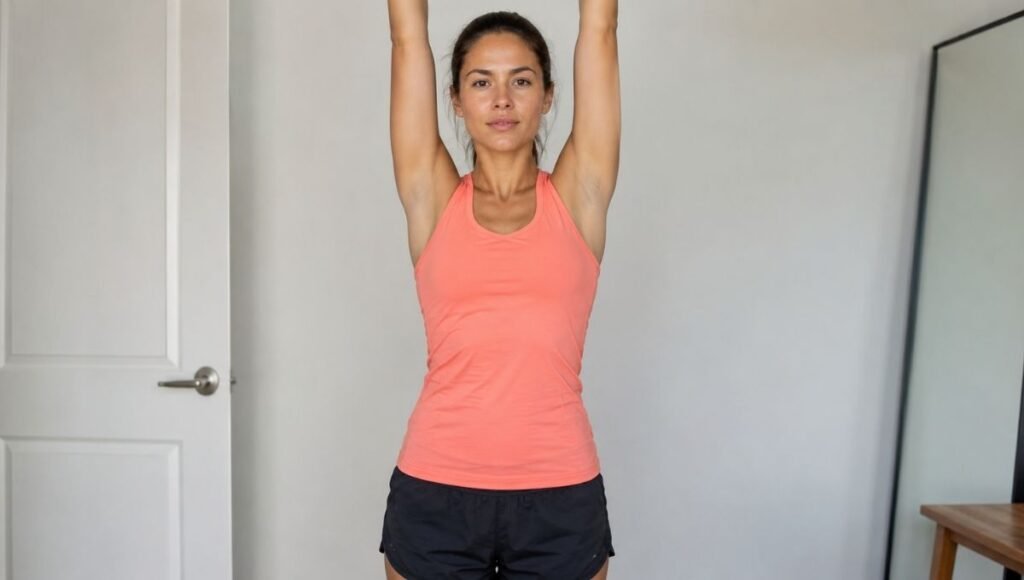
Right fit: The shirt should move with your body during arm drive without pulling across the chest or billowing significantly. Hold the hem and raise both arms overhead — if the shirt stays approximately in position, the length and body cut are appropriate for running. If it rides up significantly, you’ll be managing it throughout every run.
How to Stop Your Running Shirts from Smelling
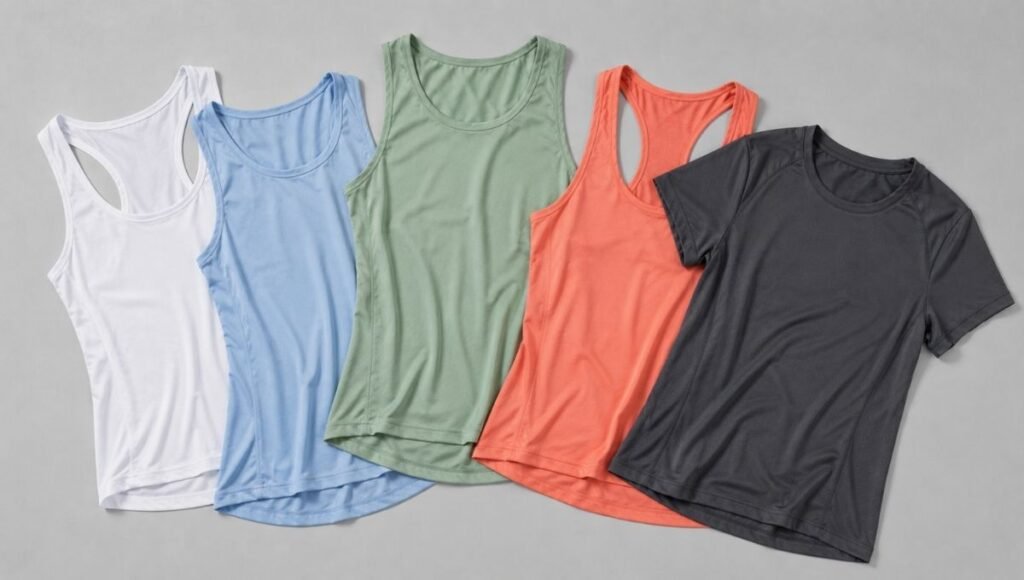
Synthetic running shirts are particularly susceptible to developing persistent odors that washing doesn’t fully address — the polyester fibers harbor bacteria that standard detergent doesn’t completely remove.
The maintenance approach that actually works: turn shirts inside out before washing (the inner surface accumulates the most bacteria), use cold water rather than warm (hot water can set odors into synthetic fibers), avoid fabric softener (the coating blocks moisture-wicking fibers and traps odor-causing compounds), and air dry rather than machine dry.
For shirts that have developed a persistent smell: soak in a diluted white vinegar solution (1 part vinegar to 4 parts cold water) for 30 minutes before washing. This breaks down the odor-causing compounds that standard detergent leaves behind. Sport-specific detergents (Nikwax Tech Wash, Sport Suds) are formulated to address this specifically and maintain technical fabric performance better than standard detergent over repeated washes.
Running shirts with antimicrobial treatments (silver-based, Polygiene, or similar) extend the interval between washes and resist the persistent odor problem better than untreated synthetics. The treatment degrades over 30-50 washes, so it’s a feature that extends but doesn’t eliminate the maintenance requirement.
FAQ: What Runners Ask About Running Shirts
What is the best fabric for a running shirt? Polyester or nylon-spandex blends provide the fastest moisture wicking and quickest drying for most running conditions. Merino wool or merino-synthetic blends wick more slowly but regulate temperature better across wider conditions and resist odor naturally. For warm-weather running at moderate to high intensity, synthetic blends perform better. For cool-weather running, multi-day events, or variable conditions, merino or merino blends earn their place.
What’s the difference between a running singlet and a tank top? A singlet has minimal shoulder coverage — narrow straps, open armholes — optimized for maximum ventilation and minimum weight. A tank top has wider straps and more shoulder coverage, providing a buffer at vest contact points and more sun protection at the shoulders. Singlets are better for racing and maximum-heat conditions; tanks are more versatile for general training.
Do running shirts need flatlock seams? Yes, for runs over 60 minutes — especially if you have any tendency to chafe at the underarm or shoulder. Flatlock seams sit flush against the skin with no raised edge; standard seams create a ridge that becomes a friction point over thousands of arm-swing repetitions. Running your thumb along the interior underarm seam tells you immediately which construction you have.
How often should I replace running shirts? Running shirts maintain their technical performance for roughly 6-12 months of regular use with proper washing care. Signs it’s time to replace: the fabric has pilled significantly, the moisture-wicking performance has degraded (the shirt stays wet and heavy rather than drying quickly during the run), or the flatlock seams have started to fray and create friction points.
Can I run in a regular athletic shirt? For short easy runs: yes. For longer distances or higher effort: the construction differences show up in ways that matter — standard seams chafe, non-wicking fabric stays wet and heavy, and non-running-specific fit patterns restrict movement or ride up during stride. Running-specific construction earns its place at higher mileage.
The Bottom Line
The best running shirts for women are the ones built specifically for running movement — flatlock seams, moisture-wicking fabric, a fit that moves with stride rather than against it, and construction appropriate for the conditions you actually run in.
For most runners, a Brooks Distance short sleeve for everyday training and an Oiselle Rogas Tank for warm-weather and vest running covers the full range. Add a rabbit EZ Singlet for racing and hot-weather speed work if you want the minimal-fabric option. That three-piece collection handles everything from early spring to late summer without redundancy.
The shirt matters less than the sports bra, less than the tights, and less than the socks for most runners. But the difference between a running shirt that works and one that chafes at mile 6 is measurable — in comfort, in focus, and in whether you’re thinking about your kit or your run.
For the complete running apparel picture, check out our best running clothes for women guide — and our moisture wicking running clothes guide for a deeper explanation of why fabric choice affects how your shirt actually performs.
References:
- iRunFar Gear Team. (2026). Best Running Tank Tops for Women. iRunFar.com.
- Outside Online Gear Team. (2026). Best Women’s Running Shirts and Tank Tops. OutsideOnline.com.
- Laing, R.M., et al. (2020). Textile and clothing comfort in sport: A review of current knowledge. Sports Medicine.
- American Academy of Dermatology Association. (2024). Sun Protection for Outdoor Athletes. AAD Patient Education.