
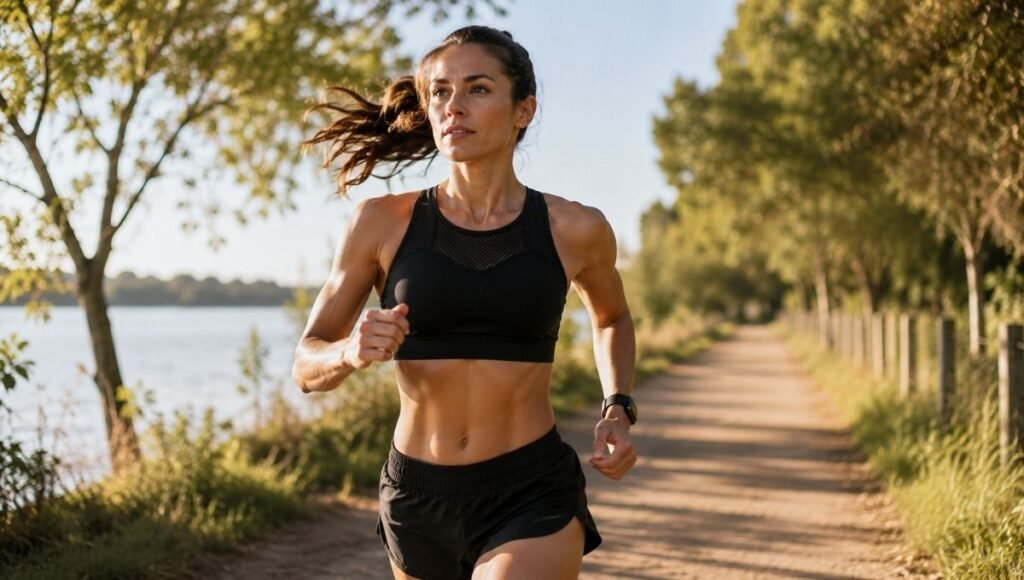
There’s a specific moment when you realize your sports bra isn’t working: somewhere around mile 4, when the bounce starts, or mile 6 when the underwire edge begins pressing into your ribs, or — worst of all — the finish line photo where you realize you’ve been running with your hand pressed to your chest for the last three miles without noticing. You thought you were just tired. You were managing your bra.
A running sports bra that works should be invisible. You put it on, you run, you finish, you take it off. You don’t think about it during the run. That sounds basic. For a lot of women runners — especially those above a C cup — it takes three or four expensive mistakes to find a bra that actually delivers on this.
The problem isn’t that good running sports bras don’t exist. It’s that most sports bra marketing uses “high impact” as a generic label without explaining what the construction actually does. And the two fundamentally different approaches to bra support — compression and encapsulation — are rarely explained clearly enough for a runner to make an informed decision before buying.
This guide explains the difference, tells you how to test whether a bra is right for your body before committing to it for a long run, and gives you honest picks across every cup size and budget.
Key Takeaways
- Compression and encapsulation are fundamentally different support mechanisms — compression works well for A-C cups; encapsulation (with or without underwire) is more effective for D+ cups where compression alone flattens but doesn’t control movement
- The jump test is the fastest way to screen a sports bra — 20 jumping jacks in the fitting room tells you more than any product description; if there’s more than minimal movement, it’s wrong for running
- Band fit is more important than cup size for support — 80% of a bra’s support comes from the band; if the band rides up, all support is lost regardless of how well the cups fit
- Running-specific chafing points are different from regular bra chafing — the underarm seam and center front gore are the most common problem areas during sustained running stride
- For D+ cup runners, Panache Sport, Freya Active, Enell, and Brooks are the brands most consistently recommended by runners with larger busts — standard athletic brands rarely build adequate structure for above a D cup
Compression vs Encapsulation: The Decision Nobody Explains Clearly
This is the foundational choice in running sports bra selection, and it determines everything else.
Compression Sports Bras
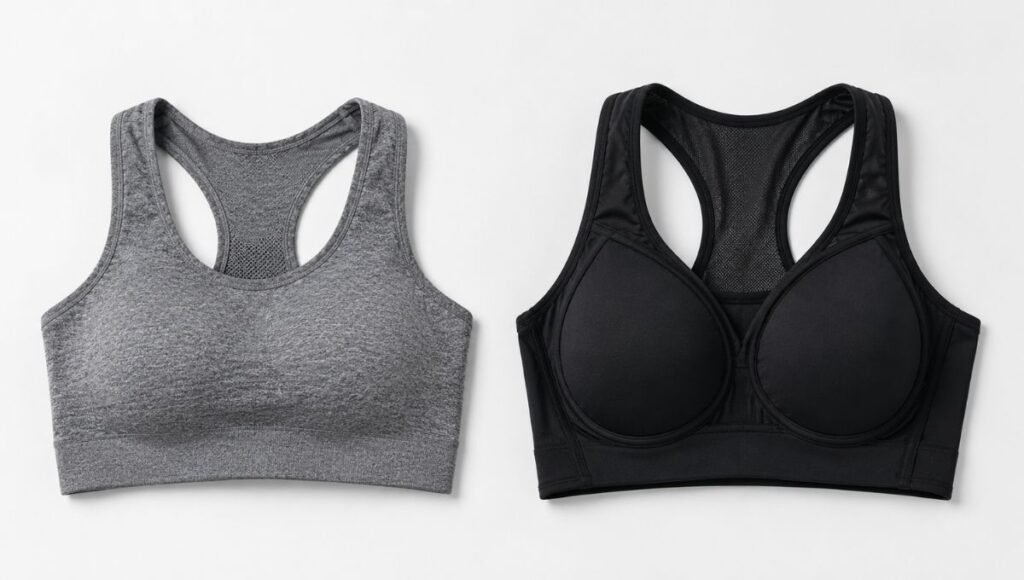
A compression bra works by pressing both breasts flat against the chest — reducing movement by limiting the space they have to move in. The construction is typically a single fabric layer pulled over the head (or zipped at the front), with no separate cups. Everything is held in position by pressure.
Compression works well when the cup size is A through C, where the volume of tissue being compressed is manageable and the fabric can generate enough pressure to control movement without becoming uncomfortably tight. At these cup sizes, a well-fitted compression bra provides good support for high-impact running.
Compression doesn’t work well when the cup size is D and above. At larger cup volumes, the compression force required to control movement becomes either uncomfortably constricting or insufficient. Many runners describe the result as “flattering but bouncy” — the bra looks and feels fine standing still but fails to control movement at running pace.
Encapsulation Sports Bras
An encapsulation bra has separate, defined cups — like a conventional bra — that individually contain each breast. Movement is controlled by the cup structure holding each breast in position rather than by external pressure. Many encapsulation sports bras also include underwire for additional structural support.
Encapsulation works well for C cup and above. The separate cup construction controls movement independently for each side, which becomes increasingly important as cup volume increases. For D+ cup runners, encapsulation typically provides meaningfully better movement control than compression at equivalent or lower external pressure — meaning more support with less squishing.
The practical guide: A-B cup runners can choose based on comfort preference. C cup runners are at the decision point — try both and see which provides better movement control. D cup and above: prioritize encapsulation-construction bras specifically, not just any bra labeled “high impact.”
The Jump Test: How to Screen a Sports Bra in 5 Minutes
This is the most useful thing you can do before committing to any running sports bra, and almost nobody does it in the fitting room.
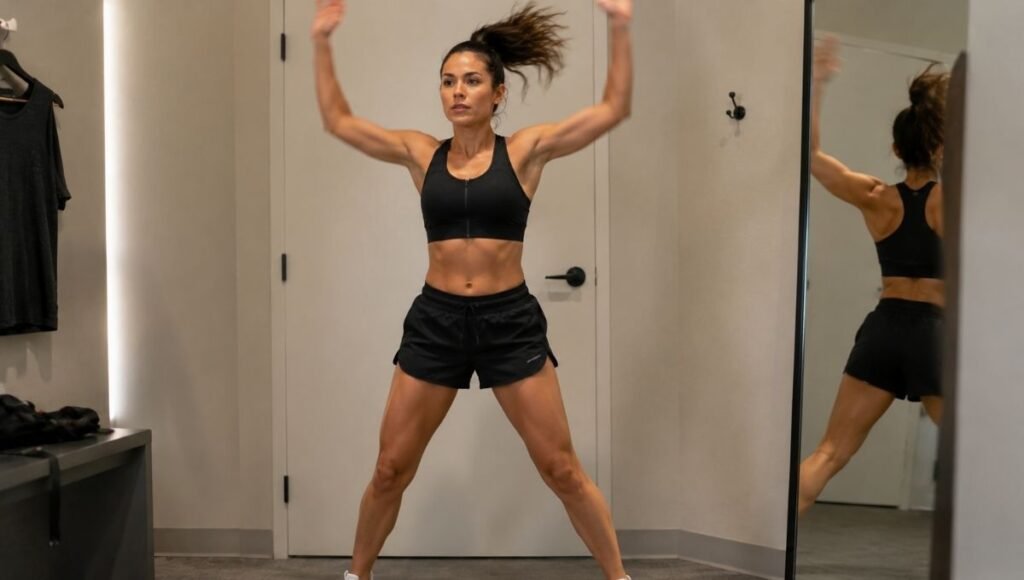
Put the bra on. Adjust the straps. Then do 20 jumping jacks at a pace that approximates your running effort.
What you’re looking for: breast movement should be minimal — the bra should feel like it’s working, not like the breast tissue is moving freely inside a container. The band should stay horizontal at the back — if it rides up, the band is too large or the bra is wrong for your body. The straps should stay put without digging. No sharp pressure points from underwire or seams — anything uncomfortable for 20 jumping jacks becomes a serious problem over 2 hours of running.
If the bra passes this test, it’s a candidate. If it fails — regardless of how comfortable it is while standing still — don’t buy it for running.
How to Size a Running Sports Bra Correctly
Most women are wearing the wrong bra size — a well-documented phenomenon that extends into sports bras and meaningfully affects support performance.
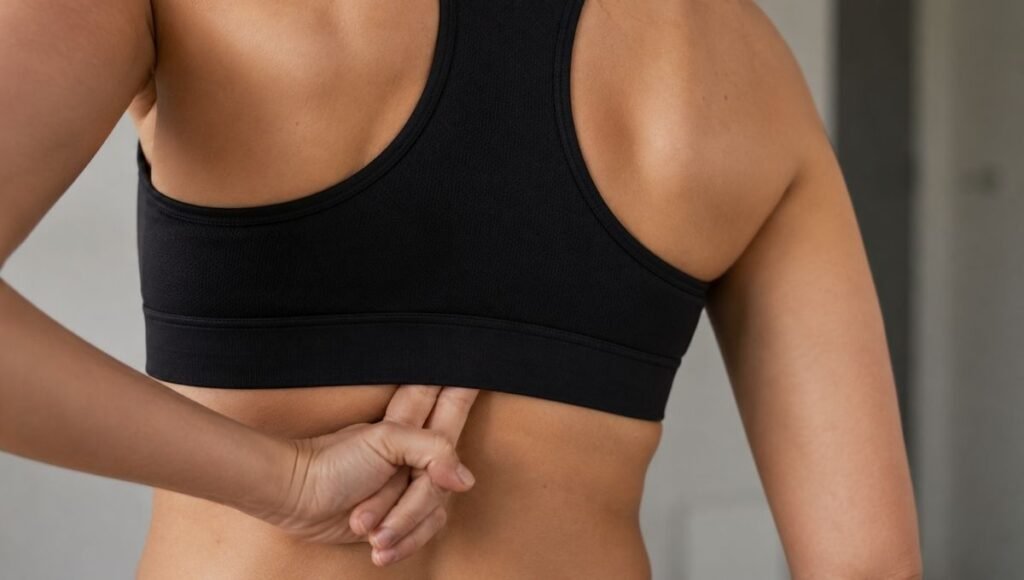
The band is the most critical element. When you try on a sports bra, the band should sit level all the way around — parallel to the floor at both front and back. If the back rides up toward your shoulder blades, the band is too large. A band that rides up transfers the support load to the straps, which aren’t designed to carry it — straps dig into shoulders, support collapses, and bounce happens even in a technically supportive bra.
Test the band: once the bra is on, try to slide two fingers under the back band. If you can fit more than two fingers comfortably, the band is too loose. If you can barely fit one, it’s too tight. The right range is snug enough that lifting your arms overhead doesn’t cause the band to shift significantly.
For sports bras specifically: many sports bras run tight in the band relative to standard bra sizing, because the band needs to provide more support during movement. Going up a band size and down a cup size is common — try multiple sizes rather than assuming your standard bra size transfers directly.
The Best Sports Bra for Running in 2026
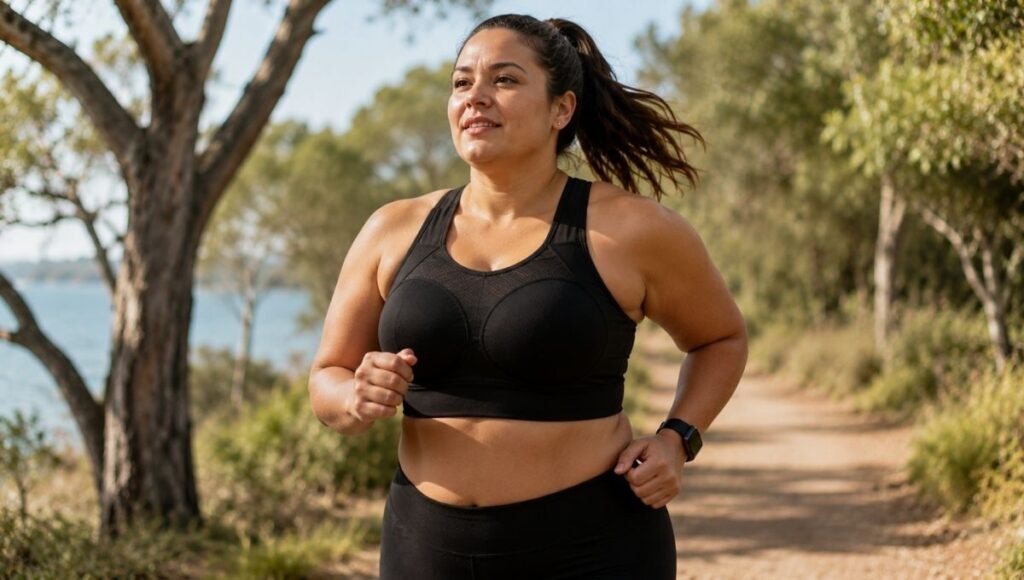
Best Overall (A-C Cup): Lululemon Free to Be Bra Wild
The Free to Be earns consistent strong reviews for the A through C cup range through a combination of comfort and function that most compression-style running bras don’t achieve simultaneously. The T-back construction provides a clean line across the shoulder blades that allows full arm swing without strap interference. The fabric sits flat at the underarm seam — the specific point where most running sports bras create chafing during sustained arm drive.
Light support rather than high compression makes this feel comfortable for longer efforts without the squeeze-all-day fatigue that higher-compression options create. The trade-off: for runners above a C cup, this light compression doesn’t provide sufficient movement control for high-pace running.
Best for: A-C cup runners, daily training runs, long runs at comfortable effort, runners who prioritize all-day comfort over maximum compression.
Best High-Impact (A-C Cup): Nike Swoosh Medium-Support Sports Bra
The Swoosh occupies the middle territory between light support and full compression — more structured than the Lululemon Free to Be, less aggressive than maximum compression options. The result works well for C cup runners at higher effort levels where the Free to Be starts to feel insufficient.
Dri-FIT fabric manages moisture effectively through long training runs. The racerback design keeps straps clear of the shoulder zone. Multiple color options, widely available, and consistently true to size.
Best for: B-C cup runners at moderate to high running effort, tempo runs and races, runners who need more support than light compression but find maximum compression uncomfortable.
Best for D+ Cup Runners: Panache Sport Wired Sports Bra
Panache is the name that appears most consistently when D+ cup runners in running communities talk about sports bras that actually work. The underwired encapsulation construction provides support through cup structure rather than external pressure — each breast is individually contained and positioned, which controls vertical movement in a way that compression cannot replicate at larger volumes.
The wide, padded shoulder straps distribute weight evenly without digging. The underwire extends high on the sides and across the center gore, providing lateral support that prevents the outward movement that contributes to bounce. The hook-and-eye back closure allows precise band adjustment.
Panache sizes in standard UK bra sizing (32-40 band, A-J cup). Getting properly measured before ordering is worth the effort — the difference in support between the right and wrong size is significant.
Best for: D-J cup runners, high-impact running at any distance, runners who have tried multiple compression sports bras without adequate support, marathon and trail runners who need sustained support over long efforts.
Editor’s note: Panache Sport is genuinely in a different category for D+ cup runners. The price is real. So is the support difference.
Best Encapsulation Without Underwire: Brooks Dare Crossback Bra
For D+ cup runners who find underwire uncomfortable, the Brooks Dare Crossback provides encapsulation-style support through molded cups without structural underwire. The crossback strap design distributes load across more of the upper back, reducing the shoulder pressure that straight-strap bras create at larger cup sizes.
The cups provide enough structure to control movement independently at D and DD cup sizes. For E cup and above, the underwired Panache typically provides meaningfully better support — at some cup volumes, the structure that underwire provides becomes important for movement control.
Best for: D-DD cup runners who find underwire uncomfortable, trail running where flexibility matters, runners transitioning from compression to encapsulation.
Best for Large Bust Running: Enell High Impact Sports Bra
The Enell is an outlier in design — front-closure, full coverage, maximum compression and encapsulation simultaneously. It’s not the most elegant option. It is, for many runners with very large busts (DD and above), the first sports bra that actually made sustained running comfortable. The front hook-and-eye closure system allows precise fit adjustment across the full chest circumference, and the wide non-elastic straps eliminate the pressure-point problem that almost all other sports bras create at larger cup sizes.
Runner’s World has included Enell in their sports bra guides for over a decade specifically because it solves a problem other bras don’t address. Worth knowing about.
Best for: DD+ cup runners, runners who have found every other sports bra insufficient, marathon training, trail running in all conditions.
Best Budget Option: Champion Women’s Spot Comfort Full-Support Sports Bra
At a fraction of premium pricing, the Champion Spot Comfort delivers honest support for A-C cup runners through a simple underwire encapsulation construction. The convertible straps allow straight-back or racerback positioning. The moisture-wicking fabric is appropriate for training runs. Consistent sizing and wide availability make it easy to exchange if the first size doesn’t fit correctly.
The support level is appropriate for training runs at moderate effort. For hard tempo runs or racing, C cup runners may find they want more control — which is where the premium compression options earn their price.
Best for: A-B cup runners, budget-conscious runners building their wardrobe, beginners trying the category for the first time.
Running Sports Bra Chafing: Where It Happens and Why
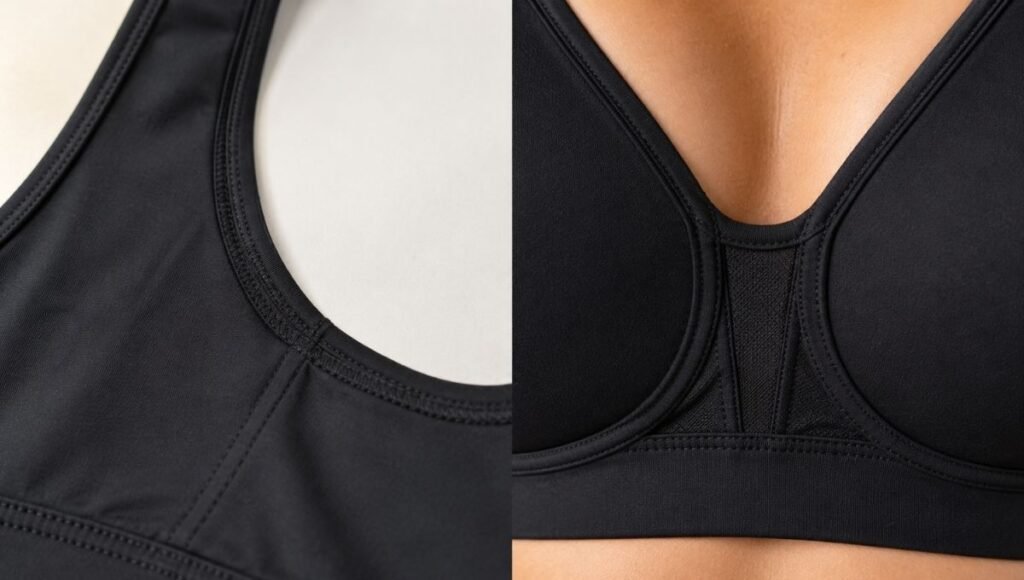
Running sports bra chafing follows predictable patterns. The underarm seam where bra fabric meets your underarm experiences sustained friction from arm swing — flat or bonded seams eliminate this; raised seams compound it. The center front gore contacts the sternum during forward arm drive, and in poorly fitted bras where the gore doesn’t lay flat against the chest, this creates friction at the center chest that shows up around mile 8. The bottom band edge on the sides can create chafe if the band is too tight, too loose, or made from fabric with rough edges.
Prevention: anti-chafe balm applied along all three zones before any run over 60 minutes. Test new bras on shorter training runs before committing them to long efforts. Wash and fully dry bras between runs — damp fabric chafes more aggressively than dry.
How to Wash Running Sports Bras Without Destroying Them
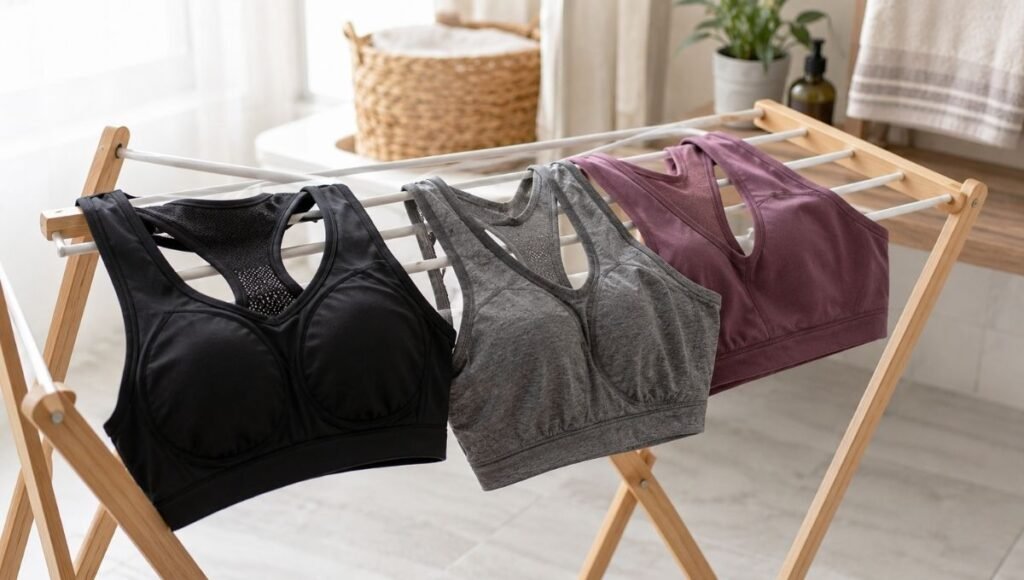
Never machine dry. Heat breaks down the elastic in bands and straps, warps underwire cups, and accelerates the breakdown of moisture-wicking treatments. Air dry every time, every bra.
Wash on delicate or by hand. Aggressive machine washing cycles stress seams, elastic, and underwire. Skip fabric softener — it coats fibers and blocks moisture-wicking capability.
Rotate at least 2-3 bras. Running bras need 24-48 hours to fully restore their elastic recovery between uses. Running in a bra that hasn’t fully recovered reduces support performance. Rotation extends individual bra life and ensures consistent support on every run.
FAQ: What Runners Ask About Running Sports Bras
What is the best sports bra for running with large breasts? For D cup and above, encapsulation-style sports bras with underwire provide meaningfully better support than compression options. Panache Sport Wired, Enell High Impact, and Freya Active are the brands most consistently recommended by runners with larger cup sizes. Standard athletic brands like Nike and Lululemon rarely build adequate support structure above a D cup.
How do I know if my sports bra is the right size for running? The band should sit level and horizontal at front and back — if the back rides up, the band is too large. Do 20 jumping jacks after putting it on: if breast movement is more than minimal, or if anything digs, slips, or shifts, the fit is wrong for running. The jump test tells you more than any size chart.
Is underwire ok for running? Yes, for many runners — particularly D cup and above where underwire provides structural support that’s difficult to replicate without it. Underwire in a properly fitted bra should sit flat against the ribcage without pressing anywhere. Underwire that digs or sits away from the chest is incorrectly sized, not inherently problematic.
How often should I replace my running sports bra? Most running sports bras maintain full support performance for 6-12 months of regular use with proper care. Signs it’s time to replace: the band no longer stays in position during runs, the straps stretch out even at their shortest adjustment, or the cups have lost their structure.
Can I wear a regular sports bra for running? For A-B cup runners doing short distances, a well-fitted regular sports bra may provide sufficient support. For longer distances, C cup and above, or higher pace efforts, running-specific construction — with moisture management, chafe-resistant seams, and appropriate support for sustained impact — makes a measurable difference in comfort over the full run.
The Bottom Line
The best sports bra for running is the one that stays put, controls movement for your specific cup size, and disappears from your awareness by mile 2. For A-C cup runners, a quality compression or light encapsulation bra handles most running situations. For D cup and above, encapsulation — ideally with underwire — is the construction that actually controls movement rather than just compressing everything flat.
Test with jumping jacks before you commit. Get the band size right before anything else. Rotate at least two or three bras so they can recover between runs.
The investment in the right running bra pays back on every single run.
For the rest of your running kit, our best running clothes for women guide covers every category from tights to jackets — and our plus size running clothes guide goes deeper on the specific fit challenges and brand recommendations for curvy runners.
References:
- McGhee, D.E., & Steele, J.R. (2010). Breast biomechanics: What do we really know? Physician and Sportsmedicine.
- White, J.L., et al. (2009). The effect of breast support on kinematic, kinetic and muscle activity variables during walking. Journal of Sports Sciences.
- Runner’s World Gear Team. (2026). Best Sports Bras for Running. Runner’s World.
- American College of Sports Medicine. (2023). Exercise and Breast Health: Sports Bra Recommendations. ACSM’s Health & Fitness Journal.