
You bought the shirt because it said “moisture wicking” on the label. You wore it on a warm 6-mile run. By mile 3, it was soaked through and clinging to your back. By mile 5, it had started to feel cold. You finished the run damp, slightly chilled, and wondering what “moisture wicking” actually means when a $15 polyester shirt from a sporting goods store and a $70 technical running shirt both claim to do the same thing.
Here’s the honest answer: they don’t. Moisture wicking is a real technology with a real mechanism, and the difference between a shirt that actually does it well and one that just uses the term in its marketing is measurable — in comfort, in performance, and in how you feel at mile 8 of a long run when your shirt is either working for you or against you.
This guide explains the actual science behind moisture wicking running clothes, breaks down what terms like “Dri-FIT,” “quick-dry,” and “moisture management” actually mean versus what marketing copy implies, and gives you a framework for choosing the right fabric for your specific running situation.
Key Takeaways
- Moisture wicking works through capillary action, not absorption — the fabric moves sweat away from your skin to the outer surface where it evaporates; cotton absorbs and holds moisture, which is why it fails for running
- Polyester and nylon wick fastest and dry quickest — the best choice for high-intensity and warm-weather running; merino wool wicks more slowly but regulates temperature better and resists odor
- “Dri-FIT,” “Climalite,” and similar brand names are all moisture-wicking technology — different names, same mechanism, different execution quality
- Fabric softener destroys moisture-wicking properties — it coats the fibers and blocks the capillary channels; one wash with fabric softener can permanently reduce a shirt’s wicking ability
- At least 60% synthetic content is the practical threshold for meaningful moisture management in running clothes
Why Cotton Fails for Running (The Physics Explanation)
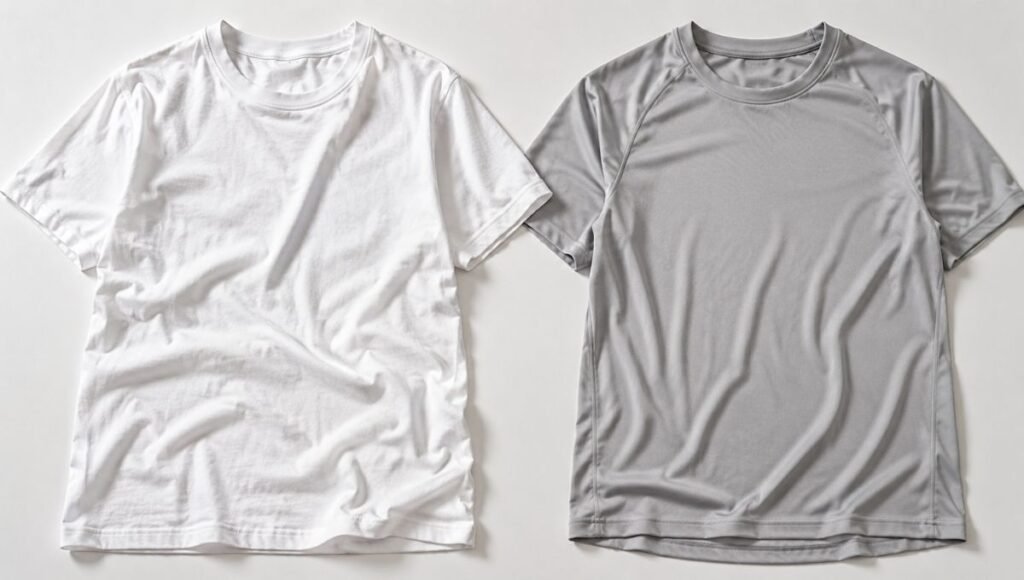
Before understanding what moisture wicking does, it helps to understand exactly why cotton fails — and “cotton absorbs sweat” doesn’t capture the full problem.
Cotton fiber is hydrophilic, meaning its molecular structure attracts and bonds with water molecules. When you sweat in a cotton shirt, the fibers absorb moisture and swell slightly, saturating from the inside out. At low sweat rates, this isn’t catastrophic. At running sweat rates — which can reach 1–2 liters per hour during moderate exercise in warm conditions — a cotton shirt can absorb and hold a significant amount of moisture against your skin.
The specific problem: wet cotton against skin creates a cold, heavy mass that doesn’t evaporate effectively because the moisture is trapped within the fiber structure rather than on the surface. When your pace slows, you stop, or a breeze hits, that saturated cotton accelerates heat loss from your body through evaporative cooling — except the cooling is happening at the wrong time and the wrong rate. You get colder faster than you should, the shirt gets heavier, and the friction from heavy wet fabric against moving skin increases chafing risk.
This is why experienced runners talk about cotton as a running fabric failure in such absolute terms. It’s not a mild inconvenience. On a warm long run, a saturated cotton shirt becomes a genuine comfort and thermoregulation problem.
How Moisture Wicking Actually Works
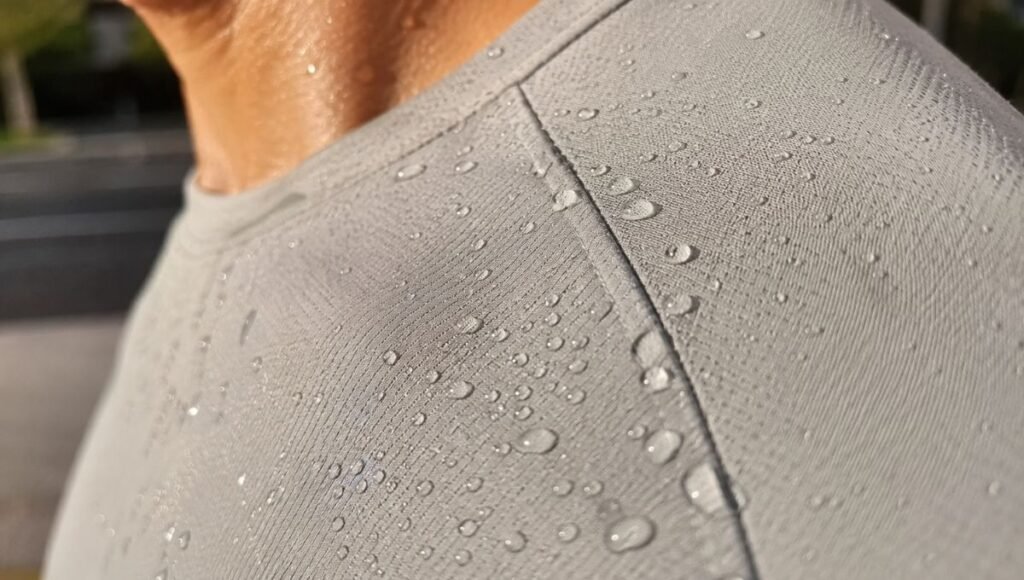
Moisture wicking fabric moves sweat from your skin to the outer surface of the fabric through capillary action — the same physical mechanism that causes water to travel up a paper towel. The key is that the moisture travels through the fabric without being absorbed into it, which keeps the fabric lighter, allows the moisture to evaporate from the outer surface quickly, and keeps your skin drier throughout the process.
The engineering that makes this work involves two elements:
Fiber structure: Synthetic fibers like polyester and nylon are hydrophobic at the molecular level — they repel water rather than bonding with it. When moisture contacts the fiber, it moves along the fiber’s surface rather than being absorbed into it. Fiber cross-sections are often engineered with channels and grooves that increase surface area and accelerate this movement.
Fabric construction: The weave or knit structure creates pathways that guide moisture from the inner surface (against skin) to the outer surface (against air). Tighter construction at the skin-facing side and looser construction at the outer surface creates a pressure gradient that pulls moisture outward.
The result: sweat moves from your skin to the fabric surface in seconds, where it spreads across a wider surface area and evaporates. Your skin stays drier, the fabric stays lighter, and you stay more comfortable across a wider range of effort levels and temperatures.
Moisture Wicking vs Dri-FIT vs Quick-Dry: The Terminology Breakdown
This is where most runners get confused, because the sporting goods industry uses multiple terms for variations on the same underlying technology.
Moisture Wicking is the generic term for the functional property — fabric that moves moisture away from skin. Any brand can use this term for any fabric that performs this function to any degree. It describes the mechanism, not the quality of execution.
Dri-FIT is Nike’s proprietary name for their moisture-wicking polyester technology. It’s moisture wicking — the term describes Nike’s version of the same technology, with their specific fiber engineering and fabric construction. Climalite (Adidas), Dri-Release (a licensed technology used by multiple brands), and similar brand-specific names all describe variations of moisture-wicking synthetic fabric technology.
Quick-Dry describes how fast a fabric dries after becoming wet — either from sweat during a run or from washing. Quick-drying fabrics are almost always also moisture-wicking (they share the same hydrophobic fiber characteristics), but a quick-dry label emphasizes the drying speed more than the active moisture transport during wear.
Moisture Management is a broader term that can refer to moisture wicking combined with other properties — vapor permeability, condensation management in cold weather, or multi-layer fabric systems that handle different types of moisture. In running apparel, it’s often used interchangeably with moisture wicking, though technically it implies a more holistic approach to managing body moisture across conditions.
The practical bottom line: Dri-FIT is moisture wicking. Quick-dry fabrics are usually moisture wicking. Moisture management includes moisture wicking. They’re all describing related properties with different emphasis and brand specificity. What matters is the execution quality, which varies significantly across price points regardless of what term is used.
The Fabric Comparison: Synthetic vs Merino vs Blends
The choice between fabric types for moisture wicking running clothes is a genuine decision with real trade-offs — not just a marketing preference.
Synthetic (Polyester and Nylon)
Polyester is the most common running fabric and the moisture-wicking standard. It moves moisture fastest, dries quickest, maintains its performance wash after wash, and handles high-intensity running sweat output better than any alternative. For runs where you’re generating significant sweat — intervals, tempo runs, races, warm-weather running — polyester-dominant fabrics are the optimal choice.
The trade-off is odor. Polyester fibers can harbor odor-causing bacteria, and synthetic running shirts worn repeatedly will eventually develop a persistent smell that washing doesn’t fully address. Many modern synthetics are treated with antimicrobial coatings (silver ions, Polygiene, etc.) that extend the odor-resistance life, but these coatings gradually degrade with washing.
Nylon shares polyester’s moisture-wicking properties while being softer against skin and more abrasion-resistant. It’s often found in shorts, tights, and close-contact items where feel and durability matter more than weight minimization. Nylon is generally less breathable than polyester and tends to cost more.
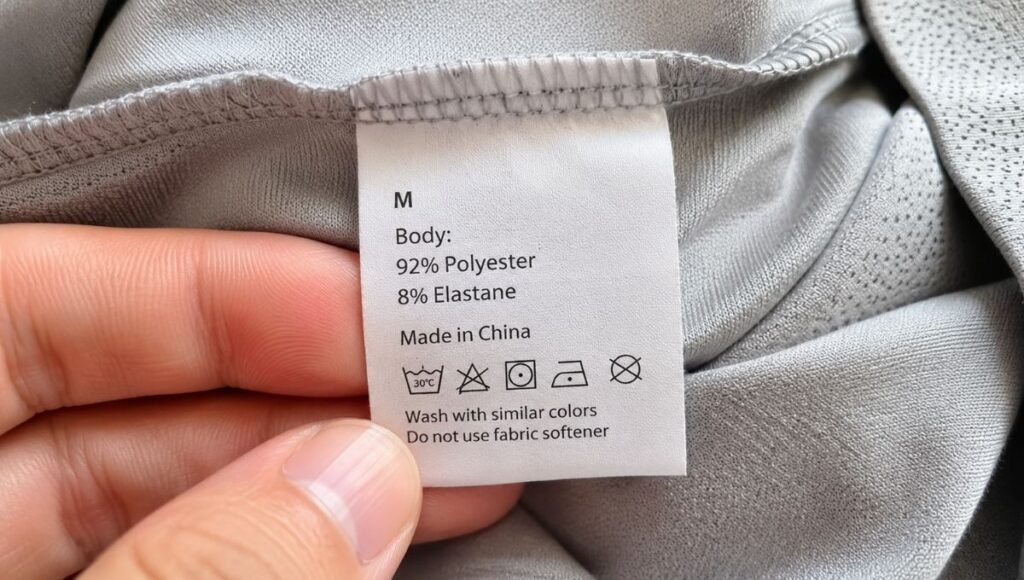
For running: A fabric composition of at least 60–85% polyester or nylon provides meaningful moisture-wicking performance. Spandex or elastane (typically 10–15%) adds stretch without significantly affecting moisture management.
Merino Wool
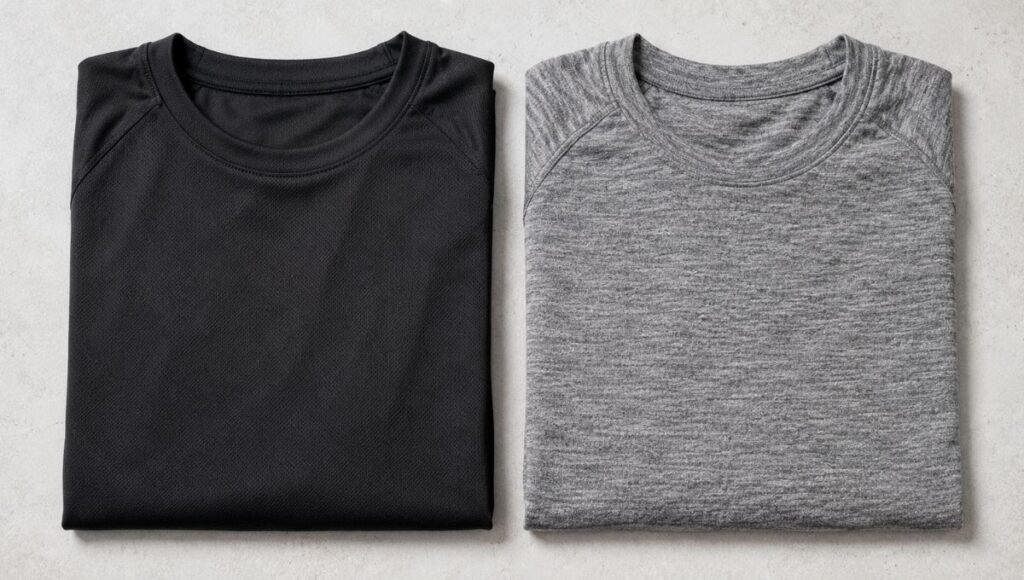
Merino works differently from synthetic fabrics. Rather than purely repelling moisture, merino wool absorbs moisture vapor into its fiber structure and then releases it through evaporation — a process that actually generates a small amount of heat as the moisture is absorbed, which helps regulate temperature in variable conditions. The result feels different from synthetic: slightly less aggressively “dry” but more consistently comfortable across a wider temperature range.
Merino’s strengths: Natural odor resistance (the lanolin in wool fiber is naturally antimicrobial), temperature regulation that works in both hot and cold conditions, and a soft feel against skin that reduces chafing potential. A merino running shirt worn on a multi-day event smells acceptable after two days of use — a polyester shirt in the same scenario does not.
Merino’s limitations: Slower drying than synthetic, higher price, and requires more careful washing. For high-intensity running in warm conditions where you’re generating maximum sweat, synthetic will keep you drier. For longer and cooler efforts, multi-day events, or any situation where odor management matters, merino earns its place.
For running: Merino is excellent for easy runs, long slow distance, cool-weather running, and any situation where you’ll be in the same shirt for extended periods. For hard training sessions in warm weather, synthetic performs better.
Blended Fabrics
Merino-synthetic blends (typically 70–85% merino, 15–30% synthetic) attempt to capture both sets of benefits: better moisture wicking than pure merino with better odor resistance than pure synthetic. The blending does improve both characteristics compared to either pure option, though neither performance characteristic reaches the level of the pure option.
For runners who want a single shirt that works across a range of conditions and effort levels without strong preference for either, a quality merino-synthetic blend is often the most practical choice.
How to Read a Running Shirt Label
When you’re standing in front of a rack of moisture wicking running clothes trying to make a decision, the fabric content label tells you most of what you need to know:
What to look for:
- 60%+ polyester or nylon for meaningful moisture wicking
- Spandex/elastane percentage (10–15% is typical; too much reduces breathability)
- Merino wool percentage if it’s a wool or wool-blend shirt
- Any antimicrobial treatment mentioned (extends odor resistance)
Red flags:
- High cotton percentage in a shirt marketed for running (anything above 20% cotton will compromise wicking performance)
- No fabric content listed at all
- “Quick-dry cotton” — a contradiction; cotton cannot truly quick-dry regardless of how it’s processed
What labels can’t tell you:
- The quality of the fabric construction (fiber channel engineering, knit structure)
- How the fabric performs after 50 washes
- Whether the antimicrobial treatment will last
This is where price point matters — a $15 polyester shirt and a $65 polyester shirt may have similar fabric compositions on the label, but the fiber engineering, construction quality, and performance longevity are usually meaningfully different.
Moisture Wicking Running Clothes by Season and Condition
The right moisture-wicking fabric choice shifts based on when and how you’re running.
Warm Weather and High-Intensity Running
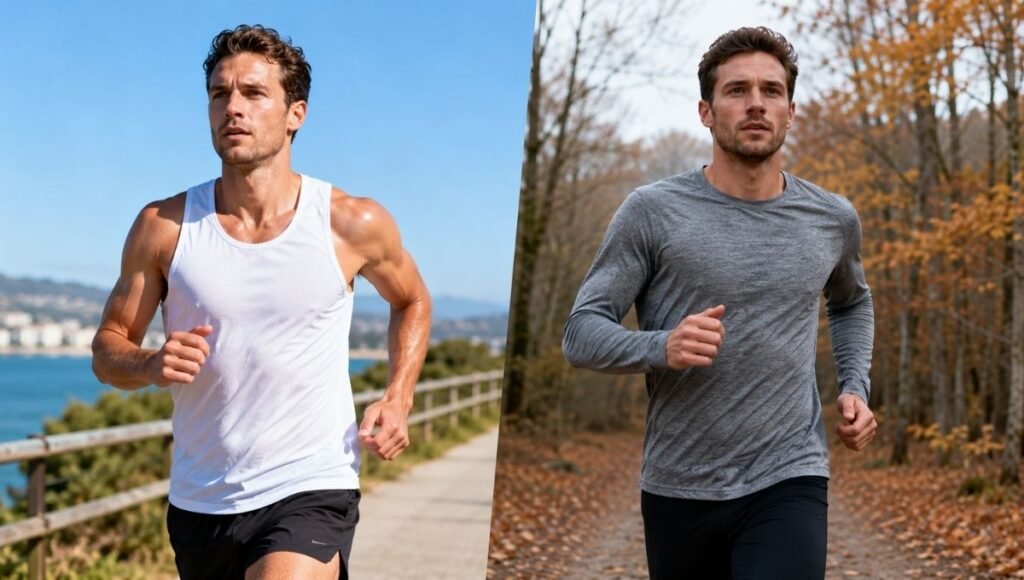
Best choice: Lightweight polyester, 100–150 GSM (grams per square meter). The lightest-weight synthetic fabrics move the most moisture the fastest and provide the most breathability. Running singlets and lightweight technical tees in this category feel nearly absent on your body during hard efforts in warm conditions.
What to avoid: Heavy polyester (over 180 GSM adds unnecessary heat), merino wool in temperatures above 65°F at hard effort (wicks too slowly for high sweat output).
Cool and Cold Weather Running
Best choice: Merino wool or merino-synthetic blend for temperatures below 45°F; medium-weight synthetic (150–180 GSM) for 45–60°F. Merino’s temperature regulation property earns its place in cold weather — it keeps you warmer when the pace slows and manages moisture without the cold clammy feel that synthetic can create when you slow down and stop sweating.
Layering note: In cold weather, moisture management happens across all layers. A synthetic base layer that wicks efficiently from skin is the foundation; subsequent layers need to allow that moisture to continue moving outward rather than trapping it.
Variable Conditions (Spring and Fall)
Best choice: Merino or merino-synthetic blend for runs where conditions change mid-run, or where you’ll start in cool temperatures and warm up significantly. A medium-weight merino shirt handles a 30°F temperature swing better than either a lightweight synthetic or a heavy cotton option.
How to Wash Moisture Wicking Running Clothes Without Destroying Them
This is the most practically important section of this guide for runners who already own moisture-wicking gear — because improper washing is the most common way to permanently reduce a technical running shirt’s performance.
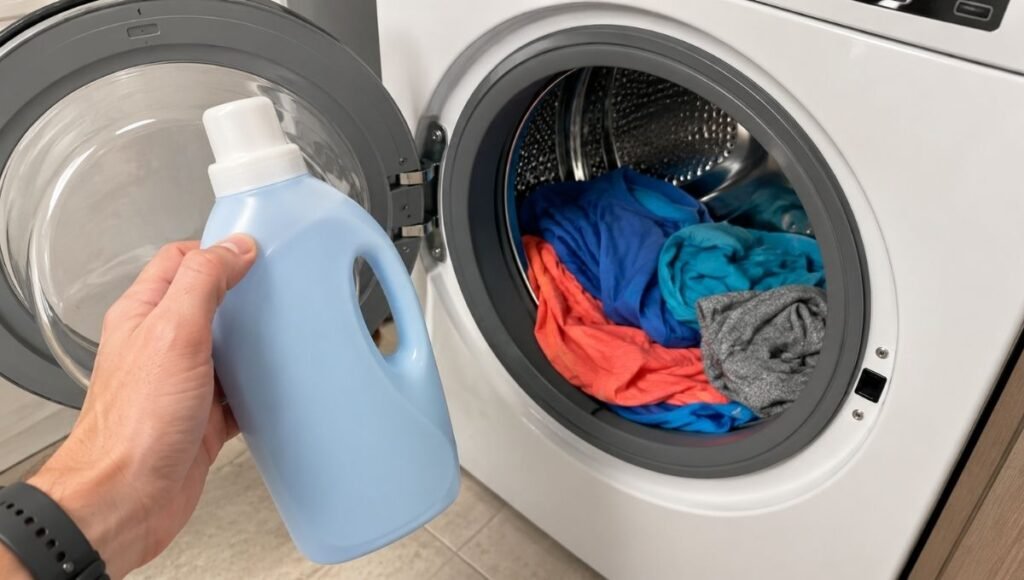
Never use fabric softener. This cannot be overstated. Fabric softener works by coating fibers with a waxy substance that makes them feel soft — the same coating that blocks the capillary channels that make moisture wicking work. A single wash with fabric softener can measurably reduce a technical fabric’s wicking ability. The effect compounds with repeated exposure.
Wash in cold water. Hot water degrades synthetic fibers faster, reduces spandex/elastane stretch recovery, and can set odors into synthetic fabric rather than removing them.
Air dry rather than machine dry. High dryer heat breaks down synthetic fibers and can cause shrinkage that affects fit and performance. Low-heat drying is acceptable for synthetics, but air drying extends garment life significantly.
Turn synthetic shirts inside out. The inner surface (against skin) accumulates body oils and bacteria faster than the outer surface. Washing inside-out improves cleaning of the high-contact areas.
For persistent odor in synthetic shirts: Soak in a diluted white vinegar solution (1 part vinegar to 4 parts water) for 30 minutes before washing. This breaks down the odor-causing compounds that standard detergent alone doesn’t fully remove. Alternatively, sport-specific detergents (Nikwax Tech Wash, Sport Suds) are formulated for technical fabrics and maintain wicking properties better than standard detergents.
FAQ: What Runners Ask About Moisture Wicking Fabric
Is moisture wicking the same as Dri-FIT? Dri-FIT is Nike’s proprietary name for their moisture-wicking polyester technology. It’s moisture wicking — Nike’s branded version of the same underlying mechanism. Other brands use different names (Climalite, Dri-Release, etc.) for similar technology. The term describes the mechanism; the brand name describes who made it and their specific implementation.
Does moisture wicking fabric keep you cool? Indirectly, yes. By moving sweat to the fabric’s outer surface where it can evaporate efficiently, moisture wicking fabric supports your body’s natural cooling mechanism. The right technical fabric choice for warm conditions can help lower your core temperature by 1–2°F compared to non-wicking alternatives during sustained exercise.
Can moisture wicking fabric be cotton? No — genuine moisture wicking requires hydrophobic fibers that repel rather than absorb moisture. Cotton is hydrophilic (attracts and holds water) and cannot wick moisture in the technical sense regardless of how it’s processed or marketed. Some cotton-synthetic blends have meaningful wicking properties, but the cotton component reduces rather than contributes to this performance.
Why does my moisture wicking shirt still feel wet? Several possible causes: the shirt may have absorbed body oils over time that block fiber channels; you may have washed it with fabric softener; the sweat rate may exceed what the fabric can move efficiently; or the fabric construction quality may be insufficient for your sweat output. Try washing with sport-specific detergent and vinegar soak to restore performance. If it still underperforms, the fabric may be degraded beyond recovery.
How long do moisture wicking properties last? Quality technical fabrics maintain wicking performance for 50–100+ washes if cared for correctly (cold wash, no fabric softener, air dry). Cheaper synthetics may degrade meaningfully after 20–30 washes. Antimicrobial coatings on synthetic fabrics typically last 30–50 washes before their effectiveness reduces.
The Bottom Line
Moisture wicking running clothes work through a specific physical mechanism — capillary action moving sweat from skin to fabric surface — and the quality of that mechanism varies enormously across price points and fabric types regardless of what the label says.
For most running situations, a quality polyester or nylon-dominant shirt (60%+ synthetic content) at a mid-to-premium price point delivers the best moisture management. For cooler weather, longer efforts, or multi-day use, merino wool or a merino-synthetic blend earns its higher price through odor resistance and temperature regulation. For warm-weather high-intensity running, lightweight polyester singlets remain the performance standard.
Whatever you buy: skip the fabric softener, wash cold, and air dry. The shirt will perform noticeably better for significantly longer.
Ready to put this into practice? Our picks for the best running socks for women apply the same fabric logic to foot comfort — and our best running leggings for women covers moisture management from the waist down.
References:
- Helly Hansen. (2025). What Does Moisture Wicking Mean? HH Technical Guide.
- Wooter Apparel. (2026). Ultimate Guide to Moisture-Wicking Fabrics for Outdoor Sports. Wooter.com.
- Laing, R.M., et al. (2020). Textile and clothing comfort in sport: A review of current knowledge. Sports Medicine.
- American College of Sports Medicine. (2023). Heat and Hydration in Exercise. ACSM’s Health & Fitness Journal.