
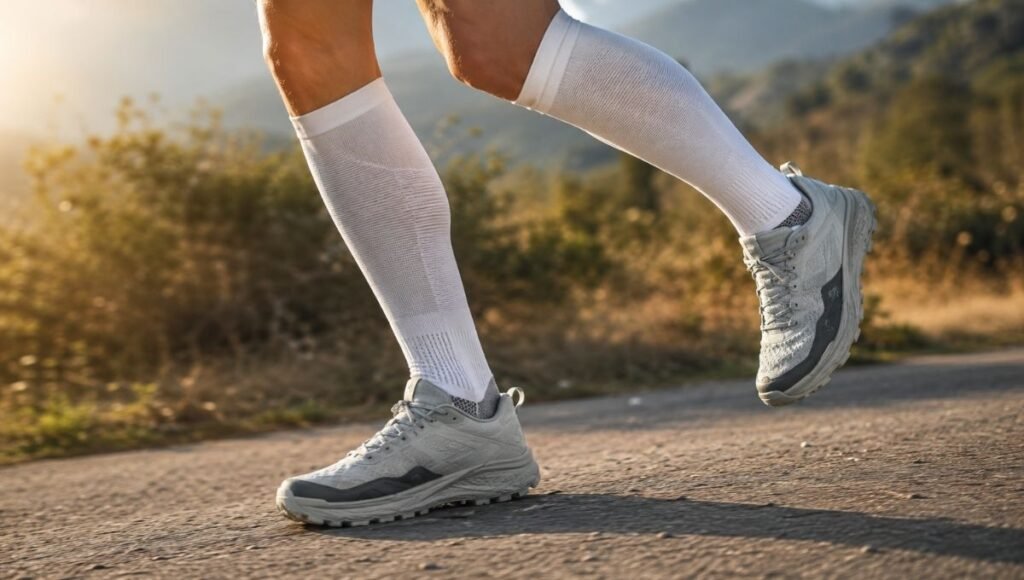
Here’s the honest version of this conversation: compression socks for running exist in a strange space between genuine performance tool and placebo. Serious runners swear by them. Scientists keep publishing studies with inconclusive results on race performance. And yet — walk the start line of any marathon and you’ll see more white knee-high compression socks than you can count.
The reason most runners end up buying compression socks isn’t because a study told them to. It’s because their calves were wrecked after a long run and someone handed them a pair with the promise of faster recovery. Or their legs swelled on a long flight to a destination race. Or they got shin splints and were desperate for anything that might help.
The research on running compression socks is more nuanced than most product descriptions let on — and understanding what they actually do (and don’t do) helps you decide whether they’re right for your specific running situation. This guide gives you the honest version: what the science says, what experienced runners actually experience, and which specific pairs are worth your money in 2026.
Key Takeaways
- Compression socks show the strongest evidence for post-run recovery, not in-run performance — a randomized trial found significant recovery benefits when worn for 48 hours after marathon running
- 20–30 mmHg is the standard compression level for running — medical-grade pressure that provides meaningful circulatory support without being uncomfortably tight
- Calf sleeves and compression socks serve different purposes — sleeves are for activity and shin splint support; full socks add foot and arch compression for blister prevention
- Graduated compression is essential — tighter at the ankle, progressively looser toward the knee; non-graduated “compression” socks provide minimal circulatory benefit
- Fit is more important than brand — a compression sock that’s too loose does nothing; one that’s too tight restricts circulation; sizing based on calf circumference, not shoe size
Do Compression Socks Actually Work for Running?
This is the question you should ask before spending $30-60 on a pair, and the answer is more honest than most brands will tell you.
What the research actually shows:
A 2016 study published in Sports Medicine found that compression wear reduced muscle pain, damage, and inflammation in runners, and may improve certain endurance performance variables like time to exhaustion. However, the same research found no statistically significant effect on race times across half marathons, 15K trail runs, 5K and 10K events, or 400-meter sprints. Running mechanics and oxygen consumption at sub-sprint speeds were not meaningfully changed by wearing lower-leg compression.
The clearest evidence comes from post-run recovery. A randomized controlled trial specifically on marathon runners found that wearing below-knee compression socks for 48 hours after marathon running showed significant beneficial effects on recovery compared to a placebo group, as measured by a graduated treadmill test to exhaustion two weeks after the event.
The practical translation:
Running compression socks are unlikely to make you meaningfully faster. They are likely to make your recovery faster after long efforts. For runners dealing with specific issues — shin splints, calf tightness, ankle instability, or post-run swelling — the functional benefits are more consistently reported. For runners who simply want to improve race times, the investment is better directed at training and shoes.
That said: if you’ve tried them and your legs feel better during and after long runs, that subjective improvement is a real metric. Feeling better during mile 18 affects how mile 19 goes.
Compression Level Guide: What mmHg Actually Means
mmHg (millimeters of mercury) is the pressure measurement for compression garments. It matters more than most buyers realize — getting the wrong compression level means either no benefit (too low) or discomfort and potential circulation restriction (too high).
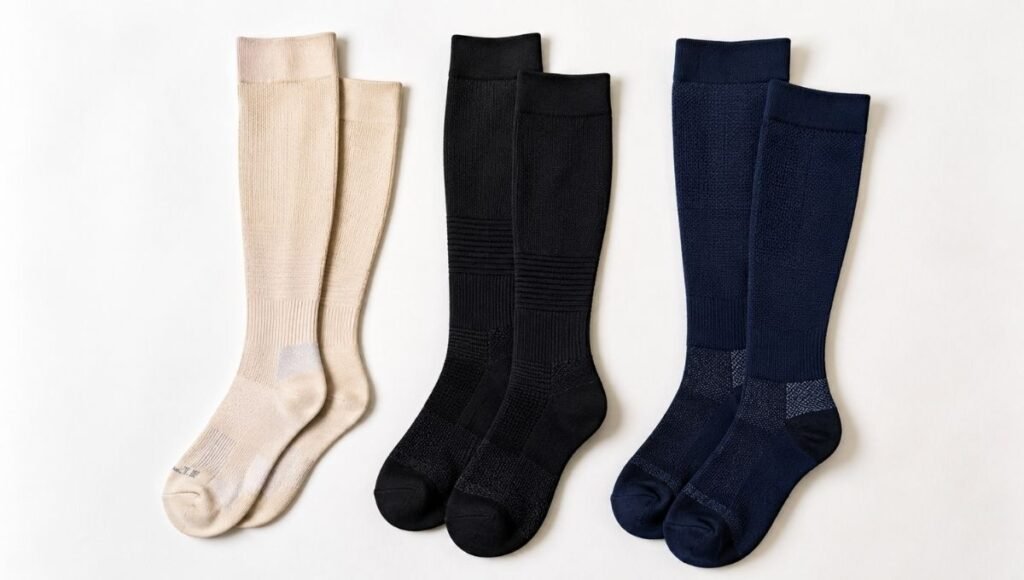
15–20 mmHg: Light compression The entry-level compression level. Appropriate for mild leg fatigue, travel, standing jobs, and casual use. Some runners use this level for easy recovery runs. Generally too light to provide meaningful circulatory support for hard training or racing.
20–30 mmHg: Medical-grade compression The standard compression level for running and the range most compression socks marketed specifically for runners use. This is the level used in the clinical studies that found recovery benefits. Provides meaningful circulatory support without being uncomfortable for most runners. This is what you want for training and race use.
30–40 mmHg: Firm compression Typically prescription-grade for medical conditions. Not appropriate for general running use without medical guidance. Too tight for most athletic applications and can restrict circulation if worn during high-output exercise.
For running, 20–30 mmHg is the target. Verify this is clearly stated on any pair you’re considering — some brands market “compression socks” that deliver much lower pressure levels.
Compression Socks vs Calf Sleeves: Which Do You Need?

This is a genuinely useful distinction that most buyers don’t understand before purchasing.
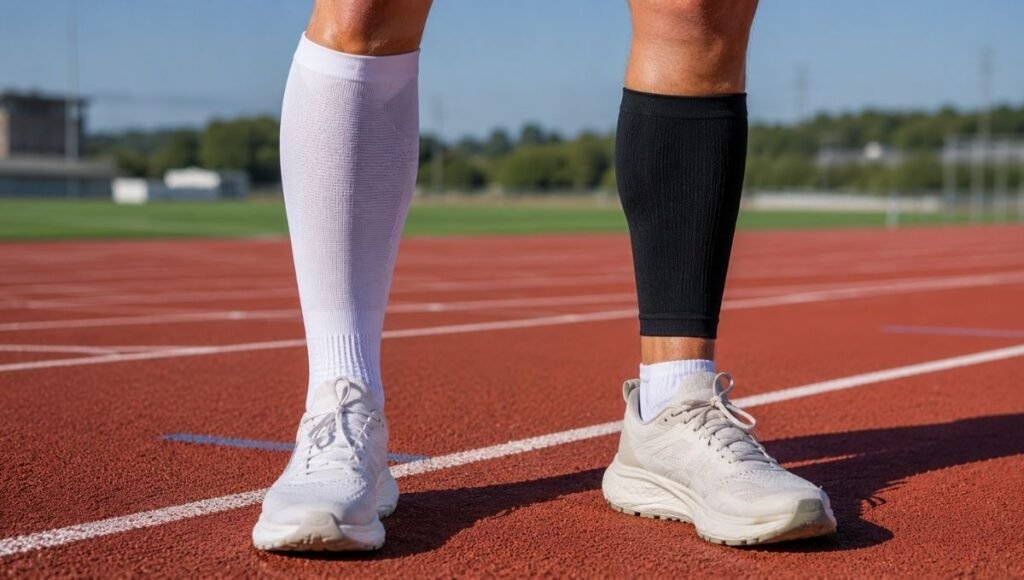
Compression socks cover the foot and extend up the calf. The full-coverage construction provides graduated compression from foot to calf, adds arch support, and provides cushioning at the heel and toe. Better for: marathon and long-distance racing, blister prevention, post-run recovery, and runners who want the full sock experience.
Calf sleeves cover only from ankle to below the knee, worn over a regular running sock. The sleeve provides calf and shin compression without the foot components. Better for: shin splints, calf support during training, runners who prefer their own running socks for foot comfort, warmer conditions where full sock coverage adds unwanted heat.
The practical guidance: if your primary concern is shin splints or calf support during runs, start with a calf sleeve and keep your existing running socks. If your concern is recovery, blister prevention, or the full graduated compression experience from foot upward, compression socks are the more complete solution.
Many experienced runners own both and use them for different purposes — sleeves during training, full compression socks during recovery.
The Best Compression Socks for Running in 2026
Best Overall: CEP Core Run Tall Compression Socks 5.0
CEP is built on medi’s medical-grade compression manufacturing expertise, and the difference shows in the actual compression delivery. Every pair undergoes 16 rounds of testing for compression accuracy — meaning the 20–30 mmHg stated on the label is what you actually get on your leg, not a marketing approximation.
The 5.0 update improves on an already strong sock with updated “Angel Wing” technology for targeted Achilles tendon support, 3D muscle support in the calf for stabilization, and ventilation panels that make the sock noticeably more breathable than previous versions. The cushioning is decreased and more targeted — less bulk underfoot, more performance feel. Length hits just below the knee on most runners, which is the right functional placement for graduated compression.
These are the socks that show up most consistently in serious runners’ gear lists, and the clinical backing behind CEP’s compression construction is more rigorous than most competitors’.
Best for: Marathon racing, serious training, runners who want verified medical-grade compression, anyone dealing with calf tightness or Achilles issues.
Editor’s note: The price is real. So is the construction difference between these and $15 “compression” socks. If you’re going to spend money on compression, spend it here.
Best for Plantar Fasciitis: 2XU Vectr Light Compression Socks
The 2XU Vectr Light specifically addresses the foot and arch compression that plantar fasciitis runners need — the graduated compression starts at the foot with meaningful arch support before moving up the calf. For runners dealing with plantar fasciitis, the foot compression component matters as much as the calf compression.
The “Light” designation refers to cushioning weight, not compression level — these still deliver meaningful 20+ mmHg compression in a construction that’s more breathable and lower-profile than maximum-cushion options. Good for warmer conditions or runners who prefer a less built-up feel.
Best for: Runners with plantar fasciitis, arch pain, or foot fatigue; warm weather compression running; runners who find maximum-cushion compression socks feel too bulky.
Best for Recovery: CEP Core Run Mid Cut Compression Socks 5.0
Not every runner wants knee-high compression socks — the mid-cut version extends to just below mid-calf, fully covering the Achilles tendon while providing the same 20–30 mmHg graduated compression as the tall version. Lower profile, slightly less warm, and easier to wear post-run when you’re not trying to look like you’re heading to a race start.
For pure post-run recovery wear, the mid-cut format is practical — easier to get on and off than knee-high versions, appropriate to wear around the house or on errands post-run, and still delivers the compression pressure that recovery research supports.
Best for: Post-run recovery, runners who dislike knee-high sock bulk, recovery use around the house and in transit.
Best Budget Option: Balega Blister Resist Quarter with Compression
Balega’s Blister Resist line adds targeted compression to their established blister-prevention construction — the mohair fiber blend that makes Balega effective against friction is paired with arch and ankle compression that provides recovery benefits without the full knee-high experience.
The quarter height means these work as a daily training sock with mild recovery properties — not the full clinical compression of a CEP or 2XU, but meaningful enough that legs feel better the next day. At a lower price point than premium compression socks, these represent a reasonable starting point for runners curious about compression without full commitment to the category.
Best for: Beginners exploring compression, daily training use, runners who want some compression benefit without full knee-high socks, budget-conscious runners.
Best Calf Sleeve: CEP Run Ultralight Calf Sleeves
For runners who want calf support without changing their sock setup, CEP’s Ultralight sleeves deliver the same medical-grade compression as their full socks in a sleeve format that pairs with whatever running socks you already use. The ultralight fabric is noticeably more breathable than heavier sleeves — appropriate for warm weather training where a full compression sock adds too much heat.
Specifically useful for runners dealing with shin splints, calf cramping, or those who want the option to add or remove compression support mid-run without changing their sock.
Best for: Shin splints, calf support during training, warm weather, runners who prefer their existing running socks, anyone who wants compression flexibility without committing to full socks.
How to Size Compression Socks Correctly
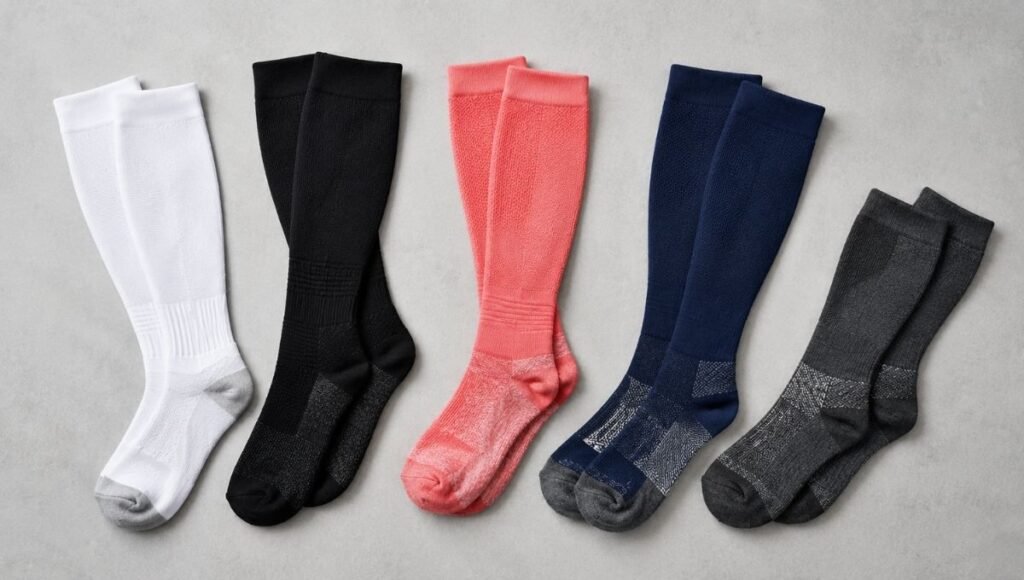
Sizing compression socks by shoe size — as many brands allow — is a shortcut that frequently produces poorly fitting socks. Compression effectiveness depends on actual calf circumference matching the sock’s compression profile.
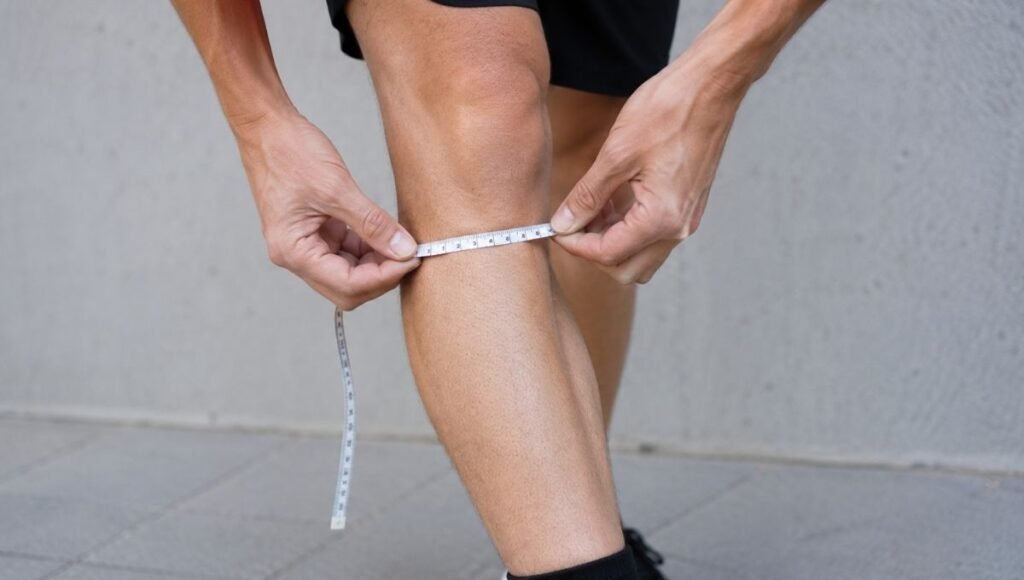
Measure correctly: Measure your calf circumference at the widest point (typically 6–8 inches below the knee) while standing. This measurement, combined with your shoe size for length, gives you the correct compression sock size.
The fit test: Correctly sized compression socks should be difficult to put on — this is normal and expected. They should feel firm and snug but not painful or circulation-restricting. You should be able to slide a finger under the top band without significant effort. If you can’t feel the compression, they’re too loose and will provide minimal benefit.
When they’re too tight: If your feet or toes feel numb or tingly, if you see significant indentation marks on your skin after removing, or if wearing them for more than 30 minutes causes discomfort, size up or consider a lower compression level.
When to Wear Running Compression Socks
During runs: Most beneficial for runs over 90 minutes, races of half marathon distance and longer, or any run where calf fatigue or cramping has been a problem in the past. For shorter easy runs, the benefit is minimal.
Immediately post-run: Many runners put compression socks on within 30 minutes of finishing a long run or race. This is where the recovery research shows the strongest benefit — keeping compression on for several hours post-run while your legs are still in active recovery mode.
48 hours post-marathon: The recovery trial that showed the strongest results had participants wearing compression socks for 48 continuous hours post-marathon. This is the specific protocol that produced the significant functional recovery improvement measured two weeks later.
Travel: Long flights or car rides before or after races are a well-established use case — sitting still reduces circulation to the legs, and compression socks counteract this directly.
Common Compression Sock Mistakes Runners Make
Buying based on shoe size alone. Calf circumference determines fit and compression effectiveness. A sock that fits your shoe size but is too loose around your calf delivers no compression benefit. Always check the calf circumference measurement.
Expecting compression socks to improve race times. The evidence doesn’t support this for most runners. The value is in recovery and managing specific issues (shin splints, calf cramping, swelling). Adjusting expectations avoids disappointment and helps you use them correctly.
Using them only during runs. Post-run is where recovery benefits are clearest. Putting compression socks on after a long run and wearing them for 2–4 hours (or longer after a marathon) delivers more measurable benefit than wearing them only during the run itself.
Buying non-graduated compression. Socks marketed as “compression” that don’t specify graduated pressure — tighter at ankle, progressively looser up the calf — may provide minimal circulatory benefit. Check that the product specifically describes graduated compression and states the mmHg range.
Washing incorrectly. Compression elasticity degrades quickly with high heat. Machine wash cold and air dry — never put compression socks in the dryer. High heat breaks down the elastic fibers that create compression, reducing effectiveness significantly after just a few hot-wash cycles.
FAQ: What Runners Ask About Compression Socks
Do compression socks actually help with running? The clearest evidence is for post-run recovery, not in-run performance. A randomized trial showed significant recovery benefits when worn for 48 hours after marathon running. During runs, they may reduce perceived fatigue and muscle soreness, particularly for distances over 90 minutes, but are unlikely to improve race times measurably.
What mmHg compression socks should runners use? 20–30 mmHg is the standard for running — medical-grade pressure that provides meaningful support without discomfort. Verify this range is clearly stated; some brands sell socks at much lower pressure levels while still marketing them as “compression.”
Should I wear compression socks during or after a run? Both, for different benefits. During long runs (over 90 minutes) they may reduce calf fatigue and cramping. After runs, wearing them for 2–4 hours supports recovery. The strongest clinical evidence is for post-marathon recovery use over 48 hours.
What’s the difference between compression socks and calf sleeves? Compression socks cover the foot and calf; calf sleeves cover only the lower leg and are worn over existing running socks. Sleeves are better for shin splints and runners who prefer their own socks. Full compression socks add arch support, blister prevention, and full graduated compression from foot upward.
How tight should compression socks feel? Firm and snug but not painful. They should be difficult to put on — that’s normal. You should feel consistent pressure from ankle to calf. If you feel numbness, tingling, or see deep indentation marks on your skin, they may be too tight or incorrectly sized.
The Bottom Line
The best compression socks for running are the ones sized correctly, delivering verified 20–30 mmHg graduated compression, and used at the right time — which for most runners means post-run recovery rather than expecting a performance boost during the race itself.
CEP’s Core Run line represents the clearest combination of medical-grade compression accuracy and running-specific construction. 2XU Vectr Light is the right choice for plantar fasciitis specifically. For budget-conscious runners starting out, Balega’s compression options deliver meaningful benefit at a lower entry cost.
Whatever you choose: measure your calf circumference, verify the mmHg range, and give them 4–6 hours post-run before deciding whether they work for you. The benefits are real — they just show up the next morning more than they show up at the finish line.
Looking to build your complete running sock rotation? Our guide to the best running socks for women covers everyday training socks from blister prevention to merino wool options — the compression question is just one part of the equation.
References:
- Engel, F.A., et al. (2016). Does Compression Apparel Affect Running Performance? Sports Medicine.
- Ali, A., et al. (2011). Compression socks and functional recovery following marathon running: a randomized trial. Journal of Strength and Conditioning Research.
- T3. (2025). Best compression socks for running: improved performance, faster recovery. T3 Magazine.
- iRunFar. (2026). Best Running Socks: CEP Core Run Tall Compression Socks 5.0 Review. iRunFar.