
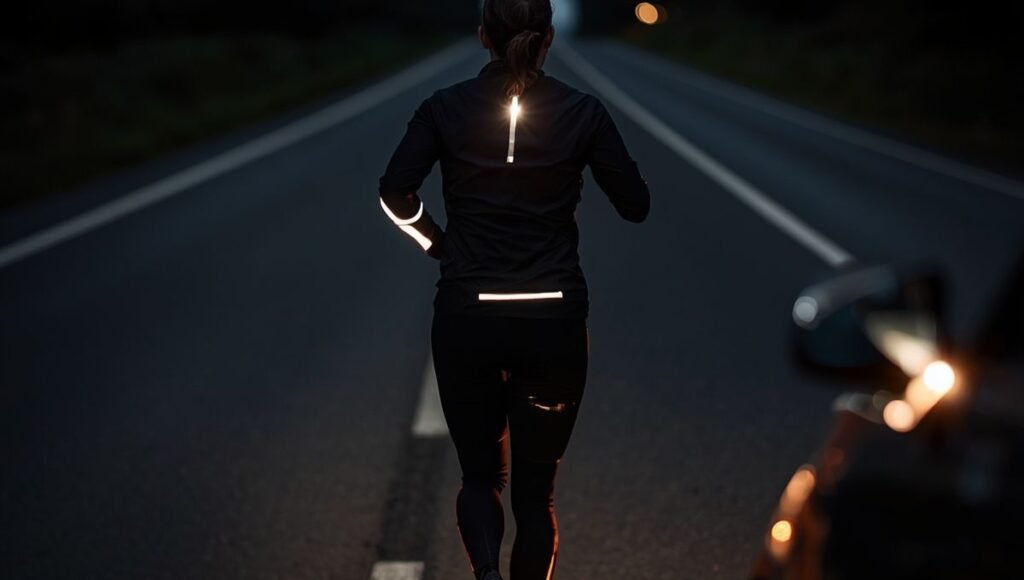
There’s a specific kind of fear that shows up on a 6am run in November — the moment a car pulls out of a side street without seeing you, brakes hard, and you both realize how close that was. You were wearing dark running clothes because it was what was clean that morning. You hadn’t thought about visibility because the sun usually rises before you finish. This time it didn’t, and you got lucky.
Reflective running gear exists specifically to remove the luck from that equation. But most runners own one reflective vest that gets worn occasionally and assume that’s sufficient — without understanding that reflective visibility is governed by specific, measurable physics that most gear either gets right or doesn’t.
This guide explains how reflective material actually works, why placement matters more than total coverage, what the difference is between reflective and high-visibility gear, and which specific products deliver genuine visibility rather than a reflective logo that looks effective in a product photo and disappears on a dark road.
Key Takeaways
- Reflective material works by returning light to its source — it only functions when illuminated by a direct light source like headlights; it provides zero visibility benefit in ambient darkness without a light pointed at you
- Placement on moving joints (ankles, wrists) is more effective than placement on the torso — research with cyclists found that reflective markings at moving extremities significantly increase driver recognition because human vision is tuned to detect motion patterns, not static shapes
- Reflective and high-visibility (hi-vis) are different mechanisms — hi-vis uses fluorescent color for daytime visibility; reflective material bounces light back for nighttime visibility; you need both for genuine all-conditions safety, not just one
- Candlepower is the measurable standard for reflective performance — quality reflective running gear is tested to return light visible from 300+ feet at typical suburban driving speeds (around 30mph)
- Reflective gear and active lights serve different functions and should be combined — reflective material makes you visible to others; lights help you see your path and increase your visibility from any angle, not just when a light source points directly at you
How Reflective Material Actually Works (And Its Critical Limitation)
Understanding the mechanism changes how you evaluate and use reflective gear.
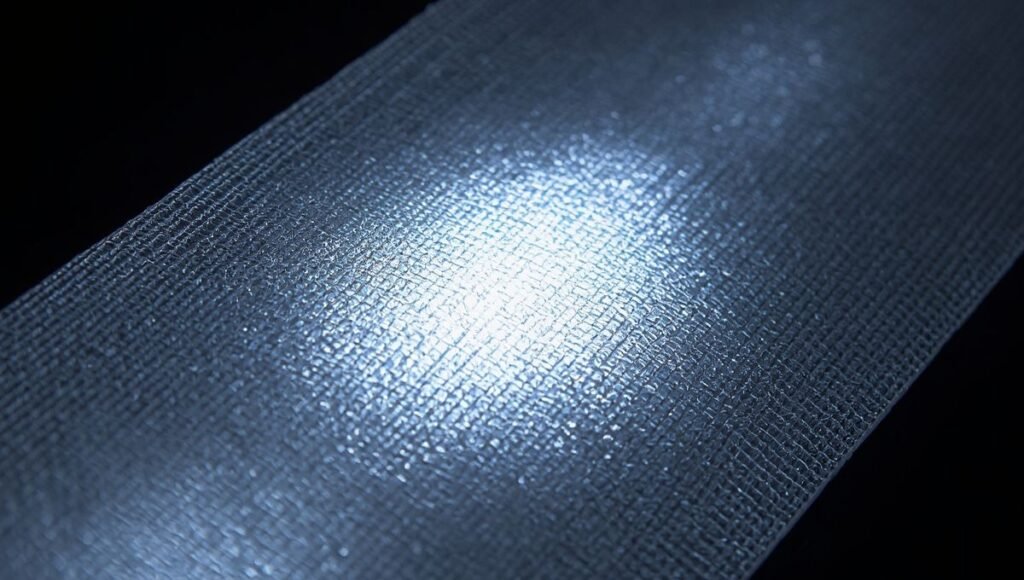
Reflective material — typically a specific technology like 3M Scotchlite — contains microscopic glass beads or prisms embedded in the fabric or applied as a coating. When light hits these structures at the correct angle, they redirect the light back toward its source rather than scattering it in all directions, the way most surfaces do. This is why reflective material appears to glow brightly in a car’s headlights: the light from the headlights is being returned directly back toward the driver’s eyes.
The critical limitation: Reflective material only works when illuminated by a direct light source pointed at you. In ambient darkness — a moonlit street with no approaching headlights, an unlit park path — reflective material provides no visibility benefit whatsoever. It’s invisible until a light source activates it.
This means reflective gear is specifically effective for road running where vehicle headlights provide the activating light source, and significantly less effective on unlit trails or paths without any light source to trigger the reflection. For those environments, active lighting (discussed below) becomes the primary visibility tool rather than a supplement.
Why Placement Matters More Than Coverage
This is the single most important and most underexplained principle in reflective running gear — and it comes from genuine research, not just marketing.
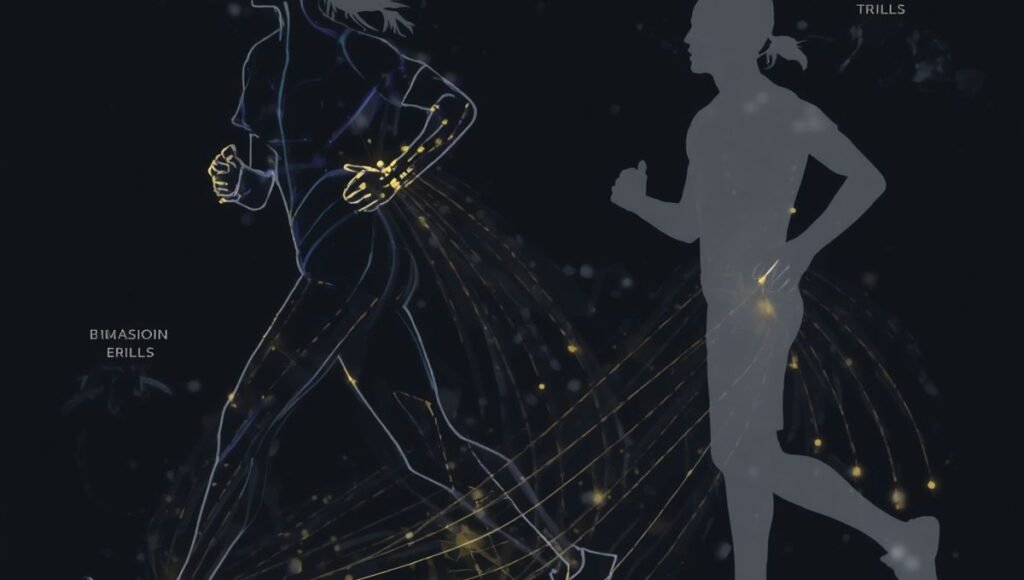
A study examining cyclist visibility found that reflective markings placed at the knee and ankle — points that move through a distinct, repetitive pattern during pedaling — significantly increased the likelihood that drivers would recognize the cyclist as a person rather than an unidentified light source. The same biomechanical principle applies directly to running.
Human visual perception is highly tuned to recognize biological motion — the specific, repetitive pattern of limb movement that signals “person” rather than “static object” or “unidentified light.” A static reflective patch on your torso, even a large one, reflects light but doesn’t create this motion-recognition signal. A reflective stripe on your ankle or wrist, moving through your running stride’s repetitive arc, creates exactly the pattern that triggers fast recognition.
Brooks’ own research into reflective gear placement confirms this directly: their Run Visible technology places reflective strips specifically at what they describe as “critical motion zones” — the points on your body that move distinctly during running stride — rather than relying primarily on torso coverage.
The practical implication: A jacket with reflective patches only on the chest and back is less effective than a jacket with reflective elements at the cuffs (wrists move through arm swing) combined with reflective elements at the ankle or shoe area (feet move through the most pronounced motion pattern in running). Total reflective surface area matters less than placement at moving joints.
Reflective vs High-Visibility (Hi-Vis): Two Different Mechanisms
This distinction gets blurred constantly in product marketing, and understanding it changes what you buy for which conditions.
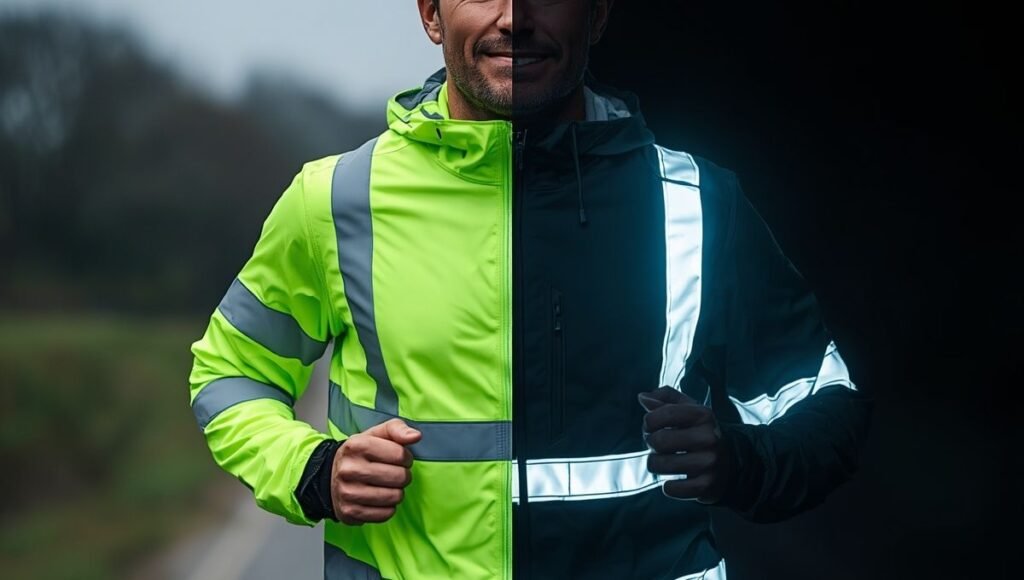
High-visibility (hi-vis) gear uses fluorescent colors — typically neon yellow-green or orange — that are highly visible to the human eye in daylight and low-light conditions, independent of any light source pointing at you. Fluorescent colors work by converting UV light into visible light, making them appear brighter than non-fluorescent colors of the same hue even in overcast or dim daytime conditions.
Reflective gear, as covered above, only activates when illuminated by a direct light source — primarily useful in true darkness with headlights or streetlights present.
The functional difference: Hi-vis works during dawn, dusk, overcast days, and any low-but-present-light condition. Reflective works in genuine darkness when a light source illuminates you. They solve different visibility problems, and genuinely comprehensive running safety gear includes both — fluorescent color for low-light daytime conditions and reflective elements for full darkness.
A jacket that’s pure black with reflective strips is excellent for nighttime running but provides minimal visibility benefit during a dim, overcast morning run before sunrise when there’s no headlight to activate the reflection. A jacket that combines a fluorescent base color with reflective strips covers both conditions.
The Candlepower Standard: How to Evaluate Reflective Gear Quality
Most reflective gear marketing uses vague language — “highly reflective,” “maximum visibility” — without quantifiable standards. Candlepower is the actual measurable metric, and knowing it helps you compare products meaningfully.
Candlepower measures luminous intensity — specifically, how strongly light reflects off the gear back toward its source. Brooks’ Run Visible Collection is engineered to return at least as much light as 300 candles burning in the same location, a standard developed from research into typical suburban driving conditions where most runners encounter traffic — specifically, roads with approximately 30mph speed limits, where drivers need adequate reaction time to identify and respond to a runner ahead.
The practical takeaway: When evaluating reflective gear, look for brands that cite specific testing standards or distance-based visibility claims (e.g., “visible from 600 feet”) rather than purely qualitative language. Brands using actual 3M Scotchlite technology, which has documented reflective performance standards, tend to deliver more consistent real-world visibility than generic “reflective trim” without specified technology.
Reflective Gear vs Active Lights: Why You Need Both
This is a distinction most runners don’t make, and it matters specifically for unlit routes.
Reflective gear makes you visible to others — but only when a light source (headlights, streetlights) illuminates you first. It’s a passive technology, dependent on external light.
Active lights — clip-on LED lights, illuminated vests, headlamps — generate their own light, making you visible from any angle regardless of whether another light source is present. They work in conditions where reflective gear provides zero benefit: unlit trails, paths without streetlights, moonless nights.
The combination is more effective than either alone. Reflective material returns concentrated light back toward a driver’s headlights with high intensity — more effective than an active light at the specific moment a car’s headlights hit you directly. Active lights provide constant, omnidirectional visibility that doesn’t depend on another light source pointing at you first.
The practical guide: For road running in areas with streetlights and traffic, reflective gear alone may be sufficient. For trail running, unlit residential streets, or any route without consistent ambient or vehicle lighting, combine reflective gear with an active light — a clip-on LED, a headlamp, or an illuminated vest like the Noxgear Tracer.
The Best Reflective Running Gear in 2026
Best Reflective Jacket: Brooks Run Visible Jacket
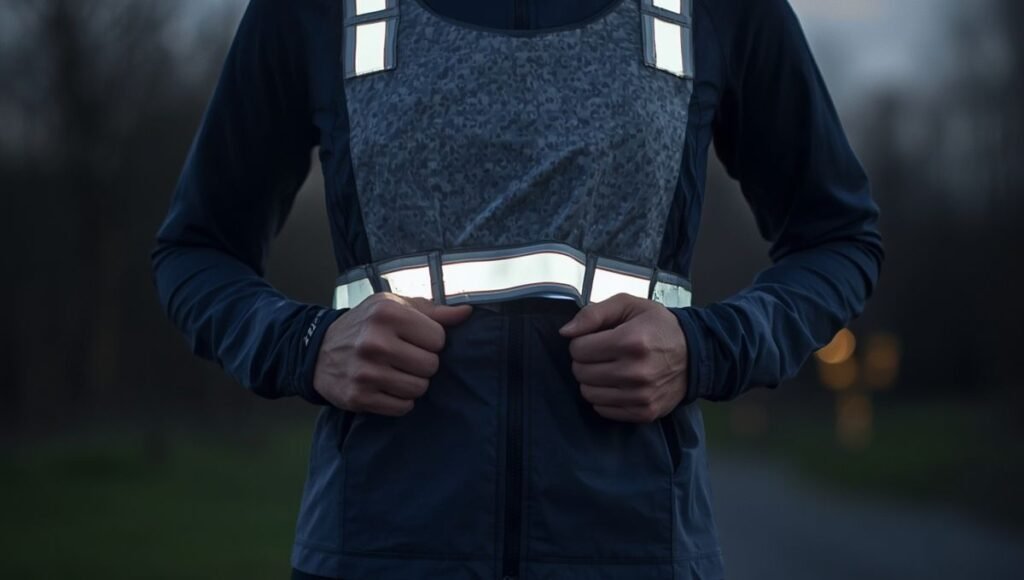
Brooks built their entire Run Visible technology platform around the placement and candlepower principles covered above, and the jacket line is where it’s most fully realized. The 3M Scotchlite Carbon Black Stretch reflectivity provides the candlepower performance discussed earlier while maintaining a deep black color (rather than the silver-gray look of older reflective technology) and color durability through repeated washing.
Reflective placement follows the motion-zone principle — strips positioned at the cuffs and lower body where arm swing and stride create the repetitive motion pattern that triggers driver recognition, not just a chest logo. The DriLayer fabric manages moisture effectively for sustained running use.
Best for: Year-round dawn and dusk road running, runners who want one reliable jacket that handles both warmth and visibility without compromise on either.
Best Reflective Vest: Nathan HyperNight Reflective Vest
A reflective vest worn over any existing outfit solves the problem of needing to buy an entirely new wardrobe for visibility — it layers over whatever you’re already wearing. Nathan’s HyperNight line uses adjustable, lightweight construction designed specifically to throw on quickly before a dark run without adding meaningful bulk or warmth.
The 360-degree reflective coverage means visibility from any approach angle, which matters at intersections where vehicles may approach from multiple directions. The adjustable fit accommodates different body sizes and different layers underneath across seasons.
Best for: Runners who want a single visibility solution that works with any outfit, year-round use across different temperature layers, quick-grab convenience before dark runs.
Best Reflective Shirt: Proviz Reflect360 Jacket
For runners who want maximum reflective coverage rather than strategic strip placement, Proviz’s REFLECT360 fabric takes a different approach: the entire garment surface is reflective, not just strips or panels. The effect is dramatic — the whole jacket reflects light back when illuminated, providing the most comprehensive reflective coverage available in a single garment.
This isn’t subtle, and it’s not meant to be. For runners whose primary concern is being unmistakably visible regardless of exact body position relative to a light source, full-surface reflective coverage removes the placement-optimization question entirely.
Best for: Maximum-priority visibility runners, rural road running with less predictable traffic patterns, anyone who wants reflective coverage that doesn’t depend on getting strip placement exactly right.
Best Active Light Option: Noxgear Tracer2
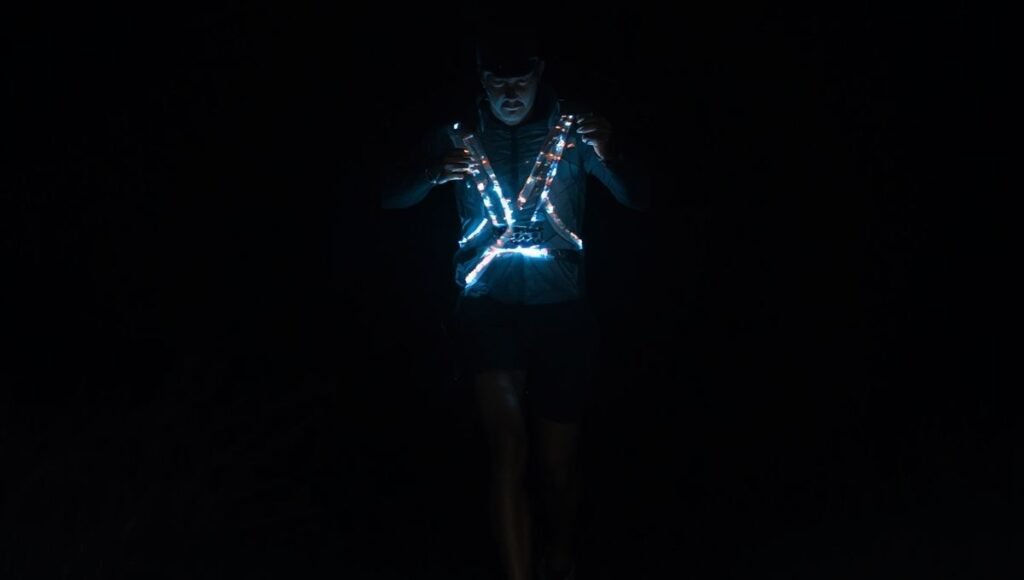
For routes without reliable ambient or vehicle lighting, the Noxgear Tracer2 provides active illumination rather than passive reflection. At seven ounces, it’s light enough to wear without noticing, with multiple illumination modes including color options and flashing or solid settings.
This isn’t a reflective gear replacement — it’s the active-light half of the reflective-plus-lights combination strategy. Worn on the torso, it provides 360-degree visibility that doesn’t depend on a car’s headlights finding you first.
Best for: Trail running, unlit residential routes, rural roads without streetlights, any run where you can’t rely on consistent external light sources to activate reflective gear.
Best Reflective Accessories: Reflectoes Reflective Running Gloves
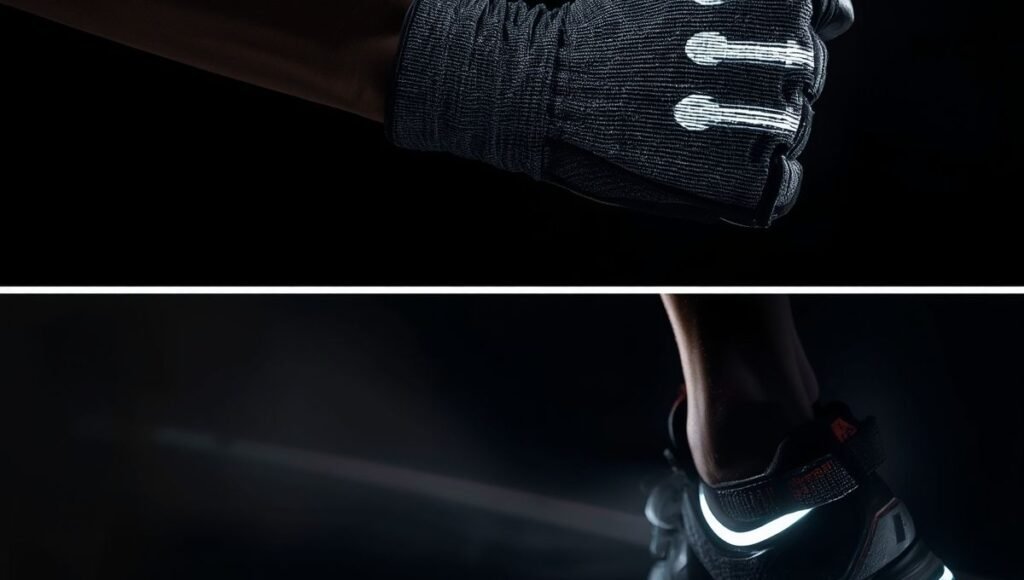
For the motion-zone principle specifically, reflective gloves put reflective material directly on your hands — one of the most consistently moving points on your body during running stride. Combined with reflective elements at the ankle (shoes or socks), this creates the dual-extremity motion pattern that research suggests is most effective for driver recognition.
Best for: Layering onto an existing dark-colored running kit without buying entirely new reflective outerwear, cold-weather running where gloves are already part of your kit, maximizing motion-zone visibility cheaply.
Reflective Running Gear Mistakes That Leave You Less Visible Than You Think
Assuming one reflective vest covers all conditions. A vest with chest-only reflective placement provides minimal motion-zone visibility. Layer additional reflective elements at wrists and ankles for genuine multi-point visibility.
Relying on reflective gear for unlit trails. Reflective material does nothing without a light source to activate it. Trail running and unlit-route running need active lights, not just reflective gear.
Buying hi-vis colored gear and assuming it works at night. Fluorescent colors are excellent for daytime and dusk visibility but provide minimal benefit in genuine darkness — they need ambient light to be visible at all, and fluorescence specifically requires UV light to activate, which isn’t present after dark. Reflective material is the nighttime solution; hi-vis color is the low-light daytime solution.
Ignoring placement in favor of total coverage. A jacket that’s 80% covered in reflective material but only at the torso is less effective for driver recognition than a jacket with strategic strips at the cuffs, hem, and shoe area. Motion-zone placement beats total surface area.
Forgetting that reflective gear is one part of a safety system. Brooks’ own safety guidance specifically notes that running against traffic so drivers can see you more easily, avoiding noise-canceling headphones so you can hear approaching vehicles, and running with a buddy in remote areas all matter alongside visibility gear. Reflective clothing reduces risk; it doesn’t eliminate the need for situational awareness.
FAQ: What Runners Ask About Reflective Running Gear
Does reflective running gear actually work? Yes, when it’s illuminated by a light source — headlights, streetlights — reflective material genuinely returns significant light back toward the source, making you noticeably more visible to drivers from a meaningful distance. It does not provide visibility benefit in complete darkness without any light source present.
What’s the difference between reflective and hi-vis running gear? Hi-vis uses fluorescent colors visible in daylight and low-light conditions without needing an external light source. Reflective material only becomes visible when illuminated by headlights or other direct light sources, primarily useful at night. Comprehensive visibility gear typically combines both.
Where should reflective elements be placed for maximum visibility? At moving joints — wrists, ankles, and shoe areas — rather than concentrated only on the torso. Research on cyclist visibility found that reflective markings at moving extremities significantly increase driver recognition because human vision is specifically tuned to detect the repetitive motion pattern of limb movement.
Do I need reflective gear if I run with a headlamp? Yes — they serve different functions. A headlamp helps you see your path and provides some visibility to others from the front, but reflective gear provides visibility from multiple angles (especially from behind, where a headlamp doesn’t help) and works in conjunction with vehicle headlights specifically. The combination covers more scenarios than either alone.
Is reflective running gear necessary for daytime running? Less critical than for dawn, dusk, or night running, but hi-vis (fluorescent) elements remain useful for overcast, foggy, or rainy daytime conditions where visibility is reduced even in daylight. Reflective material specifically provides minimal benefit during full daylight since there’s no concentrated light source to activate the reflection.
The Bottom Line
Reflective running gear works through specific, measurable physics — and understanding those mechanics changes how you select and use it. Reflective material requires a light source to function, making it most effective for road running with vehicle traffic. Placement at moving joints matters more than total surface coverage, because human vision is tuned to recognize motion patterns, not static shapes. Hi-vis color and reflective material solve different visibility problems and work best combined.
For most road runners, the combination of a reflective jacket with motion-zone placement (Brooks Run Visible) plus a layerable reflective vest for quick use covers the majority of conditions. For unlit trails or routes without consistent light sources, add an active light — reflective gear alone isn’t sufficient there.
Visibility gear doesn’t replace situational awareness. It buys you the reaction time that makes the difference between a close call and a real problem.
For the rest of your cold-weather and low-light running kit, check out our best running jacket for women guide and our best running hat guide — both cover reflective options specifically for dawn and dusk training.
References:
- Brooks Running. (2026). Reflective Running Gear Technology: The Science Behind Run Visible. BrooksRunning.com.
- iRunFar Gear Team. (2026). Best Reflective Running Gear of 2026. iRunFar.com.
- Garage Gym Reviews. (2026). Best Reflective Running Gear: Tested. GarageGymReviews.com.
- American College of Sports Medicine. (2023). Running Safety and Environmental Visibility Factors. ACSM’s Health & Fitness Journal.