

Here’s a scenario that plays out for a lot of runners: you start out doing short runs in whatever athletic shorts you already own — basketball shorts, gym shorts, something from the back of a drawer. It’s fine. Then you start running more. Longer distances, more often. And somewhere around the 8-mile mark of a long run, you discover that the liner on your casual shorts is not, in fact, designed for 8 miles of continuous thigh contact. The chafing arrives, and it is specific, unforgiving, and memorable.
This is usually the moment men start paying attention to running shorts as a category. Not because of aesthetics. Because of necessity.
The best running shorts for men solve a specific set of problems: they stay in position, manage moisture effectively, provide support without restriction, and — crucially — their liner doesn’t become a friction problem at distance. Everything else is secondary. This guide breaks down the key variables, explains the choices that actually matter, and gives you honest picks across distances and budgets.
Key Takeaways
- The liner is the most important feature in men’s running shorts — brief liner vs compression liner creates a completely different running experience, and most buyers don’t know the difference until they’ve made the wrong choice
- Inseam length affects chafing more than comfort — shorter inseams (3–5″) create more thigh exposure, which can cause friction for runners with larger thighs; longer inseams (7″) reduce skin-on-skin contact
- Split shorts aren’t just for elite runners — the split design allows full hip flexor range of motion and dramatically increases airflow; any runner doing serious training benefits from trying them
- Pockets need to be tested, not assumed — a pocket that holds your phone during a walk will bounce it loose during a tempo run; look for reinforced or zippered options
- Budget shorts work for short distances; quality liner construction matters at marathon distance — the difference in liner quality between a $20 and a $70 pair of shorts shows up at mile 15, not mile 3
The Liner Debate: Brief vs Compression (And Why It Changes Everything)
This is the conversation most running shorts guides skip entirely, and it’s the one that determines whether your purchase works for you.
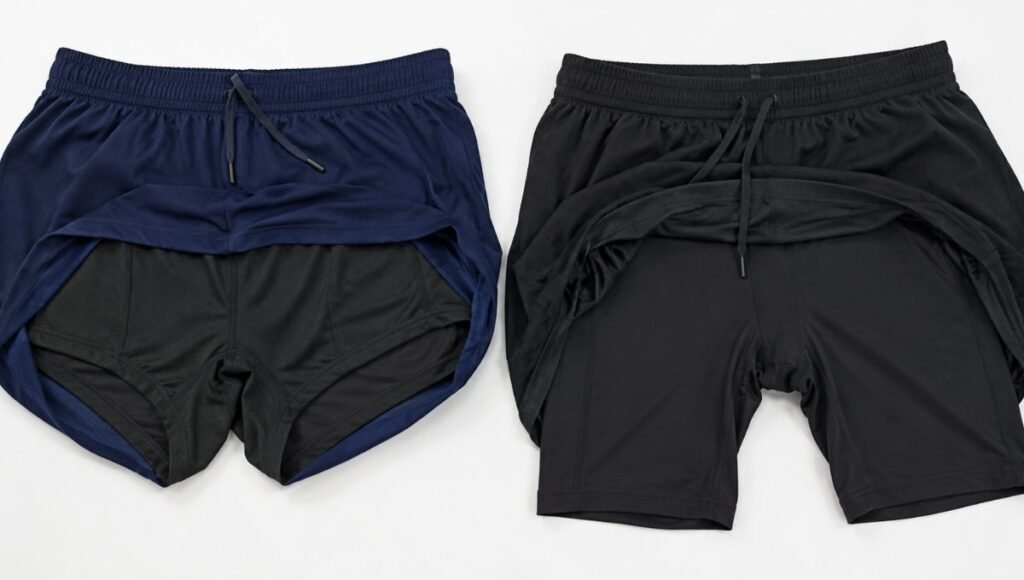
Brief Liner
A brief liner is the classic built-in underwear style — it provides support and coverage while the outer shell provides the running shorts experience. The brief sits close to the body, allows full airflow through the outer shell, and keeps weight minimal.
Brief liners work best for: runners who run cool, shorter distances in warm weather, anyone who prefers maximum airflow and minimal bulk, and runners who don’t have significant inner thigh contact during stride.
The limitation: on longer distances or in humid conditions, a brief liner can shift position slightly — it doesn’t extend down the thigh, which means the thigh-to-thigh contact zone directly below the liner edge can become a chafing area. Some runners describe this as “the liner ending exactly where the problem starts.”
Compression Liner
A compression liner extends down the thigh like a shorter pair of compression shorts built into the outer shell. It provides continuous coverage from waist to mid-thigh, eliminating the transition zone where brief liners can cause issues. The compression also provides light muscle support and keeps everything stable throughout the stride cycle.
Compression liners work best for: longer distances, runners with larger or more muscular thighs, any runner who has experienced chafing with brief-liner shorts, and marathon or ultra training where sustained comfort matters more than minimal weight.
The trade-off: compression liners add warmth and slightly more weight. In hot weather, some runners find the extended coverage uncomfortable. They also need to fit correctly — a compression liner that’s too tight restricts stride; one that’s too loose migrates and bunches.
The practical answer: for runs under 60 minutes, either works. For runs over 90 minutes, a compression liner is almost always the better choice.
Inseam Length: The Number That Matters More Than Brand
Men’s running shorts come in three primary inseam lengths, and the choice affects both function and comfort in ways that go beyond personal preference.

3-Inch Inseam
The shortest option — historically associated with elite running and track. Maximum airflow, minimum weight, full hip flexor freedom. The 3-inch creates the least fabric in motion, which some runners find distracting and others find liberating.
The functional reality: 3-inch shorts expose more thigh, which means runners with thighs that contact during stride will experience more friction. They work beautifully for lean runners, track workouts, and warm-weather racing. They’re not the default choice for general training.
5-Inch Inseam
The most versatile inseam length. Enough coverage to work for most body types without adding significant fabric or weight. This is the inseam most serious runners end up at as their daily trainer — it balances airflow, coverage, and freedom of movement across a wide range of conditions and distances.
If you’re buying your first pair of performance running shorts and you don’t know where to start, start at 5 inches.
7-Inch Inseam
More coverage, more fabric, more warmth. The 7-inch is appropriate for cooler temperatures where extra leg coverage helps, or for runners who specifically want the extra coverage on longer efforts. It’s also the standard inseam for 2-in-1 shorts that include a compression liner — the outer shell’s 7-inch length pairs with the liner’s coverage for a layered system.
Split Shorts: What They Are and Why You Might Want Them

Split shorts — sometimes called racing shorts or side-split shorts — have a high side slit that extends the leg opening, dramatically increasing both range of motion and airflow. They’re common in track and cross-country and worn by a significant percentage of marathon racers.
The running biomechanics case for split shorts is real: the high hip extension of a fast running stride can be limited by shorts fabric that lacks the flex to accommodate full range of motion. Split shorts eliminate this by removing the fabric constraint at the point where the hip reaches maximum extension. At easy and moderate paces, the difference is minimal. At fast paces over longer distances, some runners notice a genuine freedom of movement that standard shorts don’t provide.
Split shorts are not for everyone. They require comfort with more leg exposure, and the side split can flap in crosswinds in ways that some runners find distracting. But if you’ve never tried them and you’re running seriously — particularly if you’re training for or racing a half marathon or marathon — they’re worth a test run. The runners who like them tend to like them strongly.
The Best Running Shorts for Men in 2026
Best Overall: Nike Stride Dri-FIT 5″
The Nike Stride earns its position through consistent execution: the 5-inch inseam is the right default length for most runners, the Dri-FIT fabric manages moisture efficiently without feeling heavy when wet, and the cut accommodates a range of body types without being overly relaxed or restrictive. The brief liner sits flat and doesn’t shift during longer efforts.
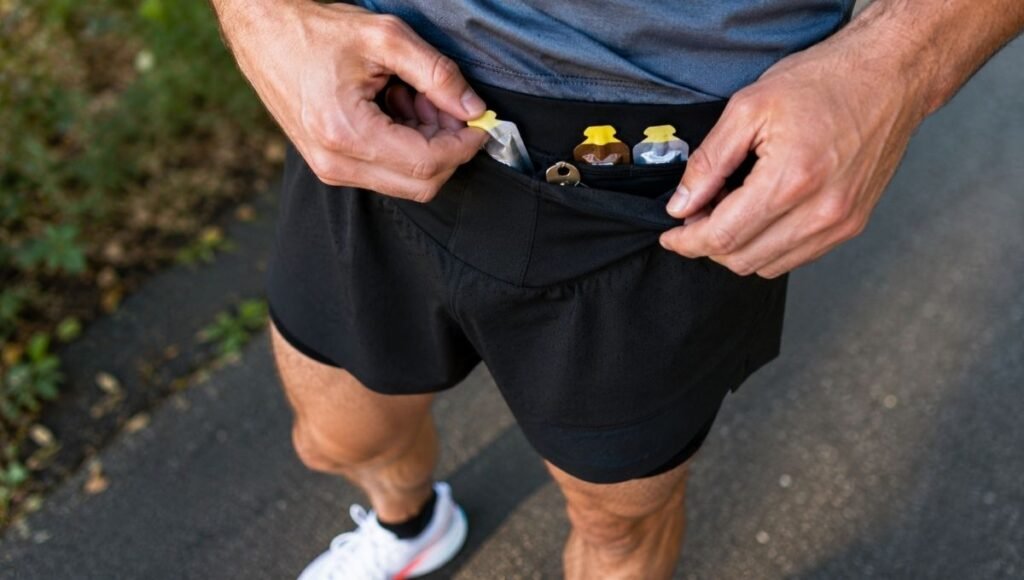
One waist pocket keeps essentials accessible without bouncing. The side cut provides enough leg opening to prevent restriction during stride. This is a shorts-that-disappear situation — by mile 3, you stop thinking about them, which is exactly what you want.
Best for: Everyday training, 5K through half marathon distances, runners who want a reliable, versatile option without overthinking the decision.
Editor’s note: These represent Nike’s performance running line at its most practical. Not the most technical option on this list, but genuinely consistent across conditions and distances.
Best for Long Distance and Marathon Training: Brooks Sherpa 5″
The Sherpa addresses the marathon-distance problem directly. The liner construction uses flat, rounded seams that eliminate irritation points in the groin and inner thigh areas — the specific zones where standard shorts create problems at mile 15 and beyond. The 5-inch outer shell pairs with a brief liner that sits stable through extended mileage.
Five storage pockets — four below the waistband and one zippered back pocket — provide genuine marathon-day carrying capacity for gels, phone, and keys without the storage bouncing or shifting. The recycled polyester fabric dries fast enough that the shorts never feel wet and heavy even through high-sweat long runs.
Best for: Marathon training, long runs over 15 miles, any runner who has experienced chafing or discomfort on extended efforts with other shorts.
Best Split Short: Rabbit FKT 2.0 5″

The Rabbit FKT is where serious training performance lives. The 87% polyester/13% spandex shell is light enough to feel like almost nothing, the mesh liner provides support without compression restriction, and six thoughtfully placed pockets — including a secure phone pocket with minimal bounce — handle everything a long training run or race requires.
The split design is present without being extreme, which makes these more accessible than traditional racing splits for runners who want the range-of-motion benefit without full exposure. The flat seams throughout mean the liner doesn’t create contact irritation even at extended distances.
Best for: Runners ready to try split shorts, marathon racing, fast training runs, runners who want premium performance construction.
Best Compression Liner Option: Brooks Run Visible 4″ 2-in-1
The 2-in-1 construction solves the chafing problem most directly: the compression liner extends down the thigh, providing continuous coverage that eliminates the friction zone that brief-liner shorts can create. The outer shell is loose and breathable while the inner liner keeps everything stable and positioned throughout the stride cycle.
The reflective elements make these the obvious choice for dawn and dusk training — visibility from multiple angles, which matters when you’re sharing roads with traffic before sunrise. The flatlocked seams and minimal waistband stitching prevent irritation at contact points over long distances.
Best for: Runners prone to chafing with brief-liner shorts, larger thigh builds, any distance over 90 minutes, low-light training conditions.
Best Budget Pick: Adidas Own the Run 5″
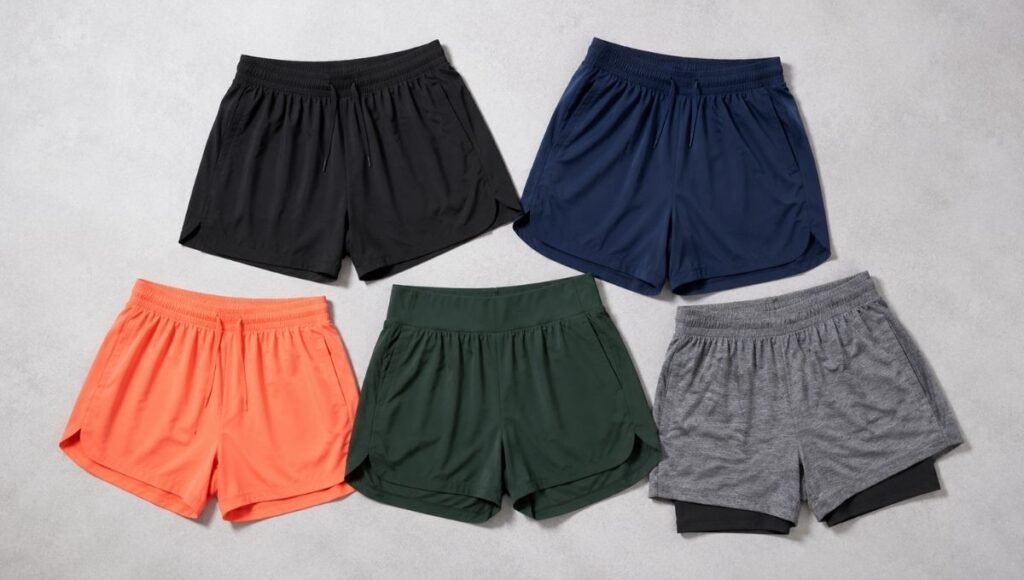
At roughly half the price of premium options, the Own the Run delivers the fundamentals without compromise: moisture-wicking fabric, built-in brief liner, side pockets, and a fit that accommodates a range of body types. The construction is honest rather than technical — this is a reliable training short, not a performance racing short.
The liner quality is noticeably different from premium options at longer distances, but for runs under 10 miles and general training use, the performance gap is minimal. These are the shorts you buy when you’re building your rotation and don’t want to spend $70 per pair.
Best for: New runners, budget-conscious training rotations, shorter distances, backup pairs, treadmill use.
Best for Hot Weather: Ciele DLYShort
At 100 grams, the Ciele DLYShort is as close to not wearing shorts as you can get while still wearing shorts. The no-chafe liner is treated with COOLmatic technology for cooling and accelerated wicking, and the DWR-treated outer shell handles light moisture without absorbing it. For summer running in heat and humidity, the combination of minimal weight and active moisture management keeps you as comfortable as a running short can.
The zippered back pocket and two hidden liner pockets provide practical storage without adding bulk. The construction is premium — this is a shorts-for-serious-runners category.
Best for: Hot weather running, summer races, runners who run very hot and prioritize cooling above all other variables.
Choosing Running Shorts by Distance
The right pair of running shorts isn’t universal — it shifts based on how far you’re going. Here’s a practical distance guide:
5K and track workouts: Prioritize lightness and freedom of movement. 3-5 inch inseam, minimal pocket weight, split shorts if you’re comfortable with them. The run is short enough that liner quality is less critical.
10K to half marathon training: The sweet spot for 5-inch brief-liner shorts. Enough distance that moisture management and liner stability matter, short enough that the premium compression liner isn’t strictly necessary.
Marathon training and racing: Compression liner or 2-in-1 construction becomes important here. Flat seam construction in the liner. Five or more storage pockets for gel carrying. Test your race-day shorts on at least two long training runs before the event.
Trail running: Prioritize durability and pocket security over weight minimization. 5-7 inch inseam for protection from brush and debris. Zippered pockets so items don’t eject on technical terrain.
Running Shorts Mistakes Men Make (And How to Avoid Them)
Running in basketball shorts or gym shorts for too long. These work for short distances but their liners — if they have them — aren’t engineered for running friction patterns. The inseam length also creates a fabric volume that can restrict stride at faster paces. If you’re running more than 3 times a week, dedicated running shorts pay for themselves in comfort within the first month.
Choosing length based on aesthetics rather than thigh contact. Shorter inseams look sleeker and feel freer. They also increase thigh-to-thigh skin contact for runners whose thighs meet during stride. Be honest about your build when choosing inseam length. The 5-inch exists for good reasons.
Ignoring the liner until you have a problem. Check the liner construction before buying. Run your thumb along the seam — if it’s raised and rough against skin, it will be worse after 2 hours of repetitive stride motion. Flat, rounded, or bonded seams are what you’re looking for.
Buying based on how they look hanging still. The way a running short drapes on a hanger tells you almost nothing about how it moves during actual running stride. The waistband might gap, the liner might shift, the leg opening might restrict hip extension. Reviews from runners at your target distance tell you more than the product description.
Not rotating pairs. Like shoes, shorts need time to recover between hard uses. Compression liners especially benefit from not being worn on consecutive days — the elasticity recovers better with a rest day. Rotate at least 2-3 pairs if you’re running more than four times per week.
FAQ: What Men Actually Ask About Running Shorts
What length running shorts should men wear? 5-inch inseam is the starting point for most runners — it’s the most versatile length across body types and distances. Runners with larger or more muscular thighs may prefer 7-inch for additional coverage and reduced skin contact. Runners focused on speed work or racing often prefer 3-inch for maximum freedom.
Do men’s running shorts need a liner? Yes, for any run over 20-30 minutes. The liner provides support and reduces the friction that bare skin against outer shell fabric creates. The choice is brief liner (lighter, more airflow) vs compression liner (more coverage, better chafe prevention at distance).
What are split running shorts? Split shorts have a high side slit cut into the outer shell that extends the leg opening, increasing hip range of motion and airflow. They’re common in racing and serious training contexts. The benefit is real at fast paces — the hip flexor extension during running stride is less restricted by the fabric. They require comfort with the more open leg cut.
How do I stop my running shorts from chafing? First, check the liner construction — raised seams are the most common cause of liner chafing. Second, consider switching from a brief liner to a compression liner for longer runs. Third, anti-chafe balm applied before long runs addresses friction that construction alone doesn’t prevent. Fourth, make sure the inseam length is appropriate for your thigh size — shorts that are too short can increase skin contact.
How often should I replace running shorts? Quality running shorts should last 200-300 runs with proper care. Signs it’s time to replace: the liner has lost its elasticity and shifts during runs, the outer fabric has thinned or pilled significantly, or the waistband no longer holds position. Don’t wait until failure — degraded liner construction causes chafing problems before the shorts look visibly worn out.
The Bottom Line
The best running shorts for men are the ones that disappear during your run. No liner migration, no chafing, no pocket-bouncing, no waistband management. Getting there requires matching the right inseam length to your build, choosing the right liner type for your target distance, and buying from a brand that engineers the liner construction as seriously as the outer shell.
For most runners, the Nike Stride Dri-FIT 5″ handles everyday training. For marathon distance and beyond, the Brooks Sherpa’s liner construction and pocket system earn their premium price. For hot weather and speed work, the Ciele DLYShort is the lightest thing on this list that actually performs.
Start with a 5-inch brief-liner pair for daily training. Add a 2-in-1 compression liner option if you’re running long. Try a split short once — you might not go back.
Sorting out the full running kit? Our guide to the best running shorts for women covers the same ground for women runners — and our winter running outfit guide covers what goes on top when the temperature drops.
References:
- Outdoorgearlab. (2025). Best Running Shorts for Men: Field tested across distances. OutdoorGearLab.
- 220 Triathlon. (2026). Best Running Shorts: Tested by real runners. 220 Triathlon.
- Laing, R.M., et al. (2020). Textile and clothing comfort in sport: A review. Sports Medicine.
- American College of Sports Medicine. (2023). Athletic Apparel and Exercise Performance. ACSM’s Health & Fitness Journal.