
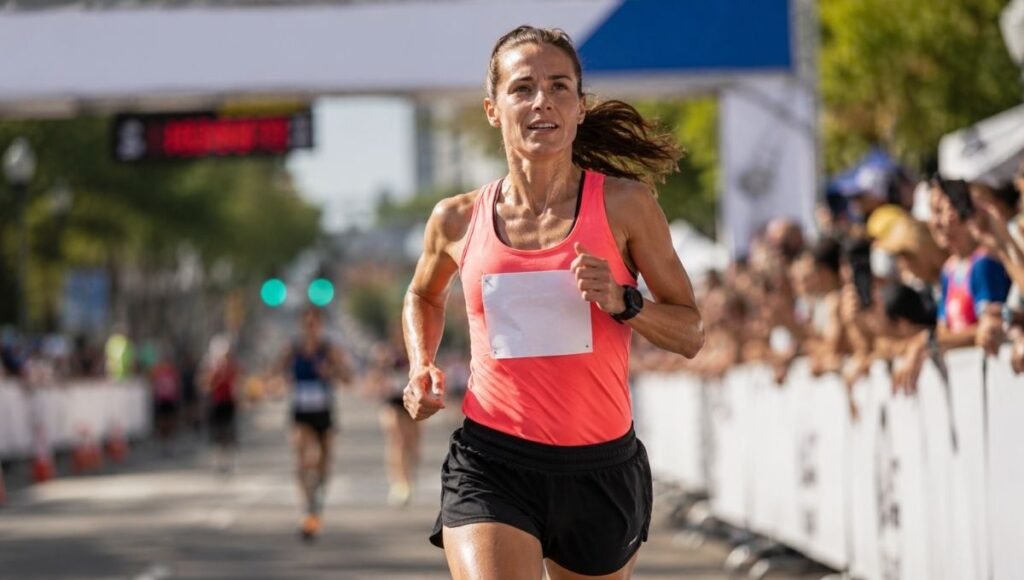
Your half marathon is three weeks away. You’ve done the long runs, logged the miles, survived the early alarms. And then someone in your training group mentions that they once got chafed so badly from a new sports bra that they had to walk the last four miles of their first half marathon. Or that they froze in the starting corral for 40 minutes because nobody told them about throwaway layers. Or that their cotton race shirt got so heavy with sweat it felt like wearing a wet blanket by mile 8.
These are not edge cases. These are the race day outfit mistakes that happen to first-time half marathoners and experienced runners alike — because most advice on what to wear for a half marathon tells you what to buy, not how to prepare. There’s a difference.
This guide covers both: the specific outfit components for every temperature condition, and the preparation process that makes sure none of it surprises you on race morning. After 13.1 miles, the only thing you should be thinking about is the finish line.
Key Takeaways
- The single most important rule of race day clothing: nothing new — every item you wear on race day should have at least 2 long training runs behind it, including your socks
- You need a throwaway layer for the starting corral — waiting 30-60 minutes before the gun in race-weight clothing in cold weather is genuinely miserable and avoidable
- Anti-chafe application is not optional for 13.1 miles — apply it before you feel like you need it, not after; sweat-saturated fabric generates more friction than dry fabric
- Dress for mile 6, not mile 0 — race day adrenaline and body heat warm you faster than training runs; the temperature that feels cold at the start will feel 15-20°F warmer by mid-race
- Your sports bra matters as much as your shorts — for women, an untested sports bra is the most common source of race-day chafing that ends races early
The Half Marathon Outfit Rule Nobody Told You

Before anything else: the golden rule of race day clothing is nothing new. Not your shorts. Not your shirt. Not your socks. Not your sports bra. Especially not your shoes.
This sounds obvious until race day, when you’re standing at the expo surrounded by shiny new gear and you think: these shorts are so much better than mine, and I have two weeks to break them in. Two weeks is not enough. The friction patterns of running — the specific way fabric contacts your inner thigh at hour two, the precise spot where your sports bra underwire hits at mile 9 — only reveal themselves over multiple long runs.
The actual minimum is two long runs in any item you plan to race in. One long run catches the obvious problems. The second confirms it was a one-run fluke or identifies the real issue. If something was mildly uncomfortable during training, it will be significantly uncomfortable at mile 10.
The corollary to this rule: your race day outfit selection should be complete at least two weeks before race day, not the weekend before.
The Starting Corral Problem (And How to Solve It)
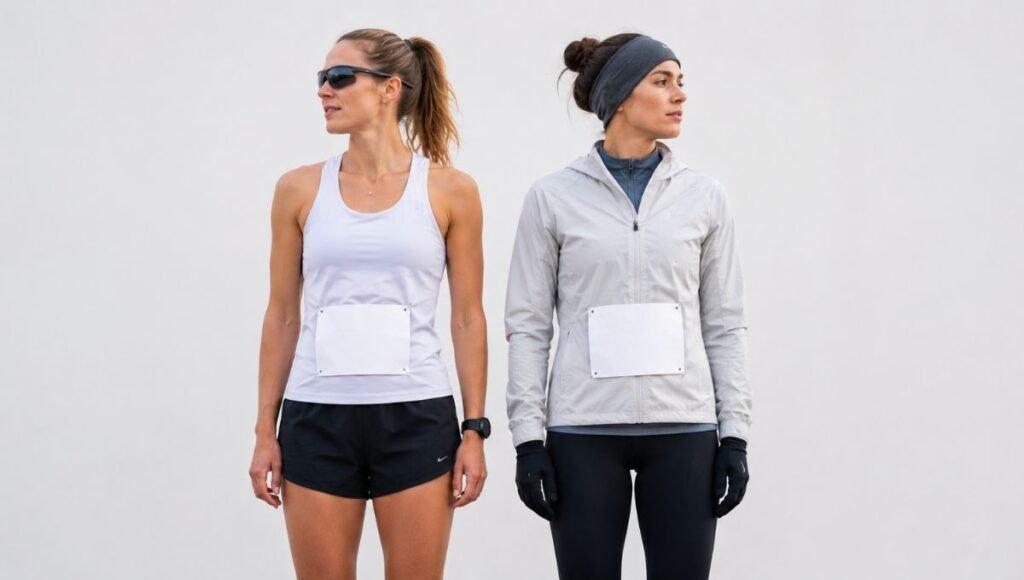
Here’s something half marathon guides almost never mention: you’re going to spend a significant amount of time standing still in your race outfit before the race starts. Depending on your corral position and race organization, this could be 20-60 minutes of waiting in place, often in cool morning temperatures.
If you dress appropriately for running at 7am, you will be cold while waiting. If you dress for waiting, you’ll overheat by mile 3.
The solution experienced runners use: a throwaway layer.
A throwaway layer is a piece of old clothing — an old sweatshirt, a cheap hoodie, a long-sleeve shirt you don’t care about — worn over your race kit that you remove and leave on the side of the road when the race starts. Most races collect these and donate them to local charities. You lose the garment; you gain comfort in the corral.
What makes a good throwaway layer:
- Something warm enough to keep you comfortable standing still in cool temperatures
- Something you genuinely don’t mind losing
- Something easy to remove while moving — full zip is better than a pullover
- Old running gear, thrift store finds, or any inexpensive warm layer works perfectly
If the forecast calls for below 45°F at start time and you’ll be in the corral for more than 20 minutes, a throwaway layer is not optional. It’s logistics.
What to Wear for a Half Marathon by Temperature
60°F and Above: Warm Race Day
This is the most common race day scenario for spring and fall half marathons, and also the one that generates the most mid-race suffering from overdressing.
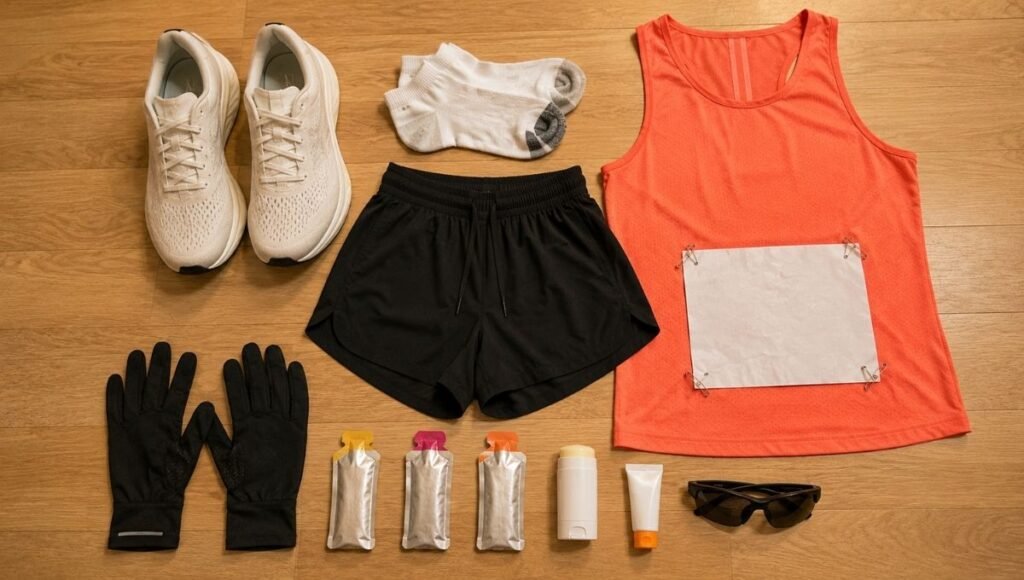
Core outfit:
- Moisture-wicking running singlet or short-sleeve technical shirt — lightweight, no cotton
- Running shorts (your tested pair with functional pockets for gels)
- Running socks — no-show or ankle height works for warm conditions
- Sunglasses if sunny — squinting for 13.1 miles wastes energy and fatigues your mental focus faster than you’d think
- Sunscreen applied 20 minutes before start — you’ll be out for 1.5-3+ hours
What to skip: Any jacket or long-sleeve layer. Even at 60°F, your body heat during sustained running effort at half marathon pace will make a jacket feel suffocating by mile 4. The only exception is a packable windshell tucked in a pocket for post-race, when your body temperature drops quickly.
Anti-chafe priority: High. Warm weather means more sweat, and more sweat means more friction. Apply balm to inner thighs, underarms, sports bra lines, and anywhere fabric edges contact skin.
45–60°F: The Most Common Race Day Condition
The majority of spring and fall half marathons happen in this temperature range. It’s also the range where dressing mistakes are most frequent — too many layers for the pace, not enough for the corral wait.
Core outfit:
- Moisture-wicking long-sleeve base layer or short-sleeve with arm warmers
- Running shorts or light running tights depending on cold tolerance
- Running gloves — hands feel the cold first; these can go in your pocket or shorts waistband at mile 3 when you no longer need them
- Ear band or light running hat if it’s breezy
- Throwaway layer for the corral if start temperature is below 50°F
The arm warmer advantage: Arm warmers are one of the smartest half marathon accessories for this temperature range. They add meaningful warmth in the corral and early miles, push down to the wrists when you warm up, and can be tucked in a pocket or tossed to a spectator mid-race. They solve the “what if I’m cold at the start but hot by mile 5” problem elegantly.
What to skip: A full jacket in this range almost always results in overheating. If you feel like you need a jacket, try arm warmers and a long-sleeve base layer first — that combination handles most 45-60°F race conditions without trapping heat.
30–45°F: Cold Race Day
Cold-weather half marathons require more deliberate layering, but the fundamental principle still holds: dress for mile 6, not mile 0. You will warm up. The question is whether your layers can accommodate that.
Core outfit:
- Moisture-wicking thermal long-sleeve base layer
- Light running jacket or windshell as an outer layer
- Thermal running tights
- Insulated running gloves — standard gloves aren’t enough in this range
- Running hat that covers your ears
- Neck gaiter or buff for wind protection
- Throwaway layer — essential for cold-weather race day corral waits
Managing layers mid-race: At this temperature, you’ll likely start shedding layers around miles 4-6. If you’re racing in a jacket, make sure it’s packable and can be tied around your waist, or hand off to a spectator at a known point on the course.
The tights vs shorts question: At 30-45°F, running tights are generally the right call. Legs generate significant heat through muscle activity, but at the lower end of this range, exposed skin in shorts faces wind chill that tights eliminate. The exception: runners who run extremely hot may be comfortable in shorts with long socks in the upper part of this range.
Below 30°F: Racing in Serious Cold
Cold-weather half marathons below freezing require full winter running kit. The good news: your body generates substantial heat at half marathon effort level, which means you’ll likely be comfortable once you’re past the first mile. The challenge is the pre-race wait and protecting extremities throughout.
Core outfit:
- Thermal base layer (moisture-wicking — cotton is especially dangerous in extreme cold when you’re wet)
- Insulated running jacket
- Thermal running tights
- Waterproof insulated mittens — fingers share warmth better than isolated gloves
- Full running hat plus balaclava or buff
- Wool-blend running socks
- Throwaway layer plus additional insulation for the corral wait
The safety consideration: At temperatures below 20°F with wind, exposed skin is at genuine frostbite risk. Cover your face and hands completely. If conditions are extreme — below 0°F feels-like temperature, freezing rain, or ice on the road — check the race’s weather policy. Many races have cancellation or modification thresholds for runner safety.
Half Marathon Outfit for Women: The Sports Bra Question

This deserves its own section because it’s consistently the most underaddressed topic in race day outfit guides — and the most common source of race-ending discomfort for women runners.
A sports bra that works fine for a 60-minute training run can create serious problems at 13.1 miles. The mechanisms are the same as shorts chafing: sustained friction plus moisture equals increasing discomfort. But because sports bra chafing tends to appear in areas that are less obvious during a run, it often isn’t detected until it becomes severe.
What to test: Run at least two long runs (10+ miles) in your race day sports bra before committing to it for the half. Pay attention specifically to the underwire band, the back clasp area if applicable, and where the shoulder straps sit. These are the friction zones that show up at distance.
Anti-chafe application for sports bras: Apply balm or petroleum jelly along the entire underwire band, under the shoulder straps, and anywhere the bra has seams that contact skin. Do this before you feel like you need it. Once you feel chafing beginning at mile 7, you cannot make it stop — you can only manage it.
Seamless sports bras are worth considering specifically for race day. The reduction in contact points from seamless construction makes a meaningful difference over 13.1 miles.
The backup plan: Many experienced women runners carry a small amount of anti-chafe balm in their race pocket or bib clip for mid-race reapplication. It doesn’t fix a chafing problem that’s already started, but it slows the progression.
The Race Day Outfit Checklist (Night Before)
This is the practical ritual that eliminates morning chaos and pre-race anxiety:
Lay out everything the night before:
- Race shorts or tights
- Technical shirt or singlet
- Sports bra (tested)
- Running socks (tested)
- Shoes (your training shoes, not new)
- Race bib and safety pins
- Gloves and ear band if needed for temperature
- Throwaway layer
- Anti-chafe balm
- Sunscreen
- Sunglasses and hat if applicable
- Energy gels (know when you’ll take them and carry enough)
Morning protocol: Apply anti-chafe balm before dressing, not after. Cover inner thighs, underarms, sports bra contact zones, and anywhere you’ve experienced chafing in training. Put on your race outfit. Pin your bib through all four corners. Put on your throwaway layer over everything. Leave for the race.
The goal is to arrive at the starting corral with your race day decisions already made. Race morning is not the time to reconsider your outfit choices.
Race Day Outfit Mistakes That Derail Half Marathons

Wearing something new. This remains the most common and most preventable race day problem. The excitement of a new gear purchase right before a race is real. The chafing consequences are also real. Test everything first — no exceptions.
Skipping the throwaway layer in cold conditions. Standing in a starting corral for 40 minutes in race-weight clothing when it’s 38°F is genuinely miserable and affects your pre-race mental state. A $3 thrift store sweatshirt prevents it entirely.
Applying anti-chafe balm only to places that chafed before. Body chemistry changes on race day — more adrenaline, higher sustained sweat output, slight differences in gait. Apply balm to all the usual suspects plus conservative coverage of adjacent zones. The places you’ve never chafed in training are the places that surprise you at mile 11.
Overdressing for the weather. Race day adrenaline and sustained running effort at half marathon pace make you significantly warmer than your easy training runs. If you’re comfortable before the gun goes off, you’re probably overdressed for the race itself.
Wearing a cotton anything. Cotton absorbs moisture and holds it against your skin. A cotton shirt that gets saturated with sweat at mile 6 becomes heavy, cold when there’s any breeze, and increasingly abrasive at fabric contact points. This is true at any temperature, but it’s particularly bad in cool or variable conditions.
When Your Race Day Outfit Goes Wrong Mid-Race
Even with perfect preparation, race day conditions can diverge from your plan. Here’s what experienced runners do:
Too hot: If you start overheating early in the race, slow your pace first — heat management and pace are directly linked. Use water stations to wet your wrists, the back of your neck, and your head. If you’re wearing a hat, it can trap heat — remove it if you’re overheating significantly.
Chafing starts mid-race: You cannot stop it once it starts. Use water station cups to wet the area if friction is the primary cause, which briefly reduces friction. Accept that the last miles may be uncomfortable and adjust expectations accordingly. Slow your pace slightly if the discomfort is affecting your stride.
Too cold: If you underestimated the temperature, increasing your pace will generate more body heat. If there’s a medical tent on the course and you’re experiencing genuine cold distress — shivering you can’t control, numbness in hands or face — stop and seek help. Hypothermia risk is real in wet and cold conditions.
FAQ: What Runners Ask About Half Marathon Outfits
What should I wear for my first half marathon? Your most comfortable, well-tested running shorts or tights, a moisture-wicking technical shirt, your training shoes, and running socks you’ve used on long runs. Nothing new. Apply anti-chafe balm before dressing. Add a throwaway layer if the start temperature is below 50°F. That’s the complete answer.
Can I wear leggings for a half marathon? Absolutely. Running tights or leggings are appropriate for any half marathon temperature and preferred by many runners regardless of conditions. Make sure they’re running-specific with moisture-wicking fabric, a secure waistband, and ideally a pocket for your phone or gels. Test them on long runs first.
What do I do with my jacket during a half marathon? Options: tie it around your waist (works for lightweight packable jackets), tuck it in the back of your tights waistband, hand it to a spectator at a predetermined point on the course, or leave it with the throwaway clothing at the start. If you’re not sure you’ll want it back, a throwaway layer approach is cleaner.
Should I wear compression socks for a half marathon? Many runners find compression socks or calf sleeves helpful for recovery after the race more than during it. For the race itself, use whatever socks you’ve trained in successfully. If you’ve trained in compression socks, race in them. If you haven’t, race day is not the time to introduce them.
How do I stop chafing during a half marathon? Prevention is the only reliable answer — anti-chafe balm applied before the race, tested gear, and moisture-wicking fabrics. Once chafing starts mid-race, you can slow its progression by wetting the area at water stations, but you cannot stop it. The post-race shower will be memorable either way.
The Bottom Line
Your half marathon outfit comes down to one principle: the race is 13.1 miles, and every piece of clothing you wear needs to have proven itself capable of being comfortable for that distance. Not for 6 miles. Not for a fast training run. For 13.1 miles at race effort, in whatever conditions the day brings.
Test everything. Lay it out the night before. Apply anti-chafe balm before you think you need it. Have a throwaway layer if it’s cold. Dress for mile 6, not the starting corral.
The finish line photo looks better when you’re not limping.
For what to wear on your training runs leading up to race day, check out our guide to the best running shorts for women and best running leggings for women — both cover the tested gear that earns its place in your race day kit.
References:
- Brooks, A., RunToTheFinish. (2025). What to Wear for a Half Marathon: Guide for All Temps. RunToTheFinish.
- American College of Sports Medicine. (2023). Exercise in the Heat: Safety Guidelines. ACSM’s Health & Fitness Journal.
- Laing, R.M., et al. (2020). Textile and clothing comfort in sport: A review of current knowledge. Sports Medicine.
- National Weather Service. (2024). Wind Chill Chart and Cold Weather Safety. NOAA.