
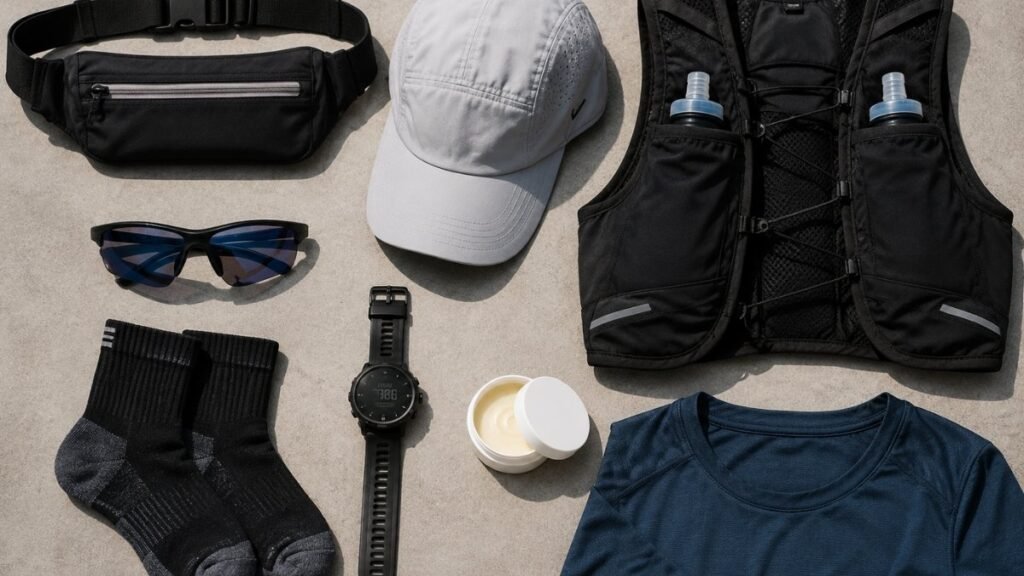
Walk into any running store, and you’ll find shelves packed with belts, hydration vests, socks, watches, lights, and countless other accessories. It’s easy to spend far more than you planned without actually fixing the problems that make running less enjoyable, whether that’s a bouncing phone, sweaty hands, blisters, or poor visibility after dark.
The best running accessories for men aren’t the most expensive or feature-packed—they’re the ones that solve the challenges you actually face. This guide explains which accessories are worth buying, when you truly need them, and how to build a practical running kit based on your distance, the weather, and your training goals—without wasting money on gear you’ll rarely use.
Overview: Quick Answer
Here’s the fast version, organized by what you’re actually doing on a given run.
Daily Runs (3–8 km):
- Running belt or pocketed shorts
- Moisture-wicking socks
- Lightweight running cap
- Optional sports watch
Long Runs (10 km+):
- Anti-chafe balm
- Running belt or hydration vest
- Technical socks
- Nutrition storage
- GPS watch
Hot Weather:
- Breathable cap
- Sunglasses
- Cooling arm sleeves
- Sweat headband
Cold Weather:
- Running gloves
- Neck gaiter
- Thermal beanie or headband
Night Running:
- Reflective gear
- Headlamp or clip-on light
- Bone-conduction headphones
New runners rarely need every accessory at once. Start with the essentials, then add gear as your training, distance, or conditions change.
How to Choose the Right Running Accessories
Buying running accessories is easier when you start with your actual needs instead of the latest gear trends. Think about how often you run, how far you typically go, the weather you run in, your safety needs, and your budget. Those factors will help you decide what deserves a place in your running kit—and what can wait.
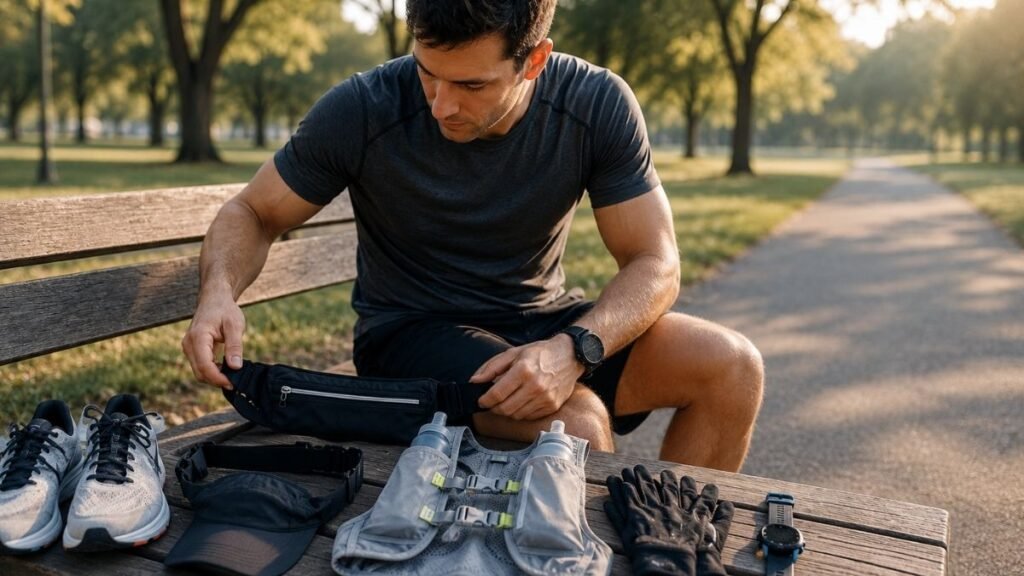
A beginner running three times a week doesn’t need the same kit as someone training for a marathon. Here’s how priorities typically shift:
- Beginner (0–3 months): Focus on comfort basics — good socks, a way to carry your phone and keys, weather-appropriate layers.
- Intermediate (consistent weekly mileage): Add distance-specific gear — hydration, nutrition storage, a running watch for pacing.
- Marathon-focused: Layer in race-day specifics — proven hydration systems, backup fueling, and gear tested repeatedly in training.
Start With Essentials
Before anything else, solve the basics: how you’ll carry your phone and keys, what’s on your feet, and whether you’re dressed for the weather. Everything past that is an upgrade, not a requirement.
Upgrade Only When Your Running Demands It
It’s surprisingly common for new runners to buy a premium GPS watch or hydration vest in month one, before they’ve even figured out that a $12 pair of moisture-wicking socks would have solved their biggest complaint — blisters. The “buy only when needed” approach saves money and avoids gear that ends up unused.
Running Goal → Accessories Worth Buying First
| Running Goal | Buy First | Buy Later |
|---|---|---|
| Just starting out | Socks, storage solution, weather layer | GPS watch, hydration vest |
| Building weekly mileage | Running belt, technical socks | Heart-rate monitor |
| Training for a race | Hydration system, nutrition storage | Recovery tools |
| Running in variable weather | Cap, gloves, neck gaiter | Specialty fabrics |
The best accessory is the one that solves your biggest running problem — not the one with the most features.
Essential Running Accessories by Category
Most runners don’t buy every accessory at once—and they don’t need to. The best approach is to choose gear that solves the challenges you face most often, whether that’s carrying your phone, staying visible after dark, or preventing blisters.
Carrying & Hydration
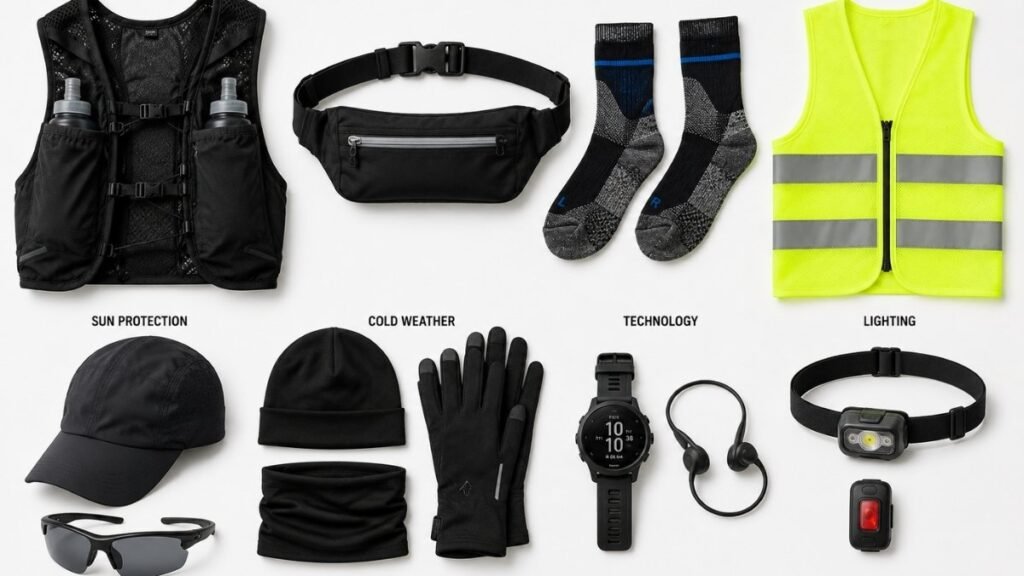
Running belts and pocketed shorts solve the basic problem of carrying a phone, keys, and a gel without them bouncing around. Hydration belts add water bottles for runs over 10K; hydration vests distribute weight better across the shoulders for longer efforts where a belt starts to feel heavy on the hips.
Many runners try holding a phone in their hand before ever buying carrying gear, and give up within a mile or two once their grip tires out or their hand starts sweating. That’s usually the moment a pocketed short or belt starts to look appealing instead of optional.
Foot Comfort
Running socks matter more than most beginners expect. Cotton socks hold moisture and cause friction; technical running socks — usually merino or synthetic blends — wick moisture and reduce blister risk significantly. This pairs naturally with a men’s running singlet up top, since the same fabric logic applies from head to toe: moisture management matters everywhere, not just on your torso.
Sun Protection
A breathable running cap or visor keeps sun and sweat out of your eyes, while running-specific sunglasses reduce glare without bouncing during your stride. Skip anything not designed to stay put — regular sunglasses tend to slide with sweat.
Cold Weather Essentials
Gloves, a neck gaiter, and a thin thermal beanie or headband cover most cold-weather needs without overdressing. A neck gaiter (often called a Buff) is particularly versatile — it works as a face cover, headband, or neck warmer depending on conditions.
Safety & Visibility
Reflective vests, clip-on lights, and headlamps aren’t optional for early morning or evening running near traffic. This is one category where skipping the accessory carries real risk rather than just inconvenience.
Running Technology
GPS watches and heart-rate monitors help with pacing and training structure, and bone-conduction headphones let you hear music or podcasts while keeping ambient awareness of traffic and surroundings — a meaningful safety upgrade over standard earbuds.
Accessory Comparison Table
| Accessory | Best For | When You Need It | Skip If… |
|---|---|---|---|
| Running belt | Carrying phone/keys | Any run over 3K | You prefer pocketed shorts |
| Hydration vest | Long-distance training | Runs over 15K or hot weather | You run under 10K regularly |
| Technical socks | Blister prevention | Every run | Never — cotton isn’t a real alternative |
| GPS watch | Pace and distance tracking | Structured training | You run casually without goals |
| Reflective gear | Visibility | Any low-light run | You only run midday |
Choose accessories based on the function they serve, not because a brand or trend makes them look essential.
Recommended Running Gear for Different Types of Runs
The gear you bring should match your distance, the weather, and the conditions you’ll be running in. Use these examples to build a practical kit for the runs you do most often.
Everyday Runs
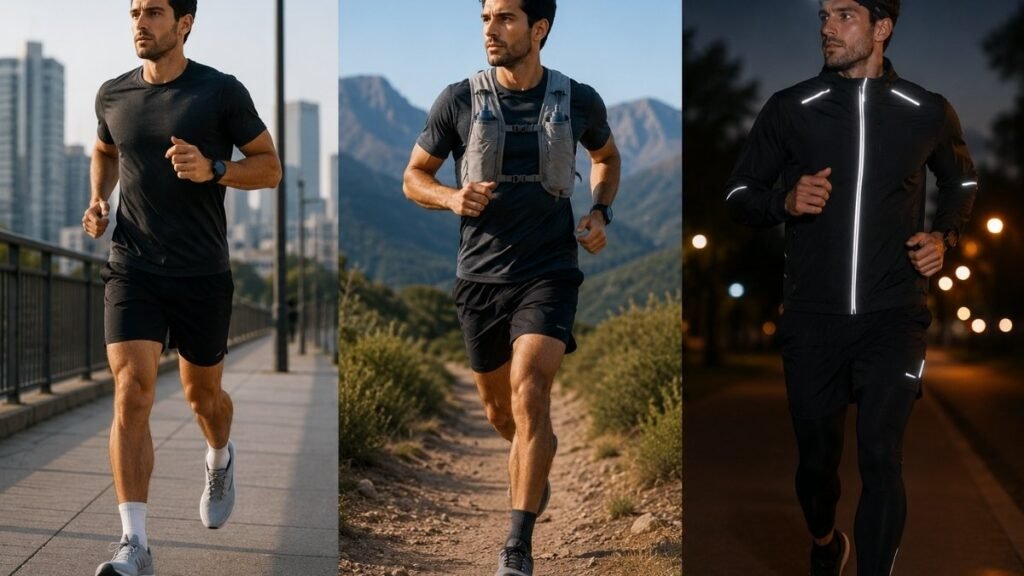
Pocketed shorts or a light belt, technical socks, and a cap if it’s sunny. Keep it minimal — daily runs don’t need race-day gear.
Long Distance Training
Add a hydration belt or vest, nutrition storage, and a GPS watch to track pace over distance. This is also where anti-chafe balm starts becoming non-negotiable.
Marathon Race Day
Whatever combination you tested and trusted during training — race day is not the time to try new gear. Reflective gear if the start is early morning, plus backup fueling in case aid stations run out.
Hot Weather
Breathable cap, sunglasses, cooling arm sleeves, and a sweat headband to keep salt and moisture out of your eyes.
Cold Weather
Gloves, neck gaiter, thermal headband, and layered clothing that can be removed mid-run as body temperature rises.
Night Running
Reflective vest or clothing, a headlamp or clip-on light, and bone-conduction headphones so you can still hear traffic.
Experienced runners tend to simplify their kits over time rather than add to them — cutting accessories that never actually got used and keeping only what solved a real problem during training.
Scenario → Recommended Accessory Combination
| Scenario | Core Kit |
|---|---|
| Everyday runs | Belt/pocketed shorts + socks + cap |
| Long-distance training | Hydration + nutrition storage + GPS watch |
| Marathon race day | Tested race-day kit + backup fueling |
| Hot weather | Cap + sunglasses + arm sleeves |
| Cold weather | Gloves + gaiter + headband |
| Night running | Reflective gear + light + safe headphones |
Different running situations call for different accessory combinations — not simply more accessories piled on top of each other.
How to Stay Comfortable on Every Run
Choosing the right socks, fitting your gear properly, and preparing before you head out can help prevent blisters, chafing, and other common problems that distract from your run.
Chafing Prevention
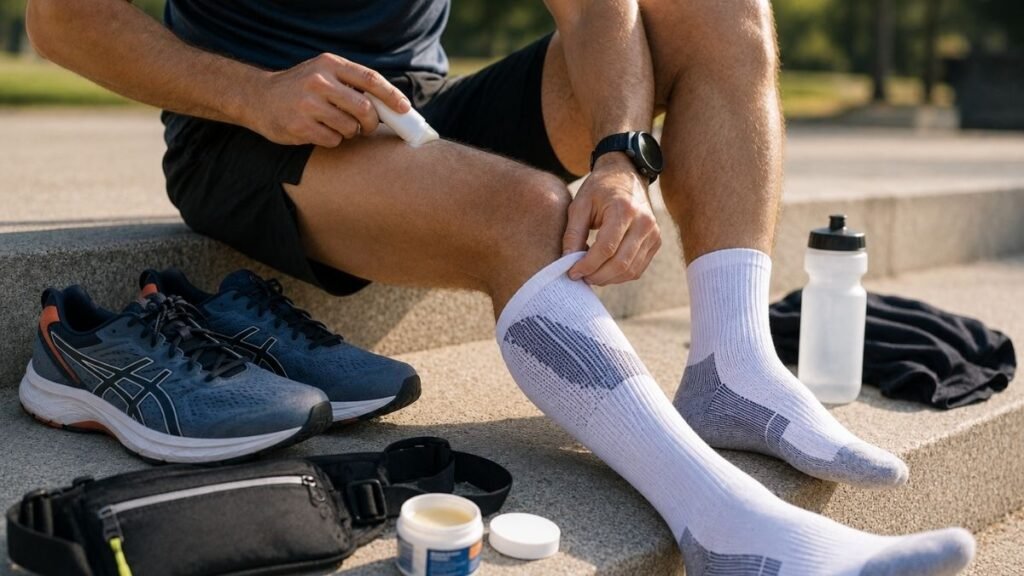
Thigh chafing and nipple chafing are two of the most commonly reported discomforts among male runners, particularly on long runs or in humid weather. Anti-chafe balm applied before the run to high-friction areas — inner thighs, underarms, nipples — makes a noticeable difference. A properly fitted men’s running singlet with flat or bonded seams also reduces friction at the source, rather than just masking it afterward.
Blister Prevention
Blisters usually come down to two things: sock choice and shoe fit. Cotton socks hold moisture and increase friction; a proper technical sock reduces this significantly. A common mistake beginners make is blaming their shoes for blisters when the actual issue was cotton socks the entire time.
Stabilizing Running Accessories
Phone bounce, hydration pack rubbing, and a poorly positioned running belt are all fixable with adjustment rather than a different product. A running belt should sit snug at the waist, not loose at the hips, or it’ll bounce with every stride regardless of brand.
Comfort Checklist Before Every Run
- Apply anti-chafe balm to thighs, underarms, and nipples for runs over 45 minutes
- Confirm socks are moisture-wicking, not cotton
- Adjust running belt snug against the waist before starting
- Check hydration vest straps for even weight distribution
- Test any new gear on a short run before using it for a long one
Correct fit and preparation matter more than buying expensive accessories — a $60 vest worn incorrectly still causes the same rubbing as a $15 one.
Running Accessories That Can Wait
Not every accessory deserves a spot in a beginner’s kit, and some genuinely aren’t worth it until your training reaches a certain point.
Power meters, advanced heart-rate straps, premium GPS watches with dozens of metrics, recovery boots, and high-end hydration systems all solve problems that most runners simply haven’t encountered yet. They’re not bad products — they’re just premature purchases for someone still building a base of consistent mileage.
Many experienced runners upgraded to this tier of gear only after a specific, identifiable need showed up in their training — not because the product looked impressive in a review.
Accessory Upgrade Path
| Accessory | Beginner | Intermediate | Marathon Runner |
|---|---|---|---|
| GPS watch | Basic or none | Mid-range pacing features | Advanced metrics, race mode |
| Hydration | Handheld or none | Belt | Vest system tested in training |
| Recovery tools | Not needed | Optional | Worth considering |
| Heart-rate strap | Not needed | Optional | Useful for structured training |
Upgrade equipment only after your training creates a real, specific need for it — not because it’s the next logical purchase on paper.
Care and Maintenance Tips
Accessories last significantly longer with basic maintenance, and skipping it tends to shorten their lifespan faster than heavy use ever would.
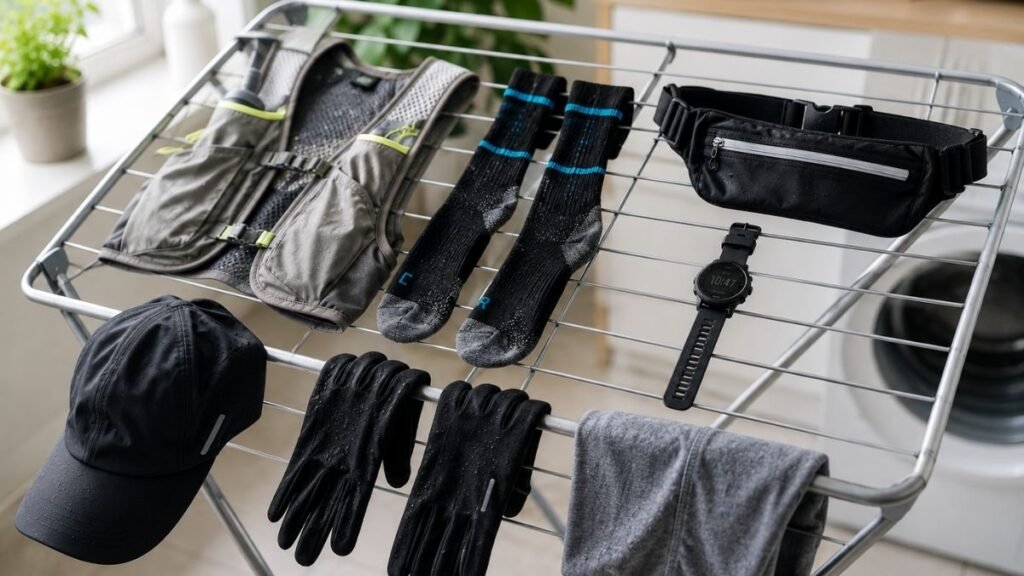
- Moisture-wicking fabrics: Wash in cold water, skip fabric softener — it coats fibers and blocks wicking performance over time.
- Hydration systems: Rinse bladders and bottles after every use to prevent bacteria and lingering odor.
- Running shoes: Air dry fully between runs rather than using direct heat, which breaks down cushioning materials faster.
- GPS watches: Wipe down after sweaty runs and charge before it hits empty to preserve battery life long-term.
- Odor buildup: Usually a sign of incomplete drying or fabric softener residue, not a defective product.
Accessory Maintenance Checklist
- Rinse hydration systems immediately after use
- Wash technical fabrics in cold water without fabric softener
- Air dry shoes and clothing instead of using a dryer on high heat
- Wipe down and store watches properly between uses
- Replace worn-out socks and belts before they cause new problems
Simple, consistent maintenance keeps running accessories comfortable and effective for far longer than heavy use alone would suggest.
Frequently Asked Questions
What are the most essential running accessories every male runner should invest in first?
Start with moisture-wicking socks, a way to carry your phone and keys (belt or pocketed shorts), and weather-appropriate basics like a cap or gloves. Everything else can wait until a specific problem shows up.
How do I carry my smartphone and keys while running without them bouncing around?
A snug running belt or pocketed running shorts solve this for most runners. The key is fit — a loose belt bounces regardless of brand, so adjust it snug against your waist before starting.
Do running socks really matter, or can I just run in standard cotton socks?
Yes, they matter significantly. Cotton holds moisture and increases friction, which is one of the most common causes of blisters. Technical running socks wick moisture and reduce that friction meaningfully.
How can male runners prevent painful thigh chafing and nipple bleeding on long runs?
Apply anti-chafe balm to high-friction areas before runs over 45 minutes, and consider a properly fitted singlet with flat or bonded seams to reduce friction at the source rather than just treating symptoms afterward.
Is a dedicated GPS running watch better than an Apple Watch or smartphone?
For structured training and racing, a dedicated GPS watch typically offers better battery life and running-specific metrics. For casual runners without specific pacing goals, a smartphone or general smartwatch is usually sufficient.
What gear do I need to stay safe and visible when running at night or early in the morning?
Reflective clothing or a vest, a headlamp or clip-on light, and headphones that don’t block ambient sound — bone-conduction models are a solid choice for maintaining traffic awareness.
What is the difference between a running waist belt and a hydration vest for long-distance runs?
A waist belt carries less volume and sits at the hips, fine for runs under 15K. A hydration vest distributes weight across the shoulders and back, which is more comfortable for longer distances or hot-weather runs requiring more fluid.
How do arm sleeves and multi-use neck gaiters help with temperature regulation?
Arm sleeves can be pushed down or removed mid-run as temperatures shift, offering flexible cooling or warmth. Neck gaiters work as a face cover, headband, or neck warmer depending on conditions, making them one of the more versatile cold-weather accessories.

Final Thoughts
Choosing the right running accessories for men doesn’t have to be complicated. Start with the basics that make your runs more comfortable and safer, then add new gear only when your training or routine calls for it. Over time, you’ll figure out which accessories you rely on every week—and which ones you never miss.
In the end, the best running gear isn’t the most expensive. It’s the gear that helps you enjoy running more, stay consistent, and look forward to your next mile.
🏃 Running Gear Notes: The Thinking Behind This Guide
Finding the right running accessories isn’t about owning more gear—it’s about making every run more comfortable, safer, and easier to enjoy.
That’s why this guide focuses on the accessories runners are most likely to benefit from, based on where they run, how far they run, and the challenges they actually face, from blisters and phone bounce to staying visible after dark.
This guide is built around three priorities:
- 👟 Everyday Comfort — Socks, anti-chafe essentials, and gear that helps prevent common running annoyances.
- 🎒 Practical Running Gear — Smart carrying, hydration, and accessories that make longer runs easier.
- 🌙 Safety & Conditions — Equipment for running in heat, cold, rain, or low-light conditions.
Because building a good running kit isn’t about buying everything.
It’s about choosing the gear you’ll actually use, run after run.
🏃 Continue Building Your Running Kit
The right accessories are only one part of a comfortable running experience. These practical guides can help you choose the right gear for different conditions, improve comfort, and enjoy every run with more confidence.
- Best Running Gloves — Keep your hands warm and comfortable with running gloves designed for cold-weather training.
- Best Running Hat — Find the right running hat for sun protection, breathability, and year-round comfort.
- Best Running Sunglasses — Reduce glare, improve visibility, and protect your eyes with running sunglasses built for the road and trail.
- Best Running Belt — Compare the best running belts for carrying your phone, keys, nutrition, and other essentials without bounce.
- Reflective Running Gear — Stay visible and safer during early morning or evening runs with the right reflective clothing and accessories.
- Running Gear for Men — Explore essential running gear that helps you stay comfortable, prepared, and ready for every mile.
❤️ A Final Note
Running is about more than pace or distance—it’s about feeling comfortable enough to keep showing up.
At KineticV, we create practical guides that help runners choose apparel, accessories, and gear with confidence. From everyday training to changing seasons, our goal is to make every decision simpler, so you can spend less time wondering what to wear and more time enjoying the run.
Our goal is simple: helping every runner find comfortable, practical solutions that make every mile feel better.