
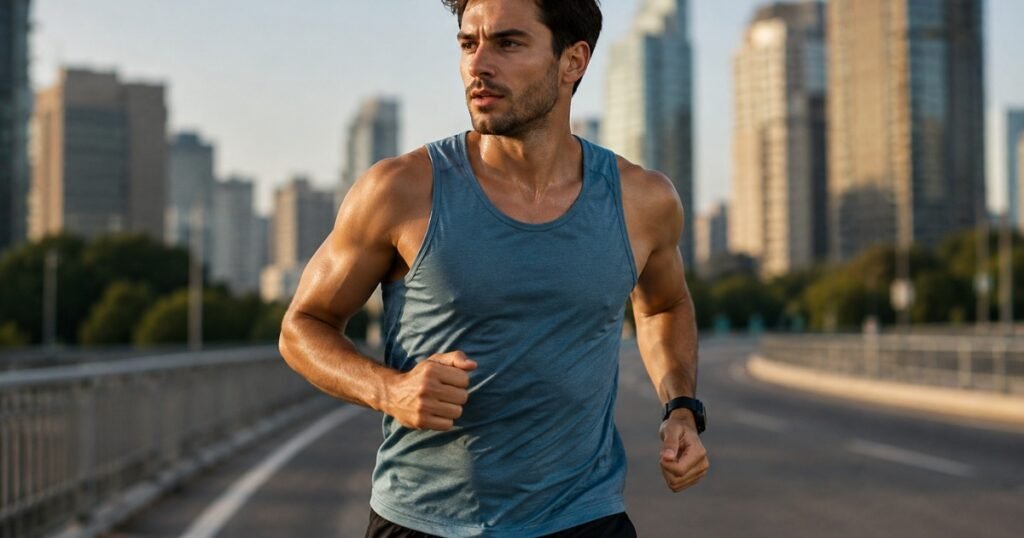
Running in the wrong top doesn’t seem like a big deal—until you’re a few miles in. Sweat-soaked fabric starts sticking to your skin, your underarms begin to chafe, and you find yourself adjusting your shirt instead of focusing on your pace. A good men’s running singlet is designed to prevent those distractions with lightweight, breathable fabric and a running-specific fit.
Not every singlet performs the same, though. Some are built for race day, others for everyday training. In this guide, you’ll learn how to choose the right fit, fabric, and features so every run feels cooler, more comfortable, and free from unnecessary irritation.
Overview: Quick Answer
Who should wear a running singlet: Anyone training regularly for distance events, racing, or running in warm weather where airflow and weight matter more than coverage.
- Best for race day: A true race-fit singlet with bonded or flatlock seams and minimal fabric weight.
- Best for daily training: A regular-fit singlet with slightly more room through the chest and shoulders.
- Best for hot and humid weather: Micro-mesh or high-ventilation polyester blends that dry fast and resist sticking.
- Best for larger or taller runners: Semi-fitted styles with a longer hem and wider armhole, avoiding ultra-race cuts.
Fit and anti-chafing prep matter just as much as the fabric label on the tag. A $90 singlet worn in the wrong size will still chafe.
What Is a Men’s Running Singlet?
A men’s running singlet is a sleeveless top designed specifically for running, built with lightweight, breathable fabric, deep armholes, and a cut that reduces bulk and friction during repetitive motion. It’s a different animal from a standard gym tank top, even though the two get lumped together constantly.
Running Singlet vs Tank Top
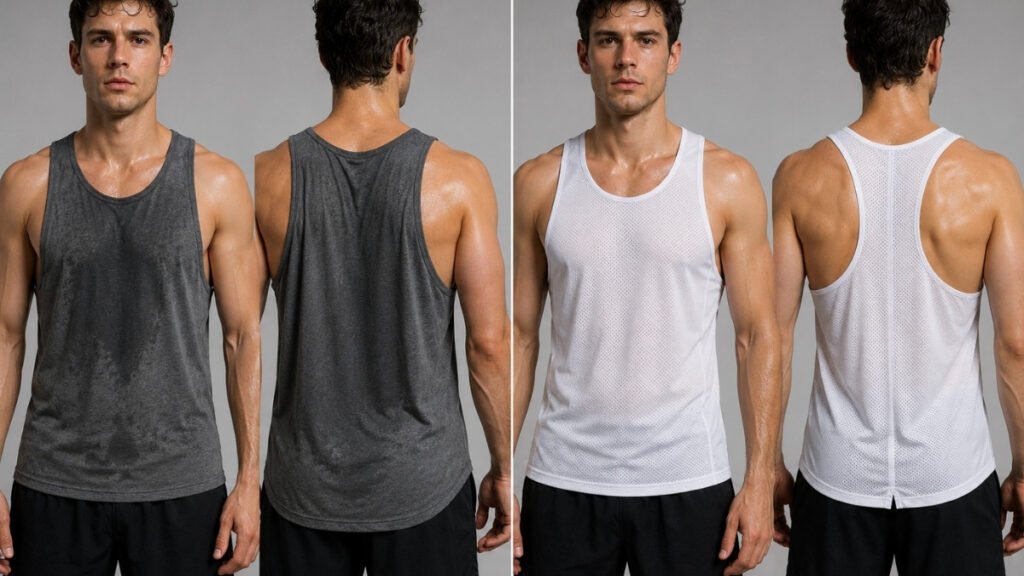
Both are sleeveless. But a gym tank top is usually built from heavier cotton-blend fabric, designed for comfort during lifting, not airflow during sustained movement. A running singlet, by contrast, uses technical fabric engineered to move sweat away from skin and let air pass through freely. Armholes are cut deeper to reduce shoulder rub, and the hem is often slightly shorter to cut weight and drag.
Common for new runners to assume any sleeveless shirt will do the job, right up until they’re two miles into a warm-weather run and realize their tank is soaked, heavy, and sticking to their chest. That’s usually the moment people start shopping for an actual singlet.
Why Marathon Runners Prefer Singlets
At race pace, every gram and every degree of body heat matters. Singlets shed both. Less fabric means less weight to carry over 26.2 miles, and more exposed skin means better heat dissipation — which is why you’ll see singlets dominate the front of the pack at nearly every major marathon.
Running Singlet vs Training Tank vs Sleeveless T-Shirt
| Feature | Running Singlet | Training Tank | Sleeveless T-Shirt |
|---|---|---|---|
| Fabric weight | Ultra-light | Medium | Heavy |
| Breathability | High (mesh panels) | Moderate | Low |
| Armhole depth | Deep, chafe-reducing | Standard | Shallow |
| Best use | Racing, hot-weather training | Gym, casual runs | Casual wear only |
| Moisture handling | Fast-wicking | Basic wicking | Absorbs sweat |
How to Choose the Right Men’s Running Singlet
Prioritize fit and breathability first, fabric weight second, and brand name last. Everything else follows from there.
Here’s what actually separates a good singlet from a mediocre one:
- Fabric – Polyester and nylon blends dominate for good reason; they wick moisture and dry quickly.
- Breathability – Mesh panels under the arms and along the back reduce heat buildup.
- Moisture management – Look for fabric that spreads sweat across a wide surface to speed evaporation, rather than absorbing it.
- Weight – Lighter isn’t always better if it sacrifices durability.
- Fit – Should sit close without restricting arm swing or chest expansion.
- Seam construction – Flatlock or bonded seams reduce friction points.
- Reflective details – Useful for early morning or evening runners.
- Durability – Ultra-thin race fabrics wear out faster with frequent washing.
- UPF protection – Worth checking if you run in direct sun regularly.
- Price – Mid-range singlets ($30–$60) usually offer the best balance of performance and lifespan.
Fabric Technologies Explained
Singlets use one of three fabric approaches: standard polyester (durable, affordable, decent wicking), micro-mesh polyester (superior airflow, slightly less durable), or merino-synthetic blends (naturally odor-resistant, better temperature regulation, higher price).
Flatlock vs Bonded Seams
Flatlock seams lie flat against the skin and are more durable over repeated washes. Bonded (seamless) construction removes stitching entirely, which is gentler on skin but can be less durable long-term. For anyone prone to chafing, bonded seams are usually worth the extra cost.
How Much Does Weight Matter?
A practical tip here: the lightest singlet on the shelf isn’t automatically the best choice for every runner. Ultra-light race fabrics (often under 100 grams) are fantastic for a 10K PR attempt but tend to wear thin faster and offer less structure for daily training. Many experienced runners actually keep two singlets — one feather-light option for racing, and a slightly heavier, more durable one for regular mileage.
Running Singlet Buying Checklist
- Fabric is polyester, nylon, or a wicking blend — not cotton
- Mesh panels present under arms or along the back
- Seams are flatlock or bonded, not raw-edge stitched
- Fit allows full arm swing without shoulder strap slipping
- Hem length suits your torso (not riding up during stride)
- Reflective elements if you run in low light
- Price matches how often you’ll actually wear it
Race Fit vs Regular Fit: Which Running Singlet Is Right for You?
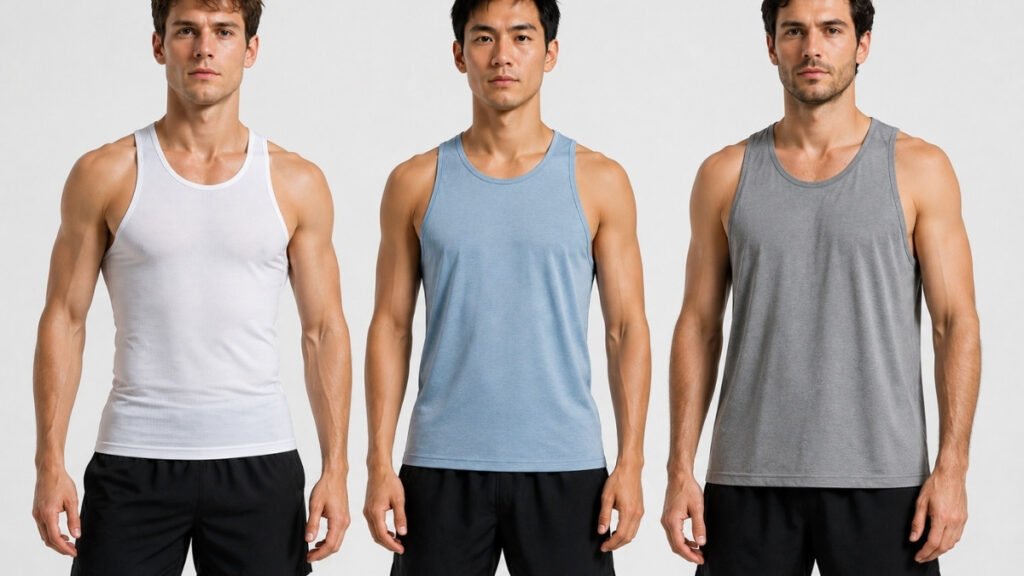
Race-fit singlets are cut tighter through the torso to minimize wind drag and fabric movement, while regular-fit versions offer more room for comfort during everyday training. Neither is objectively “better” — it depends on what you’re using it for.
Race-Day Performance Fit
Race fits sit close to the body, often with a slightly shorter hem and narrower shoulder straps. They’re designed to disappear during a hard effort, with almost no excess fabric to catch wind or bounce.
Daily Training Fit
Regular-fit singlets give a bit more room through the chest and midsection, which matters over the course of a long training block when comfort outweighs marginal aerodynamic gains.
Who Should Avoid Ultra-Race Fits?
Runners with a muscular or broader build sometimes find race-fit singlets uncomfortably tight across the chest, which can restrict breathing on hard efforts. It’s a common mistake to buy an elite race cut based on looks alone, expecting the same relaxed feel as a training top — and then finding it pulls at the shoulders on mile three.
Race Fit vs Regular Fit vs Relaxed Fit
| Fit Type | Best For | Fabric Movement | Comfort Level |
|---|---|---|---|
| Race Fit | Racing, speed workouts | Minimal | Lower |
| Regular Fit | Daily training, long runs | Moderate | High |
| Relaxed Fit | Recovery runs, casual wear | More fabric movement | Highest |
Choosing the Right Running Singlet for Your Body Type
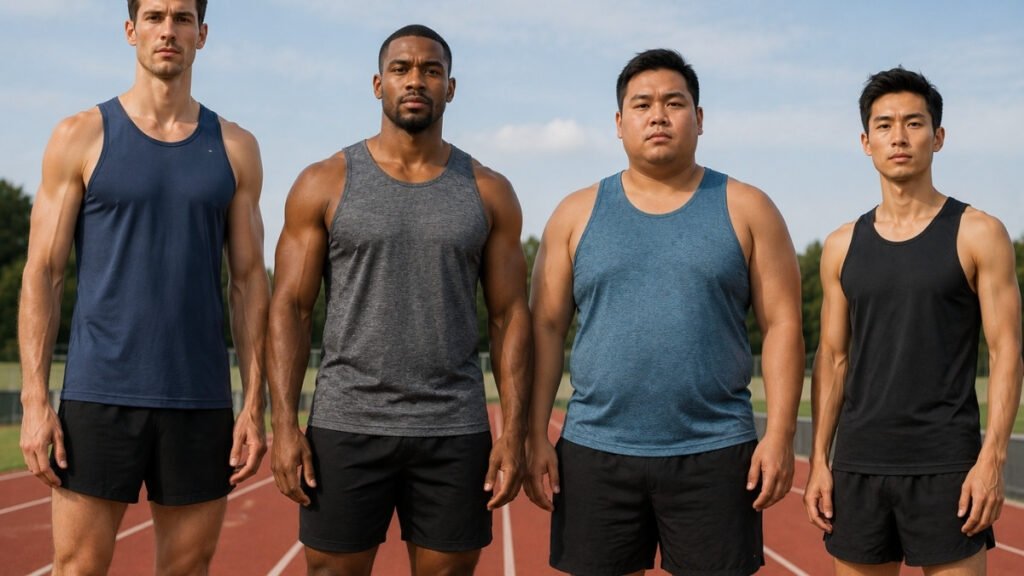
The right singlet fit depends more on body shape than most runners expect — a cut that looks great on a lean, narrow-shouldered runner can look and feel entirely different on a broader or taller frame.
Best Fits for Tall Runners
Taller runners often find standard-length singlets ride up during stride, exposing more midsection than intended. Look for brands that offer “tall” or “long” sizing, or simply size up one level and expect a slightly looser fit through the shoulders in exchange for proper torso length.
Best Fits for Broad Builds
Runners with broader shoulders or a muscular chest often do better in semi-fitted styles rather than true race cuts, which can pull uncomfortably across the chest. A slightly wider armhole reduces rubbing without adding unnecessary bulk.
Best Fits for Slim Runners
Slimmer runners have the most flexibility, since most cuts will fit reasonably well. The main thing to watch for is oversized armholes gaping at the sides during arm swing — sizing down slightly usually solves this.
Many people feel a bit self-conscious the first time they try on a true race-fit singlet, worried it looks too short or too revealing. That reaction is common, and it usually fades once the practical benefits — less chafing, better airflow — become obvious after a few runs.
Body Type → Recommended Fit Matrix
| Body Type | Recommended Fit | What to Avoid |
|---|---|---|
| Tall | Long/tall sizing, regular fit | Standard hem length (rides up) |
| Broad shoulders / muscular | Semi-fitted, wider armhole | Ultra-tight race cuts |
| Larger build | Regular or relaxed fit | Race-fit, thin fabric |
| Slim | Race fit or regular fit | Oversized armholes |
The Best Running Singlets for Different Running Scenarios
Right one depends on what kind of running you’re actually doing. A singlet built for a marathon PR attempt isn’t the same one you want for a humid Tuesday recovery jog.
Best for Marathon Racing
Ultra-lightweight, bonded-seam race fit, minimal fabric, often with a mesh back panel for maximum ventilation over a long effort.
Best for Summer Training
A slightly more durable micro-mesh singlet in a regular fit — built to survive frequent washing without sacrificing breathability.
Best Budget Choice
Entry-level polyester singlets under $40 cover the fundamentals — decent wicking, flatlock seams — without race-day extras like bonded seams or ultra-light fabric.
Best Premium Performance
Higher-end options with merino blends or advanced ventilation zones justify their price for runners logging serious weekly mileage, though the performance gap over mid-range options is often smaller than the price difference suggests.
Best for Heavy Sweaters
Look for fabric explicitly marketed for high moisture-wicking capacity and fast dry times, paired with a looser regular fit to avoid heavy, clingy fabric mid-run. This is also where pairing your top with moisture wicking running clothes throughout your full kit — shorts included — makes a noticeable difference.
It’s common for serious runners to eventually own two singlets: one dedicated to race day, and a more durable version for the bulk of weekly training. This isn’t overkill — it’s simply recognizing that race fabric wears out faster under regular use.
Recommended Singlets by Running Scenario
| Scenario | Priority Feature | Fit Recommendation |
|---|---|---|
| Marathon race day | Minimal weight, bonded seams | Race fit |
| Summer training | Durability + breathability | Regular fit |
| Budget training | Value, basic wicking | Regular fit |
| Heavy sweat / humidity | Fast-dry fabric | Regular or relaxed fit |
| Speed workouts | Freedom of movement | Race fit |
How to Prevent Chafing When Wearing a Running Singlet
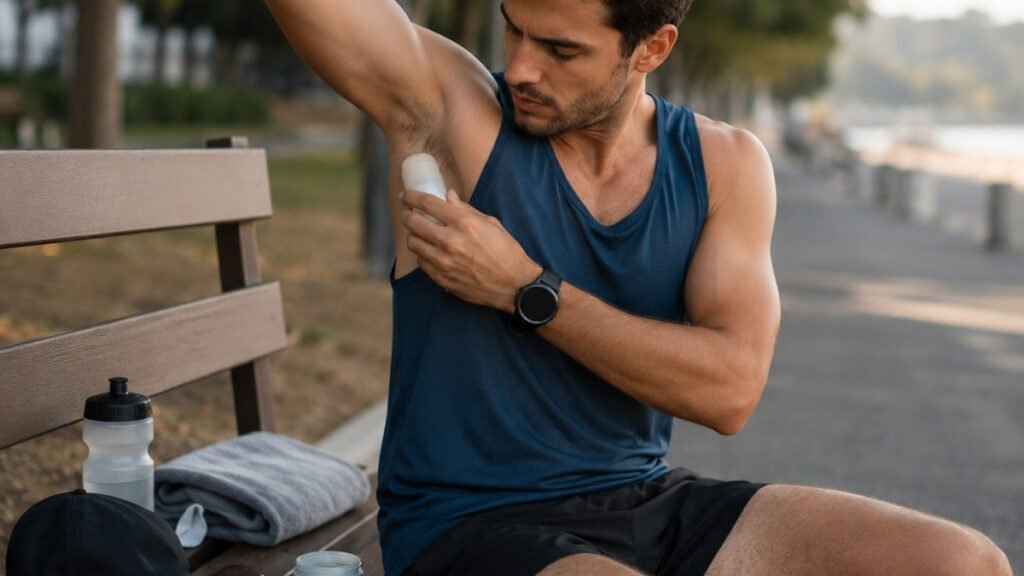
No running singlet fully eliminates chafing on its own — prevention comes from combining the right fit and fabric with proper preparation before you head out the door.
Chafing around the nipples and armpits is one of the most frequently mentioned frustrations among distance runners, and it’s rarely about the singlet alone. Sweat, salt buildup, seam friction, and repeated motion all combine over the course of a long run.
Before Your Run
Apply anti-chafe balm to nipples, underarms, and any area where fabric repeatedly rubs skin. Runners tackling long distances often add nipple tape as extra insurance, regardless of how premium their singlet is.
During Long Runs
If you feel early irritation, address it immediately rather than pushing through — reapplying balm at an aid station or pausing briefly to adjust fabric is far better than dealing with broken skin at mile 20.
After the Run
Rinse off sweat and salt as soon as possible. Leaving salt residue on skin after a long run tends to make the area more irritated the next time you wear the same singlet.
Marathon Anti-Chafing Checklist
- Apply anti-chafe balm to nipples and underarms before starting
- Use nipple tape for runs over 90 minutes, even with premium fabric
- Check singlet fit — loose fabric rubs more than snug fabric
- Rinse and dry skin thoroughly after finishing
- Replace singlets once seams start to fray or stiffen
One thing worth being upfront about: premium fabrics and bonded seams genuinely reduce chafing risk, but they don’t eliminate it. Sweat volume, distance, and individual skin sensitivity all play a role that no fabric alone can fully control.
Which Fabrics Perform Best in Hot and Humid Weather?
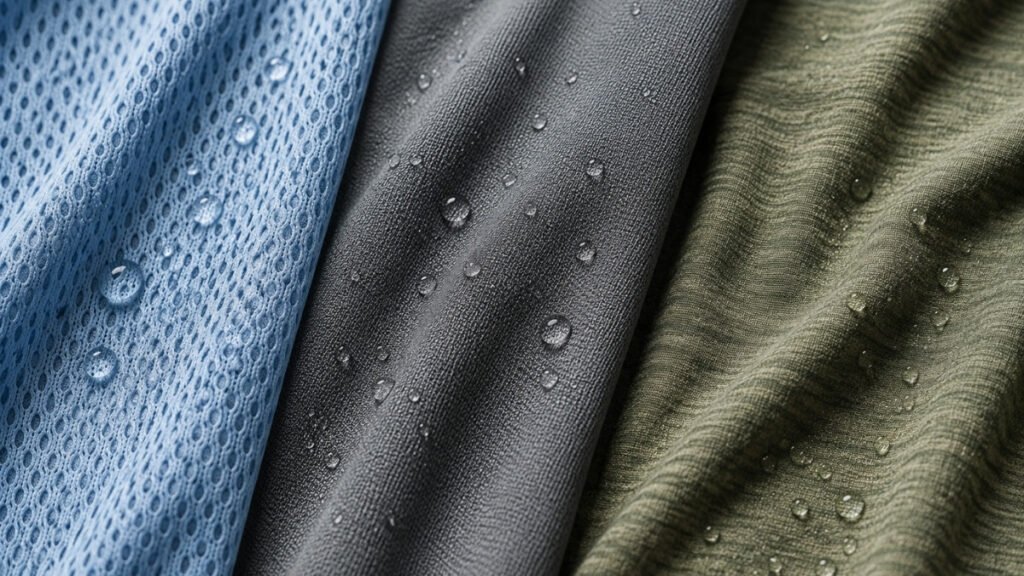
Fast-drying, highly breathable synthetic fabrics like micro-mesh polyester consistently outperform thicker or moisture-absorbing materials once temperature and humidity climb.
Synthetic Performance Fabrics
Polyester and micro-mesh blends dry quickly and move moisture away from skin efficiently, which is exactly what’s needed in humid conditions where sweat has nowhere to evaporate.
Merino Performance Fabrics
Merino-synthetic blends regulate temperature well and resist odor longer between washes, but they tend to hold slightly more moisture than pure synthetics, which some runners notice as heavier fabric in extreme humidity.
Which Fabric Feels Coolest?
In everyday use, most runners find micro-mesh polyester feels coolest during the first 60–90 minutes of a hot, humid run, since it dries fastest against skin. Merino blends often feel more comfortable over multi-hour efforts because they manage odor and temperature swings better, even if they don’t dry quite as fast.
Fabric Performance Comparison
| Fabric | Drying Speed | Breathability | Odor Resistance | Best For |
|---|---|---|---|---|
| Polyester mesh | Fast | High | Moderate | Hot, humid short-to-mid runs |
| Micro-mesh | Fastest | Highest | Moderate | Racing, intense heat |
| Merino-synthetic blend | Moderate | Moderate | High | Long runs, multi-day training blocks |
How to Layer a Running Singlet Throughout the Year
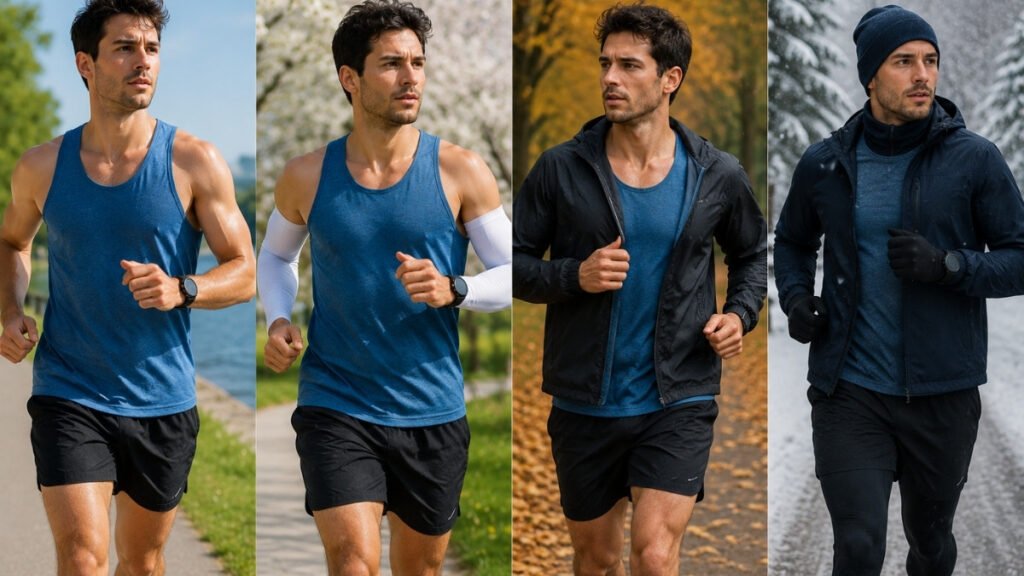
A running singlet isn’t just a summer garment — with the right layering, one good singlet can work year-round as a base layer underneath jackets or arm sleeves.
Summer
Worn alone, ideally paired with lightweight, breathable running gear for men throughout the rest of the outfit to avoid mismatched heat retention between top and bottom.
Spring
Add removable arm sleeves for cool mornings that warm up mid-run — they’re easy to pull off and tuck into a waistband once temperatures rise.
Fall
Layer a lightweight, packable running jacket over the singlet for the first few miles, then remove it once body temperature climbs, using the singlet as the breathable base layer underneath.
Many experienced runners adjust layers rather than switching shirts entirely, since a good singlet’s moisture management works just as well as a base layer in cooler conditions as it does on its own in summer heat.
Temperature-Based Layering Guide
| Temperature Range | Recommended Setup |
|---|---|
| Above 75°F (24°C) | Singlet alone |
| 55–75°F (13–24°C) | Singlet + optional arm sleeves |
| 40–55°F (4–13°C) | Singlet + arm sleeves + light jacket (removable) |
| Below 40°F (4°C) | Singlet as base layer under long-sleeve and jacket |
Caring for Your Running Singlet to Maintain Performance
Washing in cold water, skipping fabric softener, and air drying are the three habits that do the most to preserve a singlet’s wicking performance over time.
Improper washing gradually reduces moisture-wicking performance — fabric softener in particular coats synthetic fibers with a residue that blocks the fabric’s ability to pull sweat away from skin. Over time, many runners notice their singlet feels “less breathable” than when it was new, and the cause is almost always laundry habits rather than fabric defects.
Running Apparel Care Checklist
- Wash in cold water on a gentle cycle
- Skip fabric softener entirely
- Turn singlet inside out before washing to protect printed logos and seams
- Air dry instead of using high heat in the dryer
- Store folded rather than on a hanger to protect elastic and seams
- Rinse promptly after sweaty runs rather than letting salt sit
Frequently Asked Questions
What are the best men’s running singlets that won’t chafe during a marathon?
Look for bonded or flatlock seams, a snug (not loose) fit, and micro-mesh or merino-blend fabric. Combine that with anti-chafe balm and nipple tape before the race — fabric alone won’t fully prevent chafing over 26.2 miles.
How do I choose a running singlet if I am tall or have a broader build?
Tall runners should look for extended or “tall” sizing to avoid the hem riding up. Broader-built runners generally do better in semi-fitted styles rather than true race cuts, which can feel restrictive across the chest.
Are premium running singlets worth the high price tag?
Premium options often offer better ventilation zones, more durable bonded seams, and merino blends for odor control. They’re worth it for runners logging high weekly mileage, but the performance gap over solid mid-range singlets is usually smaller than the price difference suggests.
Which running singlets perform best in extreme heat and humidity without sticking to the skin?
Micro-mesh polyester fabrics perform best in these conditions, since they dry fastest and resist clinging even under heavy sweat. Merino blends feel comfortable too, but tend to retain slightly more moisture in extreme humidity.
Does sizing run small on lightweight race-fit singlets, and how should I size it?
Race-fit styles are intentionally cut close to the body, so many runners find they fit truer to size or even slightly small compared to regular training tops. If you’re between sizes or plan to layer underneath, sizing up one level is usually the safer choice.
What is the difference between a race fit singlet and a training tank top?
A race-fit singlet is cut tighter and lighter specifically to reduce wind drag and fabric weight during hard efforts. A training tank generally offers more room and slightly heavier fabric, prioritizing comfort over marginal performance gains.
Do I still need anti-chafe cream or nipple tape if I wear a seamless running singlet?
Yes. Seamless construction reduces one source of friction, but sweat, salt buildup, and repeated motion still cause chafing over long distances regardless of seam type. Preparation still matters.
What are the best budget-friendly running singlets under $40 for daily training?
Entry-level polyester singlets with flatlock seams and basic mesh panels typically fall in this range. They won’t have every premium feature, but they cover the fundamentals — breathability and wicking — well enough for regular training.
Final Thoughts
The ideal running singlet isn’t the lightest one on the shelf or the most expensive one in the store — it’s the one that fits your body, matches your running conditions, and holds up to the way you actually train. Get the fit and fabric right, prepare for chafing before it starts, and a good singlet will quietly do its job for hundreds of miles without you thinking about it twice. If you’re building out the rest of your kit, pairing your singlet with the best running shorts for men rounds out a setup built for comfort over distance, not just looks on the start line.
🏠 Behind This Guide
Choosing a men’s running singlet shouldn’t come down to guessing or buying whatever looks good online. The right top can help you stay cooler, reduce chafing, and make long runs feel noticeably more comfortable, while the wrong one quickly becomes a distraction.
That’s why this guide focuses on the features that matter most for real runners—not marketing buzzwords.
This guide is built around three essentials:
- 🏃 Finding the Right Fit — Choosing a cut that matches your body shape and running style.
- 🌬️ Understanding Fabrics — Knowing which materials keep you cool, dry, and comfortable.
- ✅ Running Smarter — Preventing chafing, layering for different seasons, and making your singlet last longer.
Because a good run isn’t about thinking about your gear.
It’s about forgetting you’re even wearing it.
📚 Continue Building Your Running Kit
A running singlet works best when the rest of your outfit is chosen with the same attention to comfort, weather, and fit. These guides can help you complete a practical running setup:
- Best Running Shorts for Men — Find shorts that stay comfortable, reduce friction, and work for daily training or race day.
- Moisture Wicking Running Clothes — Learn which fabrics manage sweat well and which performance claims are mostly marketing.
- Running Gear for Men — Build a reliable running kit with practical essentials for training in different conditions.
- Best Running Clothes for Men — Compare clothing options for warm weather, cold weather, long runs, and everyday mileage.
- Best Running Sunglasses — Choose lightweight sunglasses that stay secure, reduce glare, and remain comfortable while running.
- Best Running Hat — Find a breathable hat that manages sweat and provides useful protection from sun and changing weather.
❤️ A Final Note
Every runner deserves gear that feels comfortable, performs reliably, and fits the way they move.
At KineticV, we believe choosing running apparel shouldn’t be confusing. Whether you’re training for your first 5K, building a daily running habit, or preparing for your next race, we’re here to provide practical, easy-to-follow guides that help you choose clothing that works for your body, your season, and your running goals.
To help every runner enjoy more comfortable miles, make more confident gear choices, and keep running with confidence—one step at a time.