
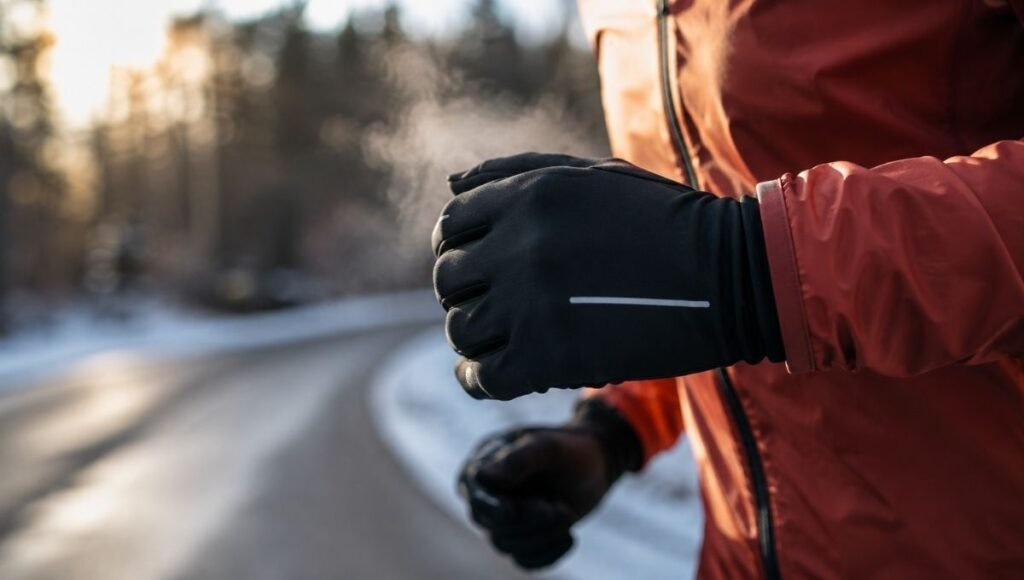
The first mile of a cold morning run has a specific cruelty to it. Your body hasn’t warmed up yet, your hands are exposed, and the wind is finding every gap between your sleeve and your glove. By mile 2, once your cardiovascular system is fully engaged and your core temperature has risen, everything feels better — except possibly your hands, which can stay cold long after the rest of you has warmed up.
This is the physiology behind why running gloves matter more than most casual runners expect: hands are small, have high surface area relative to their mass, and receive reduced blood flow in cold conditions as your body pulls circulation toward core organs. A pair of running gloves that weighs 40 grams and costs $25 solves a problem that no amount of additional jacket layering can fix, because the problem is in your extremities, not your torso.
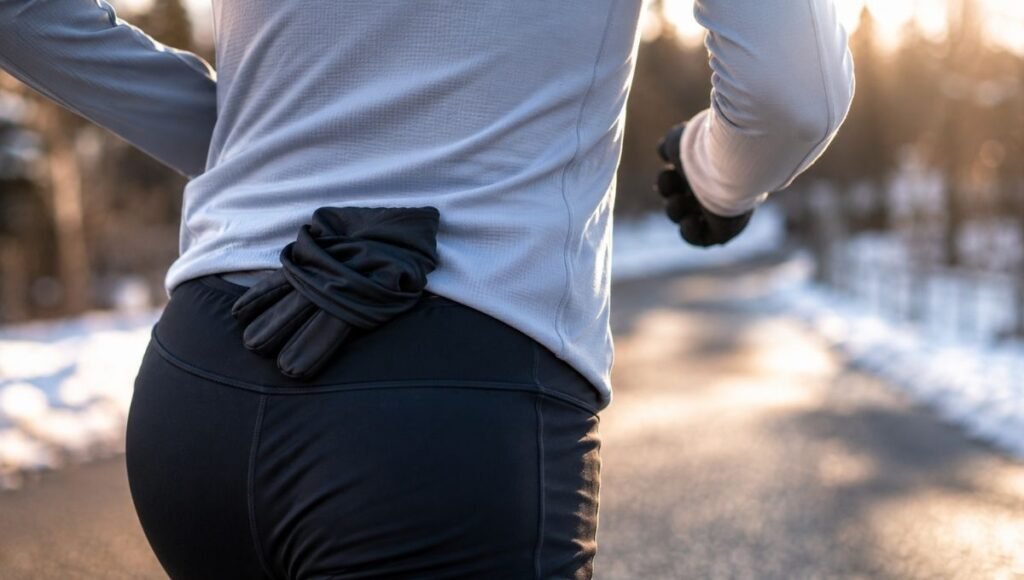
The best running gloves are ones you stop thinking about by mile 3 — light enough to ignore, warm enough to work, touchscreen-compatible enough to use your phone without taking them off, and packable enough to stuff in your shorts waistband when you warm up. This guide covers how to find them.
Key Takeaways
- Add running gloves before you add a second base layer — hands lose heat faster than your torso; gloves are the highest-impact cold-weather addition per gram of weight
- Most runners need two types — a lightweight pair for 35–50°F and a warmer insulated pair for below 35°F; trying to find one glove that covers both ranges usually means compromising on both
- Touchscreen capability varies significantly — some gloves work on most phones with most apps; others work inconsistently; test before relying on them for GPS tracking mid-run
- Convertible gloves (glove + overmitt in one) are worth considering for temperatures that shift during long runs — you get glove dexterity when you need it and mitten warmth when conditions deteriorate
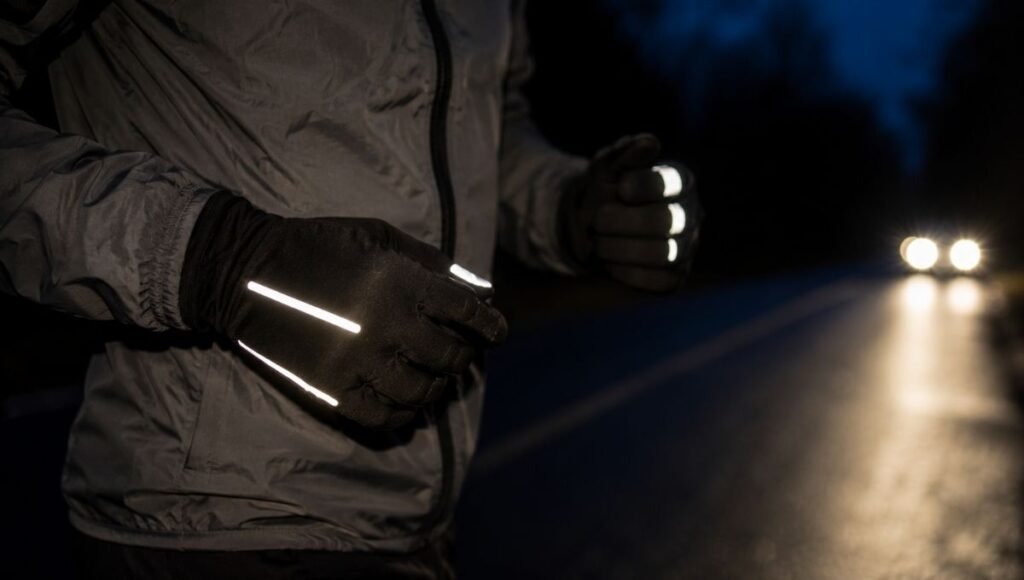
- Reflective elements on running gloves matter for visibility — hands move constantly during running stride, making them one of the highest-visibility points on your body for approaching cars
Why Your Hands Get Cold Faster Than the Rest of You
Understanding this makes buying running gloves significantly more purposeful.
When your body encounters cold, it prioritizes maintaining core temperature over extremity temperature — a physiological response called peripheral vasoconstriction. Blood vessels in your hands, feet, and ears narrow, reducing blood flow to these areas and directing warmth toward vital organs. This is protective, but it means your hands experience the full impact of ambient temperature without the benefit of sustained blood flow to warm them.
Add in the physics: hands are small relative to their surface area, which means they lose heat to the environment faster than your torso, which has far more mass generating metabolic heat. A glove creates an insulating barrier that traps the small amount of heat your hands do generate, allowing that warmth to accumulate rather than dissipate immediately.
The practical implication from the National Weather Service’s wind chill data: at 35°F with a 15 mph wind, the feels-like temperature for exposed skin is 25°F. A thin running glove eliminates virtually all of that wind chill effect from your hands — making it one of the highest-return cold-weather investments in running gear, gram for gram.
This is also why the “extremities first” principle holds for cold-weather running: add gloves and an ear covering before you add a second base layer. Your torso generates heat through muscle activity. Your hands don’t run — they just get cold.
Running Gloves vs Mittens: Which Works Better for Running?
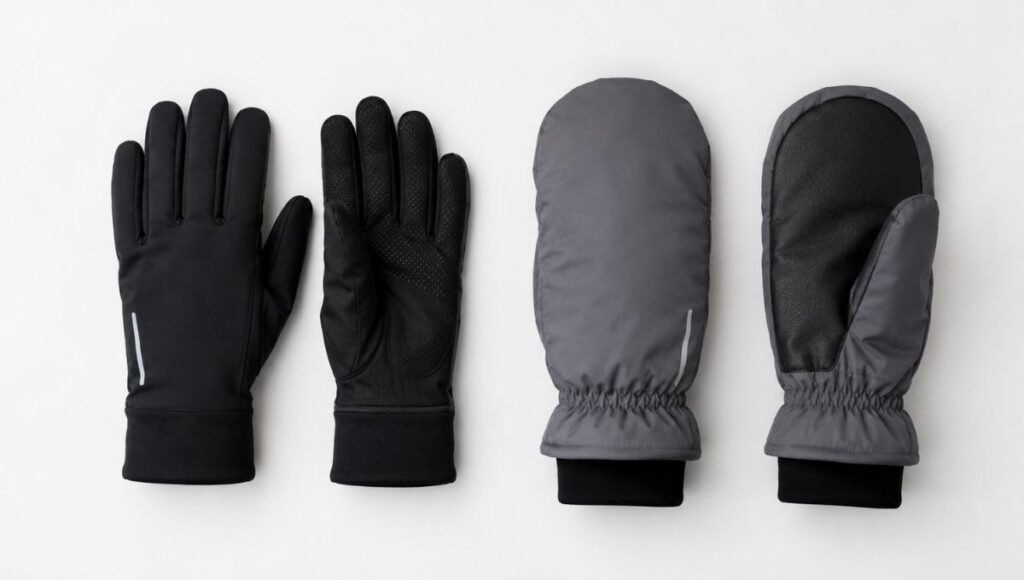
This comparison rarely gets addressed directly in running guides, and it’s a genuine decision with real trade-offs.
Running Gloves
Individual fingers provide full dexterity — you can use your phone, adjust headphones, tie a loose shoelace, accept a gel from a volunteer at a race aid station, all without removing the gloves. Fingers also allow more airflow between them, which is both a warmth liability and a breathability benefit.
Gloves are better for: Temperatures above 25°F where dexterity matters, racing where you need full hand function, runs where you’ll interact with your phone frequently, and runners who prefer fine motor control throughout.
Mittens
Fingers share warmth in a mitten — your four fingers together retain heat significantly more effectively than four fingers individually wrapped in fabric. Mittens are substantially warmer than gloves at equivalent fabric weight, which is why arctic explorers and mountaineers default to mittens in extreme cold.
Mittens are better for: Temperatures below 25°F where warmth takes priority over dexterity, ultramarathon training in extreme conditions, and runners with chronically cold hands who find gloves insufficient.
Convertible Gloves (The Best of Both)
Convertible running gloves — sometimes called “flip mitts” or “convertible mitts” — have a glove base with an attached mitten shell that folds over the fingers when conditions warrant. You run in glove mode; when the temperature drops or the wind picks up on a long effort, you flip the mitt over and gain significantly more warmth without removing anything.
For runners doing long runs or trail efforts in variable conditions, convertible gloves eliminate the “gloves or mittens?” decision entirely. The weight penalty over standard gloves is minimal. The versatility benefit is real.
Running Glove Temperature Guide
Matching glove type to conditions is the most useful framework for buying decisions.
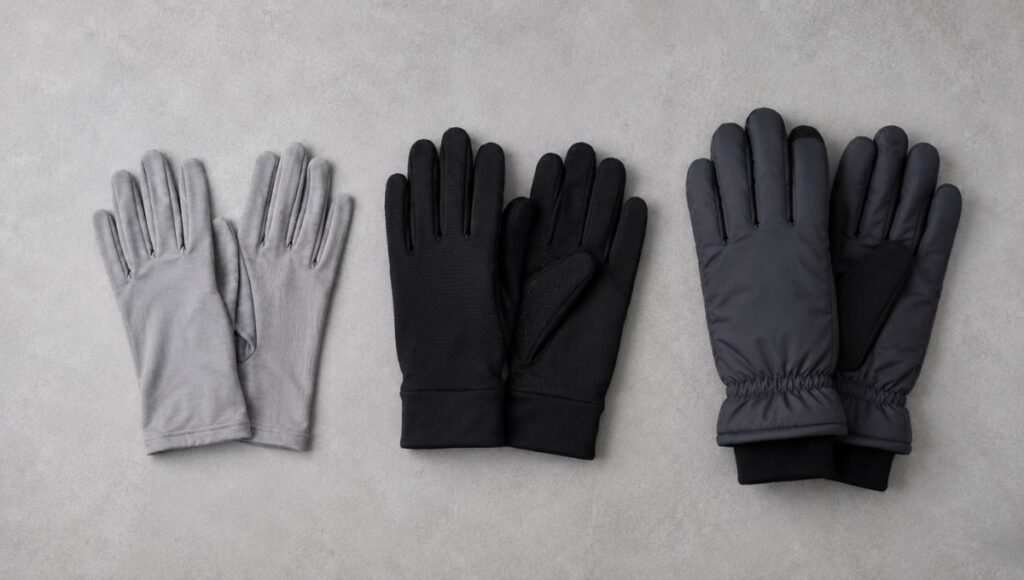
40–55°F (Cool and breezy): Lightweight running gloves in thin synthetic or merino-blend fabric. These should feel barely there — you want just enough material to cut wind and trap a thin layer of warmth. At this temperature, your hands will warm up by mile 2–3 if the glove is too heavy, and you’ll want to remove it. A packable, lightweight pair that goes in your shorts waistband when you warm up is the right answer.
30–40°F (Cold): Medium-weight running gloves with a moisture-wicking lining and wind-resistant outer. Touchscreen fingertip capability matters more here because you’re more likely to need your phone for route navigation or music adjustment. Reflective elements earn their place for the dawn and dusk runs that dominate cold-weather training.
20–30°F (Seriously cold): Insulated running gloves or convertible gloves. Standard thin running gloves aren’t sufficient — you need actual insulation, not just wind resistance. This is the range where the glove vs mitten decision becomes meaningful; many runners find their hands still cold in standard gloves below 25°F and need either heavier insulation or a mitten shell.
Below 20°F: Mittens or heavily insulated convertible gloves. This temperature range plus wind creates frostbite risk for exposed skin within 30 minutes according to National Weather Service data. Your hands need maximum warmth, and dexterity is secondary. If you’re regularly running below 20°F, investing in proper insulated mittens or expedition-weight running gloves is worth the cost.
The Best Running Gloves in 2026
Best Overall: Brooks Carbonite Running Gloves
The Carbonite earns its recommendation through consistent execution across the variables that matter for running: lightweight construction that doesn’t add perceptible weight to arm swing, wind-resistant fabric that handles the specific wind chill problem of running into a headwind, moisture-wicking interior that manages the sweat that builds up even in cold conditions, and reflective elements positioned on the back of the hand where they’re most visible to approaching vehicles.
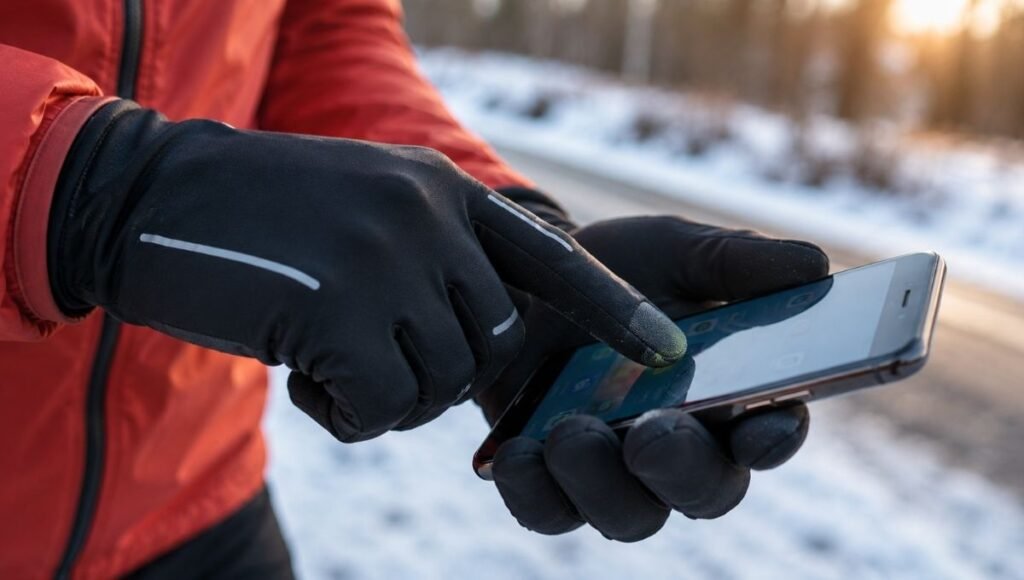
The touchscreen compatibility works reliably on modern smartphones — not a universal claim for every running glove. The fit is trim enough to allow natural hand movement without bunching, which matters for runners who use their hands actively during stride for balance and arm drive.
Best for: Everyday cold-weather running from 30–50°F, road running, runners who want a reliable all-conditions option that doesn’t require category-specific buying decisions.
Best Lightweight: Nathan HyperNight Reflective Gloves
Nathan’s HyperNight gloves lead with visibility — the geo-reflective print across the back of the hand activates under headlights from multiple angles, making moving hands one of the most visible points on a runner’s body. At this weight class (minimal insulation, primarily wind-resistant), the thermal performance is appropriate for 35–50°F.
The moisture-wicking interior handles moderate sweat output without becoming clammy — a common failure mode for cheaper running gloves that look similar but use inferior lining materials. Touchscreen-compatible index finger and thumb pads work consistently.
Best for: Transitional weather running (35–50°F), dawn and dusk visibility priority, lightweight runners who run warm and need minimal insulation, the packable “just in case” pair that lives in a jacket pocket.
Best for Cold Weather: The North Face Etip Recycled Gloves
For temperatures where warmth takes priority over minimal weight, The North Face Etip has earned a consistent reputation for the best touchscreen capability in a running-appropriate glove — the conductive material works reliably across fingers and thumb rather than just the index finger. The recycled fabric construction provides legitimate warmth for 25–40°F running without the excessive bulk that makes some insulated gloves impractical for running stride.
The fit is trim enough for running use — not as close as pure performance gloves, but significantly better than general outdoor gloves adapted for running. Multiple reviewers specifically call out the touchscreen performance as noticeably better than alternatives.
Best for: 25–40°F running, runners who use their phone frequently for GPS and music, those who’ve been frustrated by touchscreen gloves that don’t work reliably.
Best Convertible: Nathan HyperNight Reflective Convertible Mitt
The convertible option that earns consistent recommendation from serious cold-weather runners. In glove mode, full dexterity for gel management, phone use, and aid station interactions. The thermal mitt shell flips over the fingers when conditions worsen — adding meaningful warmth without requiring a gear change mid-run. The DWR finish handles light precipitation without requiring a fully waterproof (and therefore less breathable) construction.
Nathan recommends these for 30–50°F, and testing confirms the range is accurate in low-wind conditions. In significant wind, the mitt shell earns its place down toward 25°F.
Best for: Long runs in variable conditions, trail running where temperature can shift with elevation, runners who’ve tried single-mode gloves and found themselves either too cold or too hot depending on pace and conditions.
Best Budget: REI Co-op Liner Gloves 2.0
Simple, thin, packable, and effective for the specific temperature range where you need just enough. These are liner gloves in function — thin enough to wear under heavier gloves in extreme cold, capable enough as standalone gloves in the 35–50°F range. At well under $20, they’re the pair you buy to try the category, the pair you keep as backup, and the pair you don’t stress about losing.
The touchscreen capability is present but inconsistent — manage expectations here. For GPS tracking running continuously, this is fine. For frequent mid-run interactions, a better touchscreen glove is worth the additional cost.
Best for: Budget-conscious runners, first running glove purchase, backup pair, mild cold weather (35–50°F), liner use under heavier winter gloves.
Best for Extreme Cold: DexShell Ultra Weather Primaloft Gloves
When temperatures drop below 20°F or sustained precipitation is part of the equation, you need waterproof construction — and the DexShell Ultra Weather uses a waterproof Primaloft insulation system that provides meaningful protection without the heavy clamminess that most waterproof gloves create. The Primaloft insulation retains warmth when wet, which matters when snow or rain is part of the run.
These are heavier than other options on this list — they’re appropriate for extreme conditions, not everyday cold-weather running. For runners training through harsh winter conditions in cold climates, they fill the gap between regular running gloves and ski mittens.
Best for: Below 20°F running, wet and cold conditions, trail running in precipitation, runners in genuinely cold winter climates who need real weather protection.
What to Do With Your Gloves When You Warm Up Mid-Run
This is the practical question most running glove guides ignore, and it’s a real consideration for most cold-weather runs.
Option 1: Shorts waistband. The most common solution. Ball up the gloves and tuck them under the back of your waistband. Works for thin gloves; chunky insulated gloves become uncomfortable.
Option 2: Jacket pocket. If you’re wearing a jacket with pockets, this is the cleanest solution. Packable gloves are specifically designed to compress small enough for this.
Option 3: Running belt pocket. If you’re running with a belt, the zippered main pocket usually accommodates a bundled pair of thin gloves.
Option 4: Keep them on. Some runners find that keeping gloves on even when hands are warm prevents the re-cooling that happens when pace slows or you stop at a traffic light. This works better for thinner gloves than heavily insulated ones.
The practical answer: buy gloves that are thin enough to ball up into a fist-sized bundle. This narrows you toward the lightweight and medium categories and away from heavy insulated gloves for anything above 25°F running.
Running Glove Mistakes That Leave You Cold
Buying ski gloves for running. Ski gloves are insulated for standing still in extreme cold — they’re far too warm, too bulky, and too unbreathable for running effort. Hands sweat heavily in ski gloves during running, saturating the insulation, which then gets cold and wet simultaneously. Running-specific gloves are designed for a different thermal balance.
Using one pair across all temperatures. A glove that’s warm enough for 20°F will overheat your hands at 40°F; a glove appropriate for 40°F will leave you cold at 20°F. Most serious cold-weather runners own two pairs — lightweight for transitional weather and insulated for genuine cold.
Buying cheap gloves with inconsistent touchscreen performance. If you use your phone for GPS tracking, music, or safety during runs, touchscreen gloves that don’t reliably work become actively frustrating mid-run. Pay the extra few dollars for gloves where this feature is specifically called out in professional reviews rather than just mentioned on the marketing copy.
Not checking reflectivity for dark runs. Dawn and dusk running is when most cold-weather training happens. Reflective elements on gloves are high-visibility because hands move constantly during running stride — a gloved hand catches light that a reflective jacket stripe doesn’t because it’s always in motion. For any consistent pre-dawn or post-sunset running, prioritize reflective glove options.
FAQ: What Runners Ask About Running Gloves
What temperature should I wear running gloves? Most runners add gloves when the temperature or feels-like temperature drops below 45°F. Below 35°F, gloves transition from preference to practicality — exposed hands at this temperature with wind chill become genuinely uncomfortable by mile 2. Below 20°F, running without gloves creates frostbite risk for most runners.
Are running gloves different from regular gloves? Yes, in ways that matter for running. Running gloves are designed for the thermal balance of sustained aerobic activity — lighter than ski or outdoor gloves, more breathable, with moisture-wicking linings to manage the sweat your hands generate during exertion. Regular winter gloves are designed for stationary cold exposure and overheat quickly during running.
Do touchscreen running gloves actually work? Quality varies significantly. The best options — The North Face Etip is specifically called out by iRunFar as the benchmark — work reliably. Budget options may work inconsistently, phone-dependent, or degrade quickly. If touchscreen use mid-run is important to you, check specifically for reviews that test this rather than relying on marketing claims.
Should I use gloves or mittens for winter running? Gloves for most running temperatures (above 25°F) where dexterity matters. Mittens for extreme cold (below 20°F) where maximum warmth takes priority. Convertible gloves (glove with flip mitten shell) are worth considering if you regularly run in temperatures that shift — the Nathan HyperNight Reflective Convertible Mitt is the benchmark in this category.
How do I keep running gloves from getting sweaty and smelly? Wash after every 3–5 runs rather than letting sweat accumulate — follow the care instructions, usually cold hand wash or delicate machine wash. Store unrolled so they can dry fully between uses. Running-specific gloves with antimicrobial treatments extend the wash interval, but no glove benefits from being consistently worn wet with yesterday’s sweat.
The Bottom Line
The best running gloves solve a specific problem: hands that get cold before your body warms up, stay cold at pace, and remain functional for music and phone use throughout. For most cold-weather running between 30–50°F, a lightweight pair like the Brooks Carbonite or Nathan HyperNight Reflective handles the full range. For serious cold below 25°F, the North Face Etip or a convertible mitt earns its place.
The purchase logic is simple: add gloves before you add another layer. A 40-gram pair of running gloves that costs $25 has more impact on cold-weather run comfort than a $150 jacket upgrade, because the problem it solves is where cold-weather running actually fails for most people — the extremities, not the core.
Cold weather running is a full kit challenge. Check out our winter running outfit guide for the complete temperature-by-temperature layering system — and our best running hat guide for the other extremity that needs attention when temperatures drop.
References:
- National Weather Service. (2024). Wind Chill Chart and Frostbite Risk Guidelines. NOAA.
- iRunFar. (2026). Best Running Gloves: Tested across temperatures and conditions. iRunFar.com.
- Treeline Review. (2026). Best Winter Gloves: 10 Pairs Tested and Reviewed. TreelineReview.com.
- American College of Sports Medicine. (2023). Prevention of Cold Injuries During Exercise. ACSM Current Comment.