

The best running clothes aren’t about looking faster—they’re about staying comfortable mile after mile. A shirt that traps sweat, shorts that cause chafing, or pockets that can’t keep your phone secure can quickly turn a good run into a frustrating one. The good news is that building a comfortable running wardrobe doesn’t require a closet full of expensive gear. It starts with choosing the right fabrics, fit, and layers for the way you run.
The good news is that dialing in the best running clothes for men doesn’t require a closet full of gear or a premium-brand budget. It requires understanding a handful of variables — fabric, fit, weather, and body type — and matching them to how and where you actually run.
This guide breaks that down into a system. Instead of a random list of products, you’ll find outfit recommendations organized by temperature, running goal, body type, and budget, so you can build a wardrobe that actually works for your training instead of guessing every time you get dressed.
Quick Answer: What’s the Best Running Outfit for Men?
The best men’s running wardrobe combines a lightweight, moisture-wicking shirt or singlet, properly fitted running shorts with a comfortable liner, anti-chafing protection where needed, and weather-specific outer layers you add or remove as conditions change. There’s no single “best” outfit — there’s a best system, built around a few reliable core pieces.
A few quick categories to know before you shop:
- Best overall running outfit — a moisture-wicking shirt, 5-inch shorts, and technical socks
- Best for extreme heat and humidity — a breathable singlet with 3–5 inch shorts
- Best for sun protection — a lightweight UPF long-sleeve shirt
- Best for long-distance training — anti-chafing layers with secure storage
- Best for anti-chafing — smooth-seam shorts and shirts with a snug, stable fit
- Best for larger or more muscular builds — regular or relaxed-fit technical fabrics
- Best budget running outfit — mainstream athletic-brand basics
- Best premium running outfit — specialized fabrics and construction
- Best cold-weather running system — a layered base, mid, and outer shell
| Recommended Outfit | Best For | Key Feature | Price Range | Fit | Main Drawback |
|---|---|---|---|---|---|
| Lightweight shirt + 5″ shorts | Everyday training | Moisture-wicking, breathable | $ | Regular | Not ideal in extreme heat |
| Singlet + 3–5″ shorts | Extreme heat/humidity | Maximum airflow | $ | Slim/loose | Less coverage |
| UPF long-sleeve + shorts | Sun protection | UPF rating, lightweight | $$ | Regular | Warmer in high heat |
| Base + mid + shell layers | Long-distance training | Stable, chafe-resistant | $$ | Athletic | More pieces to manage |
| Budget shirt + shorts combo | Tight budgets | Solid basic performance | $ | Regular | Fewer premium features |
| Technical fabric + tailored cut | Premium buyers | Superior construction | $$$ | Athletic | Higher cost |
| Base layer + insulating mid + wind shell | Cold weather | Layered warmth | $$–$$$ | Layered | Bulkier feel |
How to Build the Best Running Outfit for Men
Think of your running wardrobe less as a pile of individual products and more as a system. Each piece has a job, and when they work together, you barely notice what you’re wearing — which is exactly the point.
The Core Running Outfit: Shirt, Shorts, Socks, and Shoes
Every solid running outfit starts with four basics:
- A moisture-wicking top that pulls sweat away from your skin instead of holding onto it
- Running shorts with an appropriate liner for support without added bulk
- Technical running socks designed to reduce friction and manage moisture
- Properly fitted running shoes, since even great clothing can’t compensate for the wrong footwear
Cotton is usually the wrong call here. It soaks up sweat rather than moving it away from your skin, which means it gets heavy, stays wet, and increases chafing risk — especially on longer or hotter runs. Technical synthetic fabrics or wool blends are built specifically to solve that problem.
Match Your Outfit to the Weather, Not Just the Temperature
Temperature alone doesn’t tell the full story. Humidity, wind, direct sun exposure, and how hard you’re running all change how your body feels mid-run. A cool, breezy 55°F morning run feels completely different from a still, humid 55°F evening — even though the thermometer says the same thing.
A more reliable approach is to dress for perceived temperature and expected sweat output, not the number on your weather app. If you know you run hot or you’re doing intervals, dress a little lighter than the forecast suggests.
The 10-Minute Rule for Cold-Weather Running
One of the most common beginner mistakes is overdressing for cold-weather runs. If you feel comfortably warm standing at your front door, you’re probably about to overheat once your body starts generating heat from movement.
The fix: dress as if it’s 10–15°F warmer outside than it actually is. You should feel slightly cool for the first few minutes. Once you’re moving, your body heat catches up fast — and you’ll avoid the sweat-soaked, clammy discomfort that comes from over-layering.
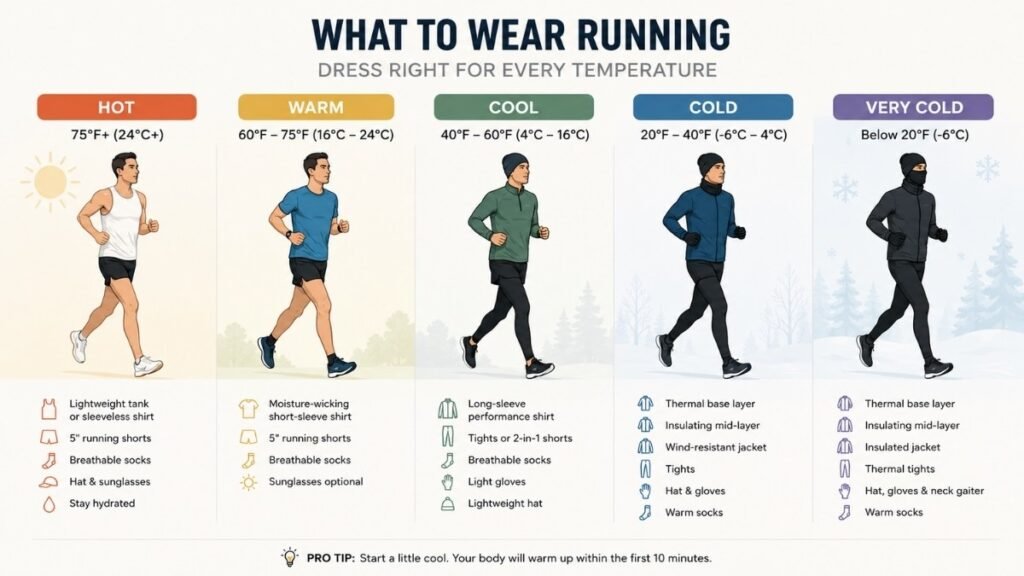
Best Running Clothes for Men by Temperature
Matching your outfit to the actual conditions is the single biggest factor in running comfort. Here’s how to dress across the full temperature range.
| Temperature | Recommended Outfit |
|---|---|
| 70°F and above | Singlet or lightweight shirt + 3–5″ shorts + breathable socks + visor |
| 60–70°F | Short-sleeve technical shirt + lightweight running shorts |
| 50–60°F | Short-sleeve or lightweight long-sleeve top + 5″ shorts or light tights |
| 40–50°F | Long-sleeve shirt or quarter-zip + tights or longer shorts + light gloves |
| Below 40°F | Base layer + insulating midlayer + wind-resistant outer layer + tights or thermal bottoms |
70°F and Above: Extreme Heat and High Humidity
This is where fabric choice matters most. Look for lightweight singlets or loose-fitting technical shirts with mesh panels for airflow. Avoid heavy or clingy materials that turn uncomfortable the moment they’re soaked through — your priority here is sweat evaporation, not coverage.
Recommended formula: Singlet or lightweight shirt + 3–5 inch shorts + breathable socks + visor.

60–70°F: Lightweight Everyday Running Outfit
This is the sweet spot for most daily training. A short-sleeve technical shirt paired with lightweight running shorts covers the majority of runs. If you’re heading out for a longer session, an anti-chafing layer is worth adding even in mild weather.
50–60°F: Transitional Weather
Transitional weather trips up a lot of runners because it feels colder standing still than it does once you’re moving. A short-sleeve shirt or lightweight long-sleeve top with 5-inch shorts or light tights works well. Save the extra layer for early-morning starts when temperatures haven’t warmed up yet.
40–50°F: Cool-Weather Training
A long-sleeve technical shirt or quarter-zip becomes worthwhile here, paired with running tights or longer shorts. Lightweight gloves help once your hands start losing warmth, which tends to happen well before the rest of your body feels cold.
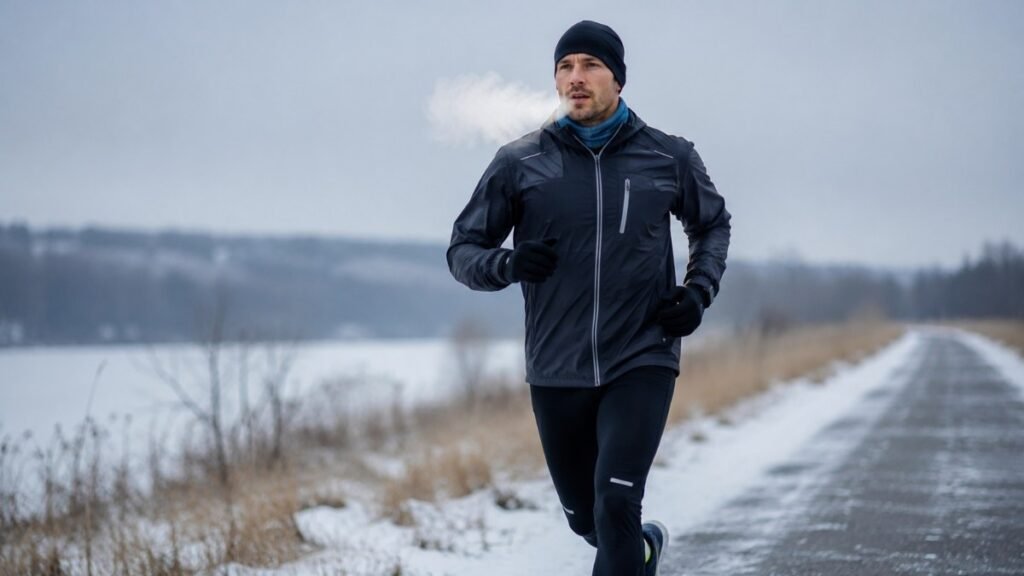
Below 40°F: Cold-Weather Layering
Cold weather calls for a proper layering system: a moisture-wicking base layer, an insulating midlayer, and a wind-resistant outer layer, combined with tights or thermal running bottoms. Add gloves, a hat, and other accessories as conditions demand.
The biggest mistake here is over-layering. Trapping too much sweat against your skin in cold weather actually makes you colder once you slow down or stop, since damp fabric pulls heat away from your body. For a deeper breakdown of layering combinations by condition, this winter running outfit guide walks through specific setups. If you’re deciding between running tights and heavier bottoms for consistently cold mornings, our full guide to men’s running tights covers fit, warmth, and compression differences in detail.
Best Men’s Running Shirts for Hot and Humid Weather
A running shirt should keep you comfortable, even after miles of sweating. The problem is that some shirts become heavy, cling to your skin, and lose much of their breathability once they’re soaked.
What Makes a Good Hot-Weather Running Shirt?
Look for a combination of:
- Strong moisture-wicking performance
- Breathability and ventilation panels
- Lightweight construction
- Quick-drying fabric
- A fit that allows airflow without excess fabric flapping around
Slim Fit vs Regular Fit vs Loose Fit for Hot Weather
| Fit | Pros | Cons |
|---|---|---|
| Slim Fit | Efficient moisture management, less fabric movement | Can cling uncomfortably once soaked |
| Regular Fit | Balanced comfort and airflow | Not extreme in either direction |
| Loose Fit | Maximum airflow, avoids skin-stick | Can flap slightly at higher speeds |
There’s no universally “correct” answer — it comes down to whether you’d rather deal with occasional clinginess or a bit of extra fabric movement.
When a Singlet Is Better Than a T-Shirt
A singlet earns its place in specific situations: extreme heat, high-intensity workouts, race day, or if you’re someone who tends to overheat easily regardless of conditions. It’s not about looking a certain way — it’s about giving your body more surface area to cool itself.
If you’re shopping for someone in your life who runs too, it’s worth knowing that the same principles — breathability, fit, and moisture control — apply to best running shirts for women, just with different cuts and sizing.
Best Running Shorts for Men: Liner, Length, and Storage
Shorts get less attention than shirts, but they’re often the source of the most persistent discomfort — chafing, bounce, and lost phones mid-run.
3-Inch, 5-Inch, and 7-Inch Running Shorts
| Length | Best For | Tradeoff |
|---|---|---|
| 3-inch | Maximum freedom of movement, racing | Least coverage |
| 5-inch | Everyday versatility | Balanced, no major downside |
| 7-inch | More coverage and thigh comfort | Slightly less airflow |
Built-In Liner vs Separate Compression Shorts
A built-in liner is simpler and lighter — one layer, no extra laundry, no adjustment needed mid-run. Separate compression shorts offer more customizable support and coverage, which some runners prefer for longer distances or if they need extra thigh protection against chafing.
If you chafe easily or run long distances regularly, separate compression shorts under your regular shorts often solve the problem better than a liner alone. For shorter, easier runs, a built-in liner is usually all you need.
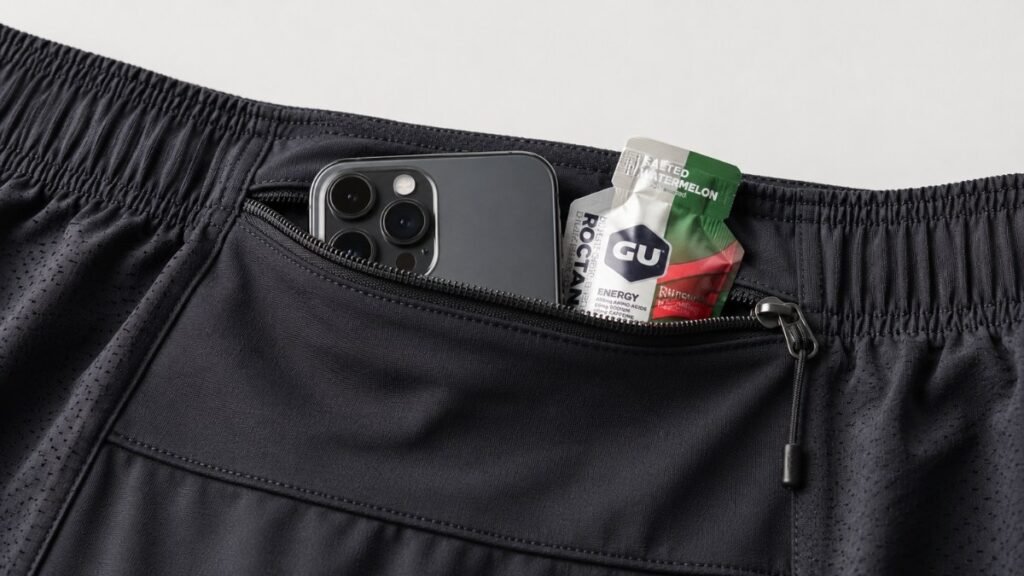
The Best Running Shorts for Carrying a Large Phone and Energy Gels
For longer runs, storage becomes a real functional requirement, not a bonus feature. Look for:
- Secure, snug pockets that hold a large phone without bouncing
- Zippered pockets for anything you don’t want to risk losing
- Waistband compression pockets for quick-access items like gels
- Multiple storage points if you’re carrying more than a phone and a gel or two
Match pocket capacity to your run duration — a 30-minute easy run needs far less storage than a 3-hour long run. If running shorts with pockets are a priority for you, it’s worth trying shorts on with your actual phone before committing, since “phone-friendly” claims vary a lot between brands.
For a full breakdown of the best options by category, our dedicated guide to best running shorts for men covers specific picks in more depth.
Best Anti-Chafing Running Clothes for Men
Chafing is one of the most common — and most avoidable — comfort problems in distance running. It rarely comes up in casual conversation, but it’s one of the top complaints among runners once mileage climbs.
How to Prevent Nipple Chafing and Bleeding
- Avoid rough or absorbent cotton shirts
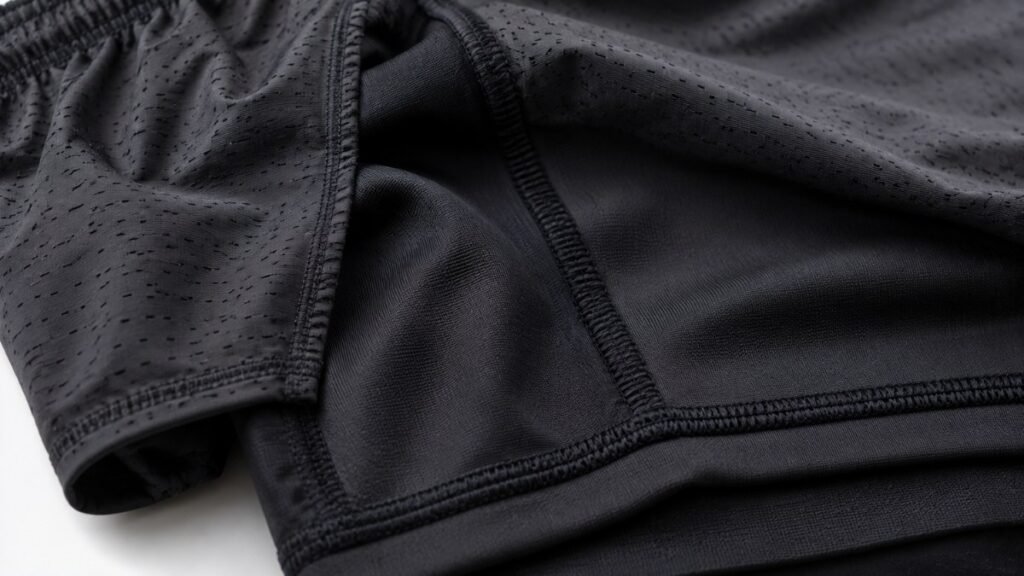
- Choose smooth technical fabrics with minimal texture
- Consider protective coverage or products for long runs
- Pay attention to seam placement and how fabric moves once it’s wet
How to Prevent Inner-Thigh Chafing
- Choose a short length that suits your body and stride
- Look for smooth seams and a supportive liner
- Consider compression layers if you’re especially prone to friction
- Avoid loose, wet fabric that repeatedly rubs against your skin
The Best Fit for Runners Who Chafe Easily
The instinct is often to go tighter, but excessively tight clothing can create its own pressure points and irritation. Excessively loose clothing causes the opposite problem — repeated friction from fabric movement. The sweet spot is smooth construction and a stable, snug-but-not-restrictive fit.
Best Running Clothes for Different Body Types
Fit matters more than most runners realize. The right cut can eliminate chafing, bunching, and restricted movement without changing anything else about your routine.
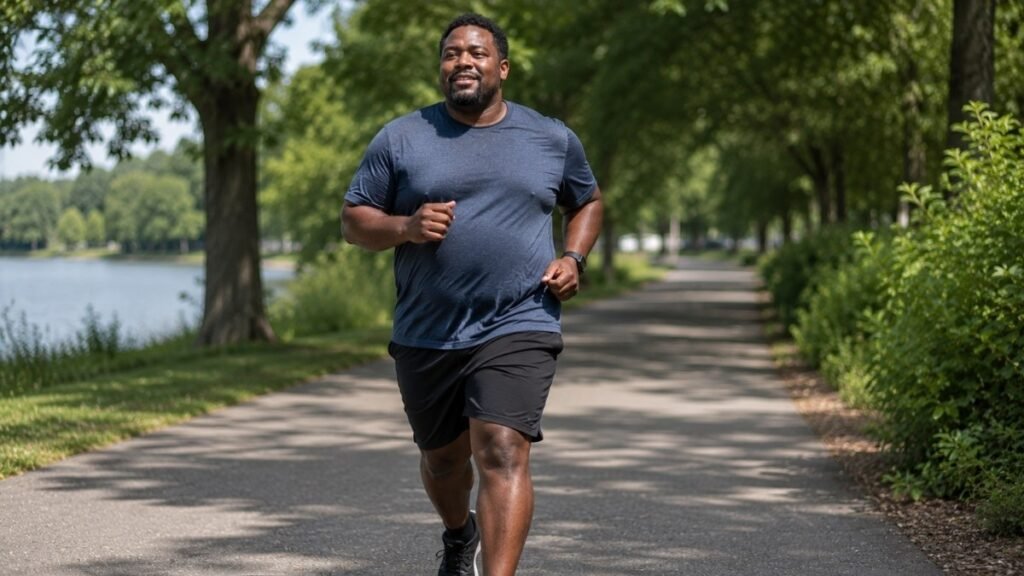
Best Running Clothes for Larger or Heavier Men
- Regular or relaxed fits generally perform better than aggressive performance cuts
- Breathable fabric that doesn’t cling when wet is a priority
- Longer shirt lengths and comfortable, non-digging waistbands matter
- Anti-chafing features around the thighs and underarms are worth seeking out
Best Running Clothes for Muscular or Broad-Built Men
- Avoid narrow chest and shoulder cuts that restrict arm swing
- Athletic or regular-fit tops tend to work better than slim cuts
- Choose shorts with enough room through the thighs
- Skip overly restrictive liners that dig in during movement
Best Running Clothes for Lean Runners
- Slim or performance fits can reduce excess flapping fabric
- Layering is easier to manage temperature without added bulk
- Make sure clothing doesn’t restrict shoulder or hip range of motion
How to Choose Between Slim, Regular, and Loose Fit
| Fit Type | Best For |
|---|---|
| Slim Fit | Race-focused runners who want minimal fabric movement |
| Regular Fit | The best all-around choice for most runners |
| Loose Fit | Maximum airflow and comfort in heat or humidity |
If you’re unsure, start with regular fit and adjust based on how your body type, typical weather, and personal comfort preferences play out over a few runs.
Best Running Clothes for Long-Distance Training
A 25-minute easy run and a 2-hour long run put very different demands on your clothing — what feels fine early on can become a real problem by mile 10.
What Matters Most After 60 Minutes of Running?
- Anti-chafing performance, since friction compounds over distance
- A stable fit that doesn’t shift as fabric gets wet
- Reliable sweat management
- Secure storage for fuel and your phone
- Comfortable seams that won’t irritate after hours of repetitive motion
- Odor control on longer or multi-day training blocks
- Durability that holds up across frequent washing
The Best Long-Run Outfit Formula
- Technical shirt or singlet
- Stable running shorts with secure storage
- An anti-chafing solution suited to your problem areas
- Moisture-managing socks
- An optional lightweight layer based on weather
If you’re building out mileage over time, it helps to match your clothing choices to your actual training phase rather than buying everything at once — this running gear checklist by distance is a useful reference as your long runs get longer.
Best Running Clothes for Sun Protection
Sunscreen alone often isn’t enough for long runs in direct sun, especially on exposed routes with little shade. A dedicated sun shirt solves a problem sunscreen can’t: it doesn’t wear off partway through your run.
What to Look for in a Running Sun Shirt
- A UPF rating for verified sun protection
- Lightweight construction that doesn’t add heat
- Breathability for warm-weather comfort
- Quick-drying fabric
- Coverage that still feels comfortable, not restrictive
When to Choose a Long-Sleeve Sun Shirt
- Long summer runs where reapplying sunscreen isn’t practical
- Open trails or routes with little tree cover
- High UV-index days
- Runners who simply prefer more coverage over exposed skin
Best Running Clothes for Trail Running
Trail conditions ask more of your clothing than the road does — uneven terrain, brush, and unpredictable weather all add up.
Trail Running Shirts and Shorts
Trail-specific gear typically uses more durable fabrics with better resistance to abrasion, along with secure pockets that won’t spill contents on rough terrain and a cut that allows comfortable movement over uneven ground.
Road Running vs Trail Running Clothing
| Factor | Road Running Gear | Trail Running Gear |
|---|---|---|
| Weight | Lighter | Slightly heavier |
| Durability | Built for smooth surfaces | Built for abrasion resistance |
| Storage | Basic | More secure, trail-specific pockets |
| Weather protection | Moderate | Often more robust |
Standard road-running gear can feel fragile on technical trails — thin fabrics and minimal pockets weren’t designed for brush, rocks, or sudden weather shifts, so it’s worth upgrading specific pieces if you’re moving from pavement to trail regularly.
Best Running Jackets for Wind and Rain
There’s a tradeoff at the center of every running jacket: weather protection and breathability rarely max out at the same time. Understanding that tradeoff helps you pick the right jacket instead of the most expensive one.
Windbreakers for High-Output Running
Windbreakers are lightweight, breathable, and packable — ideal for wind and light precipitation, especially during high-intensity efforts where overheating is a bigger risk than getting slightly wet.
Waterproof Running Jackets for Heavy Rain
Waterproof jackets offer better protection during sustained rain, but that protection often comes at the cost of breathability. They make the most sense when staying dry matters more than maximum airflow.
How to Choose Between Water Resistance and Breathability
- Light rain: prioritize breathability
- Heavy rain: prioritize waterproof protection
- Cold wind: prioritize wind resistance
- High-intensity running: avoid overly sealed jackets when possible
For a deeper comparison of specific jacket types and when each makes sense for your climate, see our full guide to men’s running jacket options.
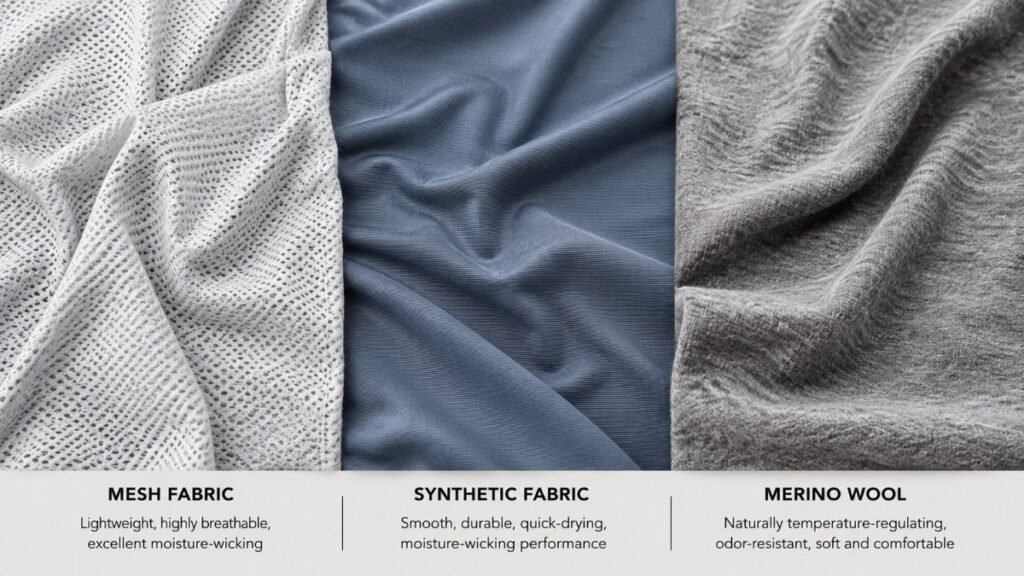
How to Choose the Best Fabric for Men’s Running Clothes
The best fabric depends on the conditions you’re running in, but for most everyday training, lightweight synthetic technical fabrics are the most practical choice because they dry quickly and manage sweat effectively.
| Fabric | Strengths | Drawbacks |
|---|---|---|
| Polyester / technical synthetics | Lightweight, quick-drying, widely available | Can retain odor over time |
| Merino wool | Excellent odor control, comfortable across temperatures | Usually more expensive, needs more care |
| Nylon blends | Durable, smooth against skin | Best suited to shorts and abrasion-prone gear |
| Cotton | Comfortable for casual wear | Absorbs sweat, dries slowly, poor for long or intense runs |
If odor retention is a recurring frustration, understanding how moisture wicking fabric explained actually works can help you choose blends that perform better wash after wash, rather than just switching brands and running into the same problem.
How to Choose Running Clothes by Budget
Best Budget Running Gear
Prioritize fit, moisture management, and durability over branding. Mainstream athletic brands, outlet racks, older model years, and quality secondhand gear can all deliver solid performance without a premium price tag. Avoid paying more for features that don’t actually solve a problem you have.
Best Mid-Range Running Gear
Mid-range gear typically offers better fabrics, more durable storage systems, and improved fit and comfort. For most regular runners, this tier delivers the best balance of price and performance.
When Premium Running Clothes Are Worth the Price
Premium pricing can be justified by superior construction, specialized fabrics, a genuinely better fit or design, unique storage solutions, better weather protection, or long-term durability that pays off over years of use. That said, a higher price tag doesn’t automatically mean better performance — it’s worth evaluating what specific problem the premium features solve for you before upgrading.
Three Complete Men’s Running Outfit Recommendations
Best All-Weather Value Running Outfit
A versatile technical shirt, 5-inch running shorts, comfortable running socks, and a lightweight wind layer. Best for everyday training and moderate conditions.
Best Extreme Heat and Sun Protection Outfit
A lightweight singlet or breathable shirt, 3–5 inch shorts, a UPF long-sleeve layer for when you need it, a visor, and lightweight sunglasses. Best for hot, sunny, humid conditions.
Best Comfortable Anti-Chafing Outfit for Larger or Heavier Runners
A regular or relaxed-fit technical shirt, longer running shorts or a supportive liner, smooth anti-chafing layers, and secure storage. Best for long runs and runners who deal with thigh or nipple chafing.
How to Build a Minimalist Running Wardrobe
You don’t need dozens of outfits to train consistently — you need a small set of pieces that cover most conditions and can be mixed and matched.
The Essential 5-Piece Running Wardrobe
- Two or three technical shirts
- Two pairs of running shorts
- One long-sleeve layer
- One lightweight wind or rain layer
- Technical running socks
When to Add More Specialized Gear
- Extreme heat conditions
- Genuinely cold weather
- Trail running
- Long-distance training blocks
- Frequent rain in your area
- High UV exposure on your typical routes
How to Care for Running Clothes and Remove Persistent Sweat Odor
Synthetic running gear is prone to a specific frustration: sweat, bacteria, and residue can get trapped in technical fibers, and regular washing doesn’t always fully solve it.
Why Synthetic Running Clothes Keep Smelling
The tight synthetic weave that makes fabric lightweight and quick-drying is also good at trapping bacteria deep in the fibers, which is why odor tends to return even after washing.
How to Prevent Sweat Odor from Getting Worse
- Don’t leave sweaty clothes sitting wet for long periods
- Rinse or wash items promptly after a run
- Follow the garment’s specific care instructions
- Avoid excessive fabric softener, which can reduce fabric performance over time
How to Make Running Clothes Last Longer
- Wash according to the garment’s instructions, not just habit
- Avoid unnecessary high heat in the wash or dryer
- Inspect elastic, seams, and fabric condition periodically
- Pay attention to whether performance changes noticeably after repeated wash cycles
Frequently Asked Questions
What are the best men’s running shirts for extreme heat and high humidity that won’t stick to your skin? Look for lightweight, loose-to-regular fit shirts or singlets made from highly breathable technical fabric with mesh panels. Slim-fit shirts can cling once fully soaked, so if sticking fabric bothers you, a looser cut with strong moisture-wicking performance will feel more comfortable in extreme heat.
Are premium running clothing brands like Tracksmith, Bandit, and Satisfy actually worth the high price tag? It depends on what you value. Premium brands often deliver better construction, more refined fits, and specialized fabrics, but the performance gap over quality mid-range gear is usually smaller than the price gap suggests. They’re worth it if a specific feature — fit, fabric, or durability — solves a real problem for you, not simply for the branding.
How do you prevent nipple chafing and bleeding during long-distance marathon training? Choose smooth, seam-free or flat-seam technical shirts instead of rough or absorbent fabrics, and pay attention to how the fabric moves once it’s wet. For longer distances, many runners also use a protective barrier product or strategically placed coverage as extra insurance.
What are the best running shorts with pockets that can securely hold a large phone and energy gels without bouncing? Look for shorts with snug, secure pockets designed specifically for phones, ideally with a zippered closure, plus a waistband compression pocket for gels. Try them on with your actual phone before buying, since “phone-friendly” sizing varies significantly between brands.
Where can I find high-quality, budget-friendly running gear that isn’t from the main expensive mainstream brands? Mainstream athletic brands’ basic lines, outlet stores, previous-season models, and reputable secondhand marketplaces are all solid sources. Focus on fit and moisture management rather than branding, since those two factors matter far more to comfort than the logo on the shirt.
How do you completely get rid of that persistent sweat odor in synthetic polyester running gear? Wash items promptly after each run rather than letting them sit, follow the fabric’s specific care instructions, and avoid fabric softener, which can coat fibers and trap odor further. In stubborn cases, a pre-soak with a sport-specific detergent designed to break down bacteria in synthetic fibers can help more than a standard wash cycle.
Should I choose running shorts with a built-in liner or wear separate compression shorts underneath? A built-in liner is simpler and lighter for everyday runs. Separate compression shorts make more sense if you want more customizable support, extra thigh coverage for chafing protection, or you’re training for longer distances where a single liner layer isn’t enough.
Is it possible to find a running jacket that is truly waterproof but still breathable enough for high-intensity winter runs? Fully waterproof and fully breathable rarely coexist perfectly in one jacket — it’s a genuine tradeoff. For high-intensity winter running, a highly breathable, water-resistant windbreaker usually performs better than a fully sealed waterproof shell, unless you’re running in sustained heavy rain where staying dry outweighs ventilation.
Final Thoughts
The best running clothes for men aren’t defined by brand names or price tags — they’re defined by how well they match your comfort, fit, weather, and actual training needs. A small, well-chosen wardrobe built around a few reliable pieces can realistically cover most of the conditions you’ll run in throughout the year.
If you’re building out a full head-to-toe system rather than shopping piece by piece, our complete running gear for men guide walks through the entire setup in one place. And if you’re shopping for a partner or friend, best running clothes for women covers the same comfort-first approach for female runners.
🏠 Behind This Guide
This guide exists because so many runners — beginners and experienced alike — end up frustrated by clothing that looks good on paper but doesn’t hold up on an actual run. Chafing, overheating, bad storage, and clingy fabric are common, fixable problems, not something you have to accept as part of running.
To put this together, our editorial team combined current best practices in running apparel, references from trusted sources in the running community, research into how competing guides approach the topic, and the recurring questions runners ask most often when trying to solve real fit and comfort problems.
The goal was never to push a specific product or brand. It was to organize scattered advice into one clear, practical resource that helps you make confident decisions based on your body, your climate, and your training goals.
The takeaway: the right running outfit is less about spending more and more about matching the right fabric, fit, and layers to how you actually run.
📚 Related Reading
- Best Men’s Running Shirts for Hot Weather
- Best Running Shorts for Men with Phone Pockets
- What to Wear Running in Every Temperature
- Best Men’s Running Jackets for Cold and Rainy Weather
- Best Running Clothes for Bigger Guys
- How to Build a Minimalist Running Wardrobe
- Merino Wool vs Polyester for Running: Which Fabric Is Better?
❤️ A Final Note
Getting your running outfit right isn’t about chasing the newest gear drop or the most expensive brand on the shelf — it’s about paying attention to the small details that make each run more comfortable than the last. Every runner’s body, climate, and mileage are a little different, and the best setup is the one that fits your reality, not someone else’s.
Give yourself permission to experiment. A shirt that works for a friend might not work for you, and that’s completely normal. What matters is building a wardrobe, piece by piece, that lets you stop thinking about your clothes and start focusing on your run.
That’s really the whole point: gear that disappears so the run can take center stage.