
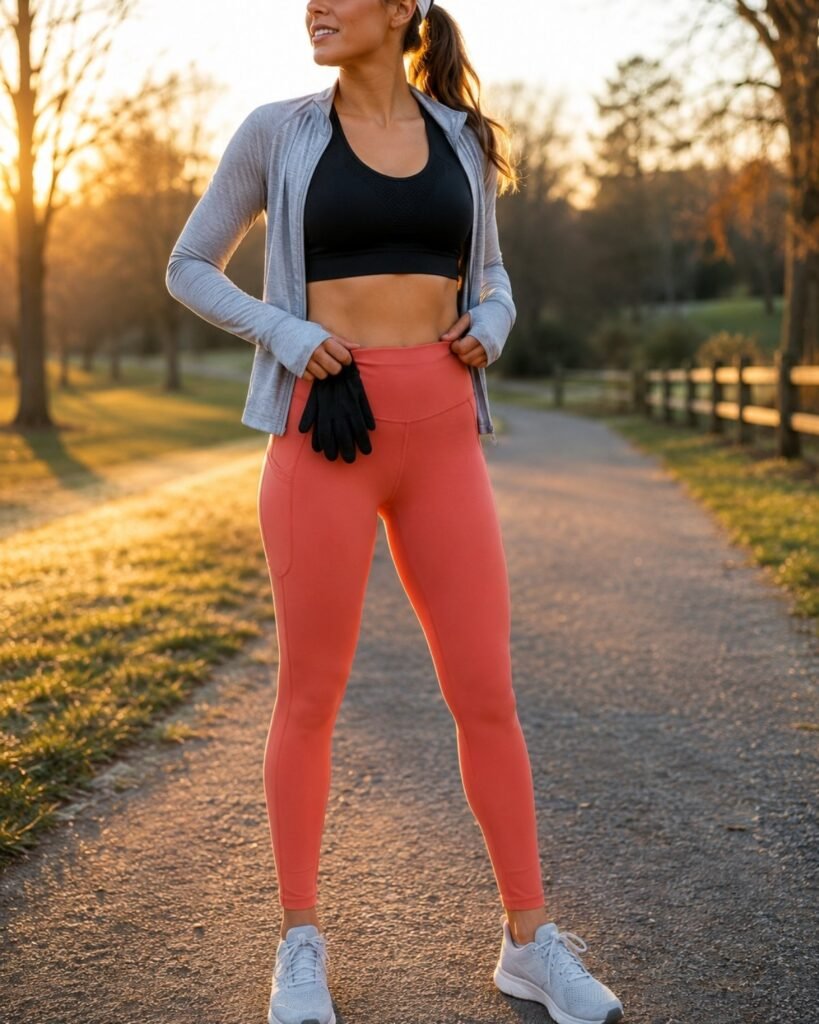
Most women start running with whatever they already own. A stretched-out sports bra from two years ago. Leggings from the gym. Cotton ankle socks. And for a 20-minute run around the block, it works fine. Then the runs get longer, and the gear that was “fine” starts to fail in very specific, memorable ways — the bra that chafes by mile 4, the leggings that need constant pulling up, the socks that mysteriously create blisters on a route you’ve run a hundred times.
This guide is for every stage of that progression. Whether you’re running your first 5K or training through your third marathon cycle, the gear you wear directly affects how long you run, how comfortable you are doing it, and whether you come back tomorrow. We’ve organized everything by priority — what to get right first, and what to add as your mileage builds.
No fluff, no 40-product lists. Three picks per category: best overall, best budget, best for long distance. That’s enough.
Quick Overview
| Category | Priority | Most Important Feature |
|---|---|---|
| Running Socks | 🔴 Essential | Moisture-wicking, seamless toe |
| Sports Bra | 🔴 Essential | Cup-size appropriate support |
| Running Tights & Shorts | 🔴 Essential | Waistband stability, pockets |
| Moisture-Wicking Tops | 🟡 High | No cotton, flatlock seams |
| Running Accessories | 🟡 High | Socks, visibility, anti-chafe |
| Distance-Specific Gear | 🟢 As needed | Matched to your mileage |
Running Socks: The Foundation Under Your Feet
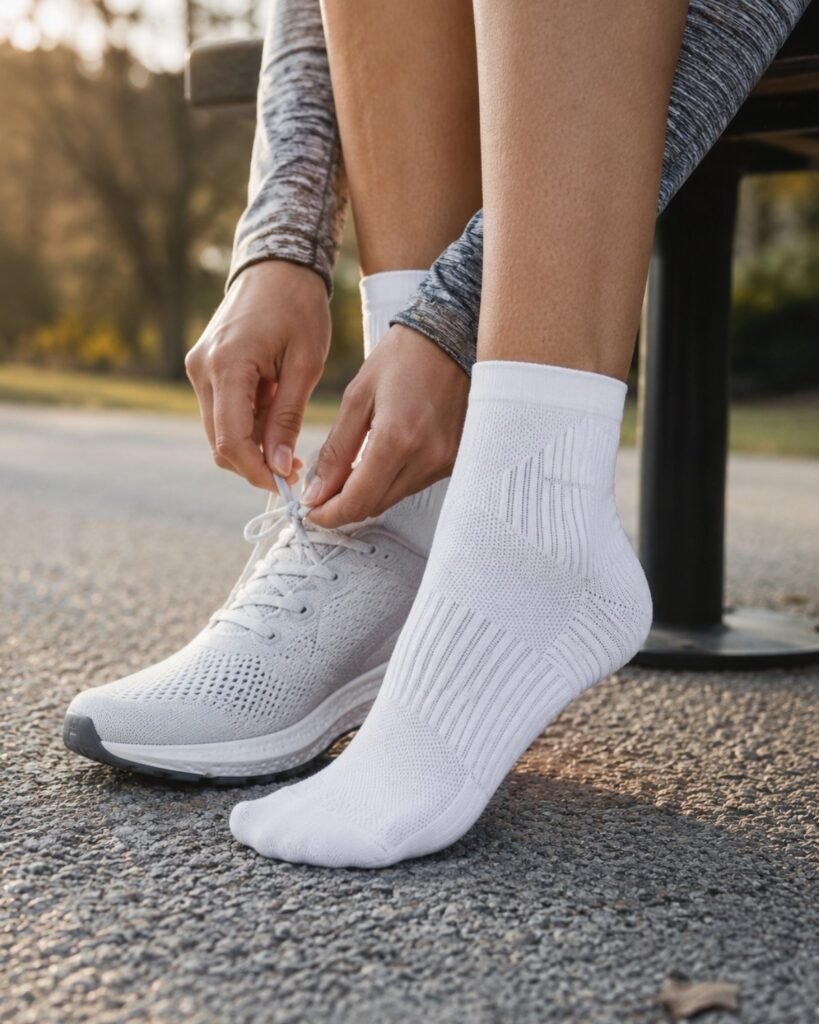
Nobody talks about socks until they get a blister at mile 9 that makes the last four miles of a long run feel like a punishment. Then they become very interested in socks.
The difference between a $3 athletic sock and a $20 running-specific sock isn’t marketing — it’s construction. Regular athletic socks are made from cotton or cotton blends that absorb sweat and hold it against your skin. Running socks use moisture-wicking fibers that move sweat to the surface to evaporate, seamless toe construction that eliminates the friction ridge that causes blisters, and cushioning placed specifically at the heel and ball of the foot where running impact concentrates.
What actually matters:
Fabric: Merino wool or synthetic (nylon, polyester) — never cotton. Merino manages temperature and resists odor. Synthetics wick fastest and dry quickest.
Seamless toe: A raised seam at the toe becomes a blister-maker over thousands of running strides. Look for seamless or flat-seam construction specifically.
Cushion level: Match to distance. Lightweight for speed work and short runs. Medium cushion for everyday training. Maximum cushion for marathon distance where impact adds up.
Rotation: Own at least 3-4 pairs. Socks need to fully dry between runs to maintain their properties.
Our Picks:
Best Overall: Feetures Elite Light Cushion No-Show — anatomical left-right construction, seamless toe, stays in position through any distance.
Best Budget: Bombas Women’s Running Ankle Sock — all the functional checkboxes at roughly a third of the premium price.
Best for Long Distance: Darn Tough Run No-Show Tab Ultra-Lightweight — merino wool blend, unconditional lifetime guarantee, disappears on your foot by mile 2.
→ Deep dive: Best Running Socks for Women
High-Impact Sports Bras: Support Without Chafing
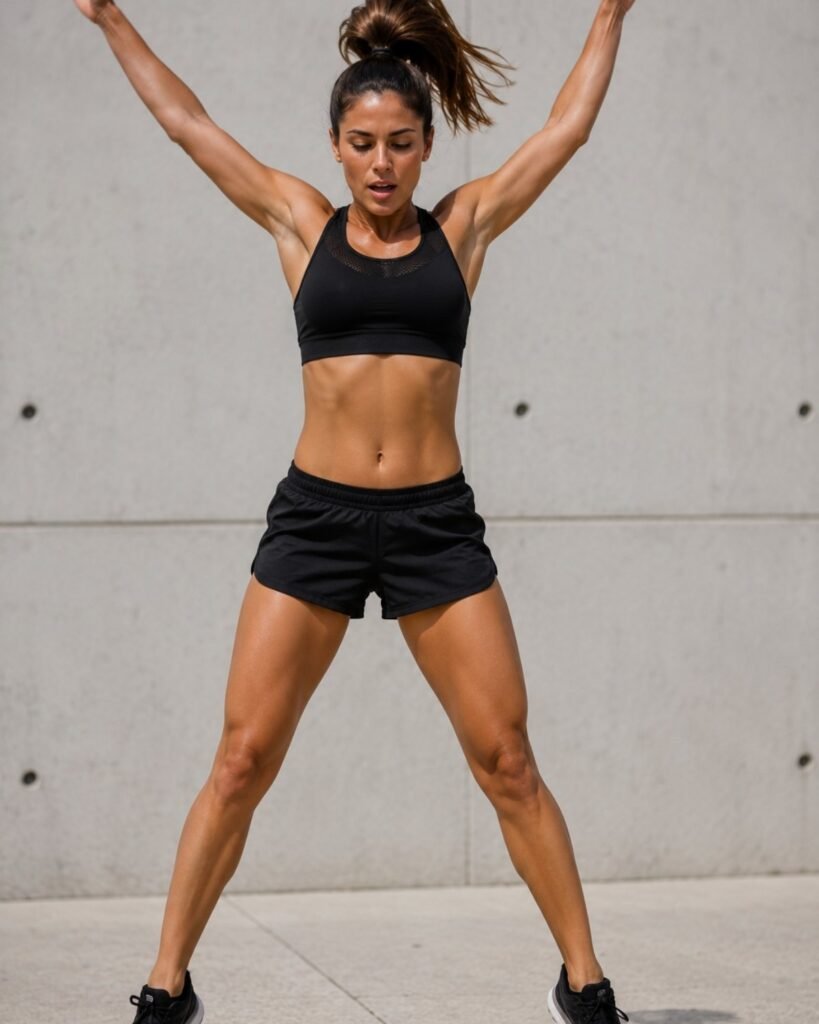
A bra can feel supportive in the fitting room and still fail after 30 minutes of running. The fitting room test is standing still. Running is thousands of repetitive impacts, sustained sweat output, and continuous arm drive creating friction at the underarm seam. These are completely different conditions, and a bra that passes one doesn’t automatically pass the other.
The jump test is the fastest way to screen a sports bra before buying: put it on, adjust the straps, do 20 jumping jacks at pace. If there’s more than minimal movement, or if anything digs or shifts, it’s not right for running regardless of how comfortable it feels standing still.
Cup size changes everything:
A-C cup: Compression-style sports bras work well — they press both breasts flat against the chest, reducing movement through pressure. Lighter, easier to put on, appropriate support for most running effort.
D cup and above: Compression alone doesn’t control movement effectively at larger cup volumes. You need encapsulation — separate, defined cups that individually contain each breast. This is what underwire provides: structural support that compression can’t replicate. Standard athletic brands (Nike, Lululemon) rarely engineer adequate support above a D cup. Panache Sport, Freya Active, and Enell are built specifically for this.
Strap and band fit:
Wide, padded straps distribute weight across the shoulder without digging — especially important for longer runs where cumulative pressure matters. The band provides 80% of a bra’s support. It should sit level and horizontal front and back. If the back rides up toward your shoulder blades, the band is too large and the support has transferred to your straps, which aren’t designed to carry it.
Washing care:
Never machine dry. Heat degrades elastic and compression fabrics faster than anything else. Cold wash, air dry, every time. Rotate at least 2-3 bras — elastic recovers better with 24-48 hours between uses.
Our Picks:
Best Overall (A-C): Lululemon Free to Be Bra — flat underarm seams that don’t chafe during arm drive, comfortable for long efforts.
Best Budget: Nike Swoosh Medium-Support — reliable construction, widely available, works well for B-C cup at moderate effort.
Best for D+ Cup / Long Distance: Panache Sport Wired — underwired encapsulation that actually controls movement at larger cup sizes. The brand that D+ cup runners in every running community consistently recommend.
→ Deep dive: Best Sports Bra for Running
Running Tights & Shorts That Stay Put
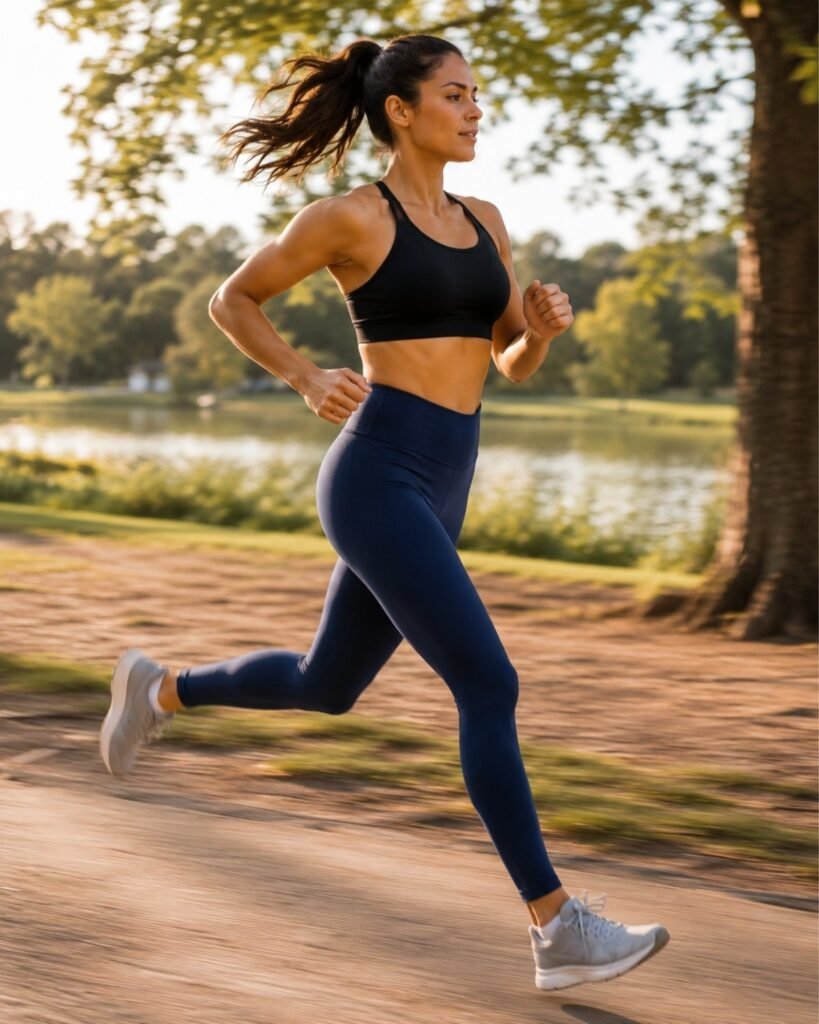
If you’ve ever spent the first mile pulling your leggings back up, the problem probably isn’t your body — it’s the waistband design. A waistband that rolls or slides during running isn’t a size problem. It’s an engineering problem: the waistband lacks the width, structure, or internal grip to stay in position against the downward pressure that running stride creates.
Tights — what makes them work for running:
Waistband: Minimum 3 inches wide. Internal drawstring for bodies where standard waistbands slide. High-rise positioning — the closer to your natural waist, the more the waistband has to grip against, and the less it migrates.
Inner thigh seams: Running tights that chafe at the inner thigh have raised seams in the contact zone. Look for flatlock seams (stitched flat rather than raised) or bonded construction. Run your thumb along the inner thigh seam of any pair before buying.
Fabric: Four-way stretch (not two-way) for full running range of motion. 75-85% synthetic for moisture management. Opacity — stretch the fabric against your hand before buying; if you can see skin through it, it’s worse when fitted to your body in motion.
Pockets: A running tight without at least one secure phone pocket is behind the times. Test the pocket with your actual phone — it should hold it flat without bouncing.
Shorts — the inseam decision:
2.5-3 inch: Maximum airflow, works for most body types in warm weather. Will ride up on muscular or curvier thighs.
5 inch: The sweet spot for most runners and most body types. Enough coverage to prevent riding up without adding unnecessary fabric.
7 inch / 2-in-1: Best for inner thigh chafing prevention. The compression liner or extended coverage eliminates skin-to-skin contact at the zone where chafing happens.
Anti-chafe basics:
Apply anti-chafe balm before any run over 60 minutes — inner thighs, underarms, anywhere fabric edges meet skin. Don’t wait until you’ve experienced chafing to start this habit. Once it starts mid-run, you can slow it down but not stop it.
Our Picks — Tights:
Best Overall: Lululemon Fast and Free High-Rise Tight — the waistband benchmark, drop-in thigh pockets, Nulux fabric manages sweat efficiently.
Best Budget: The Gym People Running Leggings — four-way stretch, high-waisted, deep side pockets at a fraction of premium pricing.
Best for Long Distance / Chafe Prevention: Sweaty Betty Zero Gravity — bonded inner thigh construction eliminates seam friction at the most common chafing zone.
Our Picks — Shorts:
Best Overall: Lululemon Track That High-Rise Lined Short (5″) — wide leg opening prevents ride-up for muscular builds, waistband that genuinely stays.
Best Budget: Senita Baseline Shorts — four-way stretch, multiple pockets, thousands of positive reviews from real runners.
Best for Long Distance: Bandit Stamina Shorts (5″) — silicone taping on the inner hem physically grips the thigh and prevents riding up.
→ Deep dives: Best Running Leggings for Women | Best Running Shorts for Women
Moisture-Wicking Tops: Never Cotton, Ever
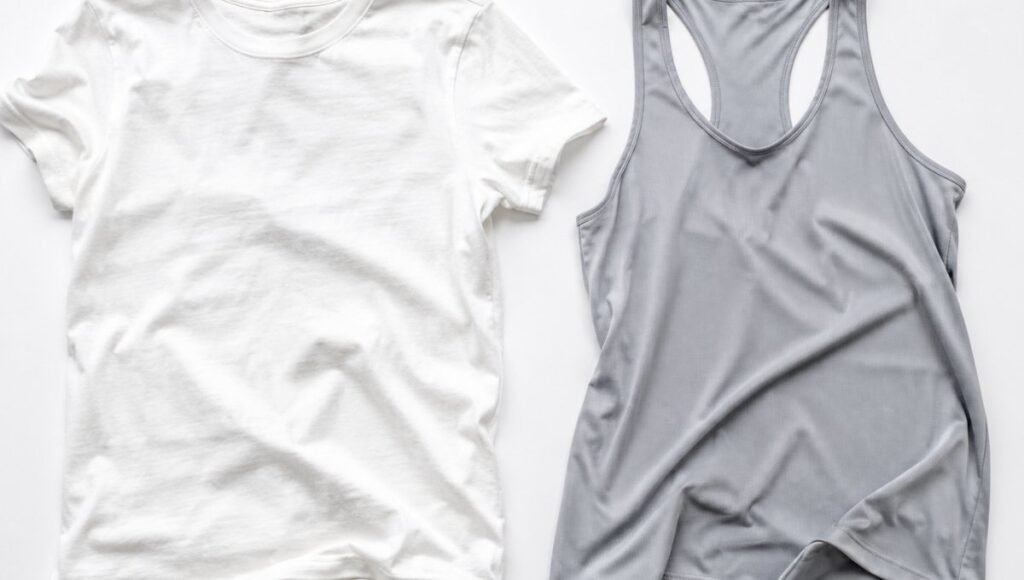
Cotton absorbs sweat, holds it against your skin, and gets heavier as the run progresses. On a 45-minute easy run, it’s uncomfortable. On a two-hour long run in warm weather, a saturated cotton shirt becomes heavy, cold when there’s any breeze, and abrasive at every fabric contact point. It’s not a mild inconvenience — it’s a genuine problem that gets worse the longer you run.
The replacement is simple: polyester or nylon-spandex blends for warm weather and high-intensity running (fastest moisture wicking, quickest drying), merino wool or merino blends for cooler weather and variable conditions (better temperature regulation, natural odor resistance).
Singlet vs tank vs short sleeve:
Singlet: Maximum ventilation, minimum fabric, appropriate for racing and hot weather above 65°F. Not suitable under hydration vests — the thin straps conflict with vest shoulder straps.
Tank: Wider straps, more shoulder coverage, appropriate for warm training runs. Works under vests for shorter efforts.
Short sleeve: Full arm coverage, sun protection, appropriate for cooler conditions. The right choice for any run where sun exposure is extended or temperature is below 60°F.
The seam detail nobody mentions:
Flatlock seams — stitched flat rather than raised — at the underarm are what separate a running-specific top from a general athletic top. A raised seam at the underarm contacts your arm during every arm drive repetition. On a 60-minute run, that’s tens of thousands of contacts. Flatlock seams sit flush against the skin and eliminate the problem. Check the underarm seam construction before buying any running top.
Our Picks:
Best Overall: Brooks Distance Short Sleeve — flatlock seams, moisture-wicking polyester, fits correctly through full running stride.
Best Budget: Nike Dri-FIT short sleeve — the standard for a reason. Reliable, widely available, honest moisture management.
Best for Long Distance / Sun Protection: Janji Sunchaser 50 Short Sleeve — UPF 50 built into the fiber construction, Tencel-merino blend for temperature regulation across long efforts.
→ Deep dive: Best Running Shirts for Women
Running Accessories That Actually Matter
This is the category where runners spend money on things they don’t need before getting the things that would actually help. Here’s the honest version.
Socks (Already Covered Above — Start Here)
If you skipped to this section, go back and read the socks section. They’re not accessories — they’re foundation gear.
Visibility Gear
If you run before sunrise, after sunset, or in any low-visibility weather condition: reflective gear is a safety item, not optional. The specific insight most guides miss: reflective material at your wrists and ankles — the points that move through your running stride — is more effective for driver recognition than reflective patches on your torso. Human vision is specifically tuned to recognize biological motion patterns.
A reflective vest worn over any outfit solves the problem without requiring a complete wardrobe of reflective gear. For unlit trails where headlights won’t activate reflective material, add an active LED light.
→ Deep dive: Reflective Running Gear
Anti-Chafe Products
Body Glide, Squirrel’s Nut Butter, or petroleum jelly applied before any run over 60 minutes at: inner thighs, underarms, sports bra contact zones, anywhere fabric edges meet skin. Apply before you feel like you need it — chafing that’s already started can be slowed but not stopped. Carry a small amount on long runs for mid-run reapplication.
Running Hat or Gloves
Based entirely on your conditions. If you run in sun: lightweight cap with UPF 40+. If you run in cold: gloves before you add any additional body layer — hands get cold faster than your torso. If you run in pre-dawn or post-sunset cold: an ear band or full beanie.
→ Deep dives: Best Running Hat | Best Running Gloves
Running Belt
Only if you consistently need to carry a phone and can’t solve it with shorts pockets. A running belt that doesn’t bounce is the goal — rear waistband placement bounces less than side-hip placement because it’s closer to your body’s center of mass.
→ Deep dive: Best Running Belt
Compression Socks
For recovery after long runs, not as a performance tool during runs. The strongest evidence is for wearing them for several hours after a marathon or long effort — meaningful recovery benefit measured two weeks later. Put them on within 30 minutes of finishing a long run.
→ Deep dive: Best Compression Socks for Running
Running Gear Checklist by Distance
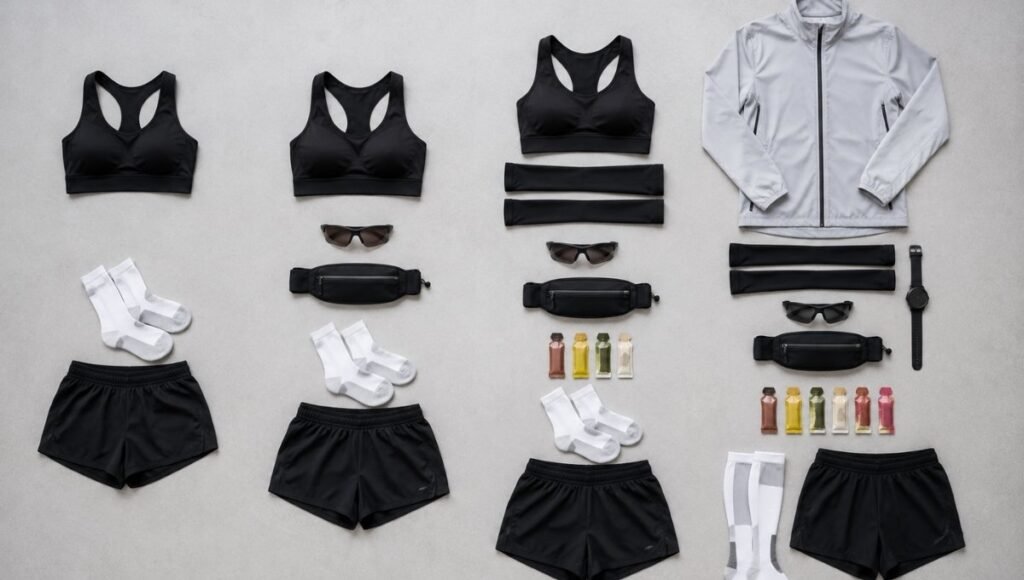
5K
The essentials only. You don’t need nutrition, a hydration vest, or a running belt for 3.1 miles.
- ✅ Properly fitted sports bra
- ✅ Running socks (seamless, moisture-wicking)
- ✅ Running shorts or tights with at least one pocket
- ✅ Moisture-wicking top
- ✅ Running hat or gloves based on temperature
- ✅ Anti-chafe balm if prone to chafing
10K
Same as 5K plus:
- ✅ Running belt or shorts with secure phone pocket
- ✅ Running sunglasses if running in direct sun
- ✅ 1 gel or chews if you fuel during runs (pocket or belt required)
Half Marathon
Same as 10K plus:
- ✅ 2-3 gels or equivalent nutrition
- ✅ Anti-chafe balm applied before the race (not just the spots you’ve chafed before)
- ✅ A throwaway layer if start temperature is below 50°F — you’ll remove it after mile 1-2
- ✅ Everything tested on at least two long training runs before race day
Marathon
Same as half marathon plus:
- ✅ 4-6 gels or equivalent marathon nutrition
- ✅ Compression socks to put on within 30 minutes of finishing
- ✅ Every single item race-tested on a long run — nothing new on race day, including socks
- ✅ Reflective gear if start time is pre-dawn
- ✅ Running belt with enough pockets for your nutrition plus phone
→ Race day deep dive: Half Marathon Outfit Guide
Build Your Running Wardrobe: The Priority Order
Don’t buy everything at once. Build in this sequence:
Month 1 — Foundation Sports bra + 3 pairs of running socks. These two items affect every run more than anything else.
Month 1-2 — Core Kit 2 pairs of running tights or shorts + 2-3 running tops. Enough to rotate without repeating gear two days in a row.
Month 2-3 — Based on Conditions Whatever your runs have told you you need. Cold in the morning? Gloves and an ear band. Running pre-dawn? Reflective vest. Training for a longer race? Running belt.
Month 3+ — Optimization Running sunglasses, compression socks for recovery, arm sleeves for temperature flexibility. These are meaningful upgrades, not Day 1 purchases.
FAQ
What running gear do I actually need as a beginner woman runner? Start with a high-impact sports bra appropriate for your cup size, 2-3 pairs of moisture-wicking running socks, and one pair of running tights or shorts with a secure waistband. These three categories affect every run more than any other gear. Add a running top that isn’t cotton, and you have everything you need for runs up to 45-60 minutes.
What’s the most important running gear for women specifically? The sports bra. There’s no equivalent for men, and the impact of a correctly vs incorrectly fitted bra on running comfort is more significant than any other single piece of gear. If you invest in one thing first, get the sports bra right for your cup size and running intensity.
How much should I spend on running gear? A functional starter kit — sports bra, 3 pairs of socks, one pair of tights or shorts, two running tops — runs $100-150 from mid-range brands. Premium versions of the same kit cost $250-350. The sports bra and tights are where quality differences are most measurable. Running tops and accessories have smaller performance gaps between budget and premium.
Do I need different running gear for different seasons? Yes, but you don’t need a completely separate wardrobe. Core items (sports bra, socks, base running tights) work year-round. Add: a running jacket or windshell for cold and wet weather, gloves and an ear band for cold starts, a running hat for sun protection in summer. The same tights work from 30°F to 65°F with appropriate layering above the waist.
How do I stop my running clothes from smelling? Wash synthetic running clothes cold, inside out, without fabric softener. Fabric softener coats moisture-wicking fibers and traps the odor-causing bacteria that detergent alone doesn’t fully remove. Air dry rather than machine dry. For persistent odor, soak in diluted white vinegar (1 part to 4 parts water) for 30 minutes before washing.
The Bottom Line
Running gear for women works best when it’s built in priority order — foundation first, conditions-based additions second, optimization third. The sports bra and socks are the foundation. Everything else follows from what your running actually requires.
The most expensive gear isn’t necessarily the most useful. The most useful gear is whatever solves the specific problem your runs are creating — whether that’s a waistband that finally stays put, a bra that controls movement at your cup size, or socks that get you to the finish line without blisters.
Build your kit slowly, test everything on training runs before race day, and replace items when they stop performing rather than on a schedule.
For the full running apparel picture — tights, shorts, jackets, and the complete clothing system — check out our best running clothes for women guide.
🏃♀️ Runner Notes: The Research Behind This Guide
The best running gear is not about having the newest products or the longest shopping list.
It is about understanding how your body moves, where discomfort begins, and which pieces of gear actually make running feel better.
This guide combines practical running experience with research on movement, support, fabric performance, and outdoor protection — so every recommendation focuses on comfort, consistency, and helping you enjoy more miles.
Here are some of the resources that helped shape this guide:
💗 Sports Bra Support & Movement Science
Research from McGhee & Steele on breast biomechanics and sports bra design helps explain why proper support, band structure, and cup-specific fit matter during repetitive running movement.
Because the right sports bra is not just about comfort — it can determine whether running feels sustainable.
👚 Performance Fabrics & Running Comfort
Textile research, including work from Laing et al., explores how fabric choice affects moisture management, friction, temperature regulation, and overall comfort during exercise.
Small details — like seamless construction, technical fibers, and avoiding cotton — often make the biggest difference after the first few miles.
🏃 Strength, Movement & Long-Term Running Habits
Guidelines from the American College of Sports Medicine (ACSM) support choosing equipment that improves comfort, reduces unnecessary barriers, and helps runners build consistent training habits.
The best gear is the gear that helps you keep showing up.
☀️ Sun Protection & Outdoor Running Safety
Educational resources from the American Academy of Dermatology Association (AAD) highlight the importance of UV protection during outdoor activities, including hats, sunglasses, and protective clothing.
Protecting your skin and eyes is part of taking care of the runner you are becoming.
Running does not require a perfect wardrobe.
Start with the pieces that solve real problems, learn what your body needs, and build from there — one comfortable mile at a time.